

Selecting the perfect structural layout to strike a balance between individual personality and peaceful relaxation is one of the most rewarding challenges in residential styling. Throughout my decade of hands-on interior design experience, I have always guided my clients to treat glass-enclosed additions not as isolated extensions, but as the foundational anchor for natural light, spatial flow, and structural balance. Your immediate environment shapes your daily routine, and a poorly insulated glass box means missing out on valuable living square footage when the weather turns harsh.
In 2026, creating an indoor-outdoor escape that feels expansive yet deeply comforting relies on complex material layering that shifts gracefully through the seasons. Homeowners across the United States are searching for functional Four Season Sunroom Ideas to introduce true domestic retreat value, moving far past basic three-season screens and drafty construction styles. The most common pitfall I see with casual DIY projects is picking basic single-pane materials without considering thermal breaks or proper low-emissivity glass, which can quickly leave an ungrounded sunroom feeling like an oven in July and an icebox in January.
To prevent this, I utilize a repeatable interior styling system rooted in thermal physics, sightline alignments, and zone layering. By treating your addition as a natural, highly efficient extension of your main living zones—one that handles changing weather while showing off gorgeous views—you can easily expand your home’s footprint. These 22 hand-picked concepts show exactly how to use this comforting design strategy to cultivate a personal paradise right past your primary home grid.
| Design Application | Material & Thermal Profile | Ideal Climate Exposure | Preferred Furniture Pairing |
| Airy Social Hubs | Triple-pane low-E glass, vaulted cedar beams | Full southern sun paths | Premium resin all-weather wicker |
| Sleek Minimalist Zones | Matte black steel framing, radiant tile floors | Tight urban footprints | Low-profile performance linen sofas |
| Muted Organic Sanctuaries | Built-in stone mason fire pits, skylights | Northern wooded properties | Rich walnut wood, layered wool rugs |
Table of Contents
ToggleTools / Materials You Need
Before ordering heavy glass shipments or cutting structural framing layouts, securing these exact technical baselines guarantees structural integrity and thermal comfort:
Insulated Glass Rating: Argon gas-filled, double- or triple-pane glass panels boasting a minimum U-factor of 0.24 to maximize energy conservation.
Radiant Heat Standard: Low-profile, energy-efficient electric radiant heating mat grids installed strictly underneath durable porcelain tile or premium engineered hardwood.
Climate Control Solution: A multi-zone ductless mini-split heat pump system delivering a minimum 12,000 BTU cooling/heating capacity for independent zoning.
Window Shading Specification: Motorized solar cellular shades engineered strictly with a 95% ultraviolet (UV) ray blockage rating to preserve interior fabrics.
Detailed Step-by-Step Guide
Architectural Foundations and Structural Essentials
1. Install Floor-to-Ceiling Windows for Panoramic Views
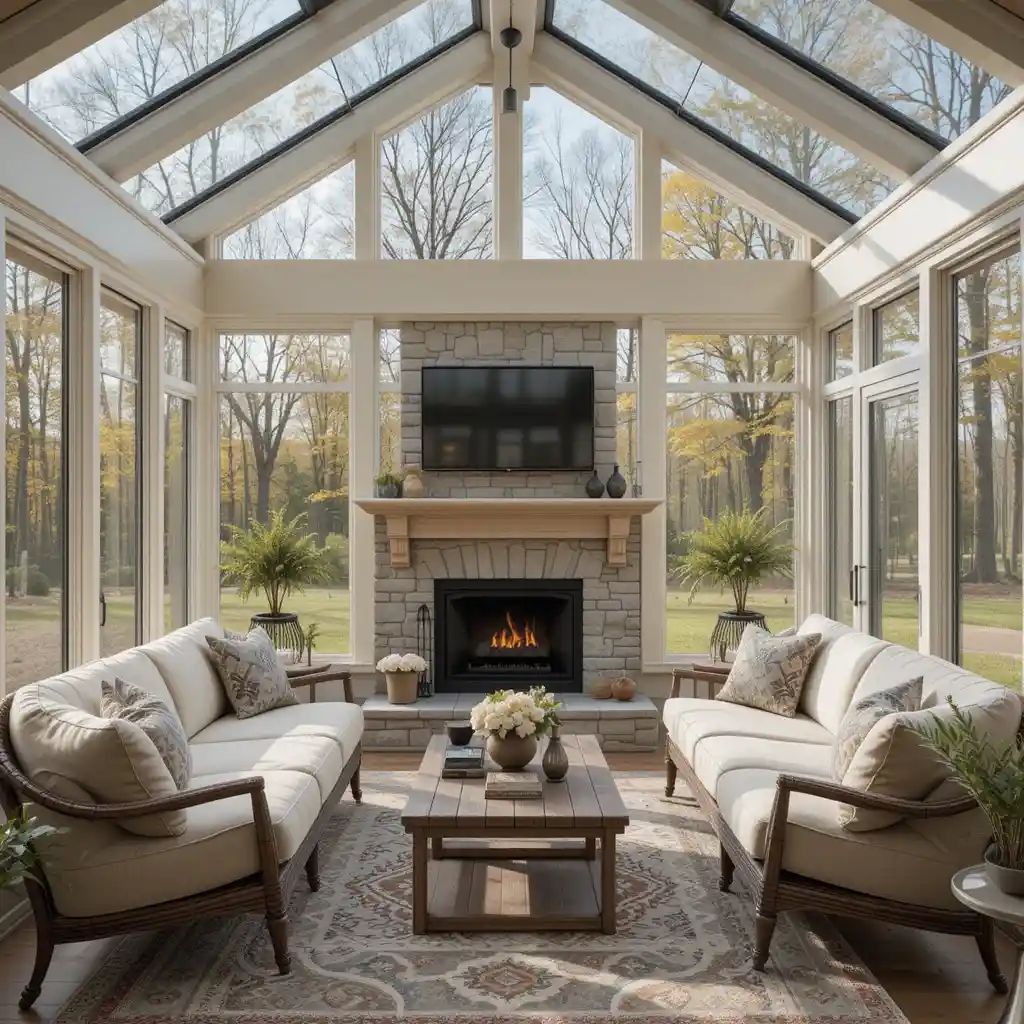
Letting the outside in with floor-to-ceiling glass windows establishes an unhindered visual connection to changing seasonal landscapes. This design maximizes incoming natural light paths and allows breathtaking views throughout the year, completely removing the heavy, closed-in feel of standard drywall borders. I always recommend my clients align these sweeping glass fields with your property’s best natural views to anchor the room’s lifestyle footprint.
2. Use Insulated Glass to Maintain Temperature
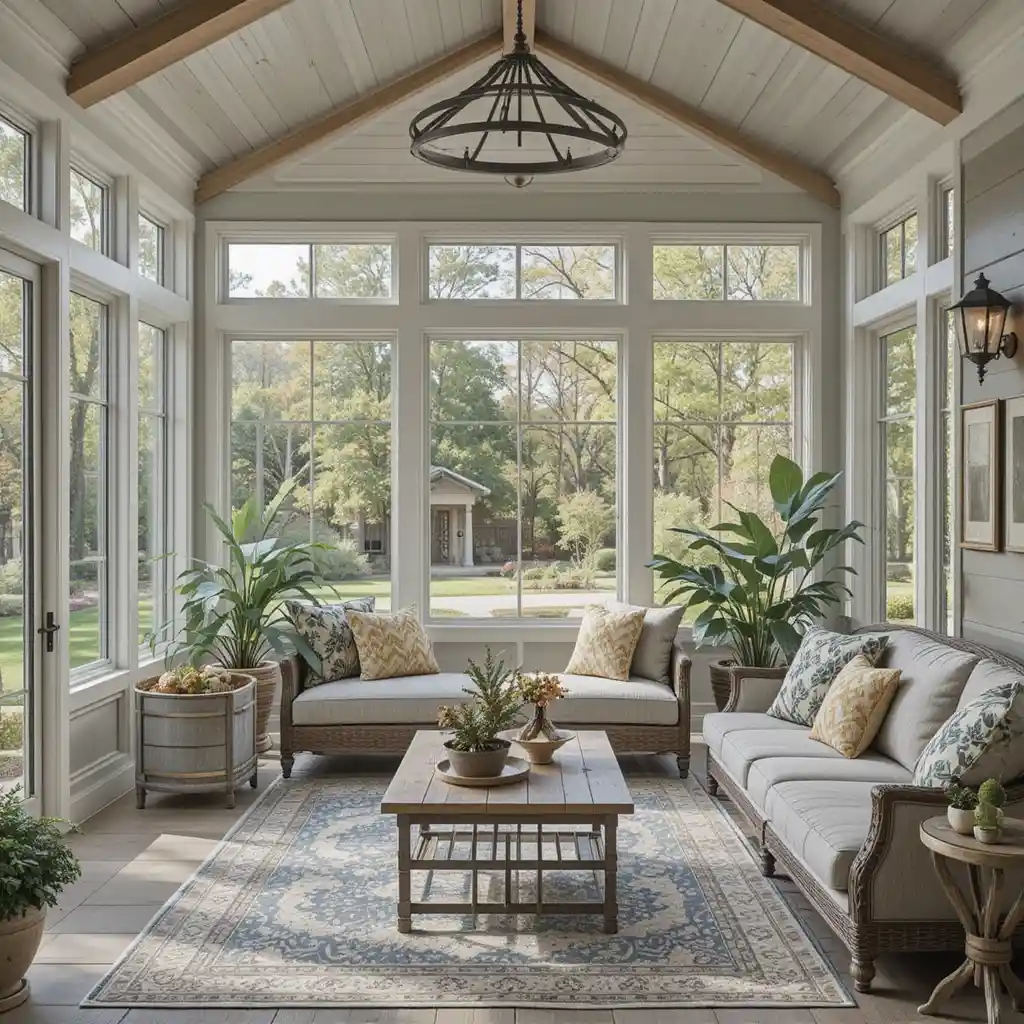
Opting for premium double- or triple-pane insulated windows is the absolute baseline requirement for any true year-round build. These specialized thermal boundaries keep your sunroom warm in the winter and cool in the summer, ensuring excellent energy efficiency and structural comfort. Investing in advanced gas-filled window units prevents unwanted thermal transfers, saving your HVAC systems from working overtime.
3. Add a Stone Fireplace for Cozy Winters
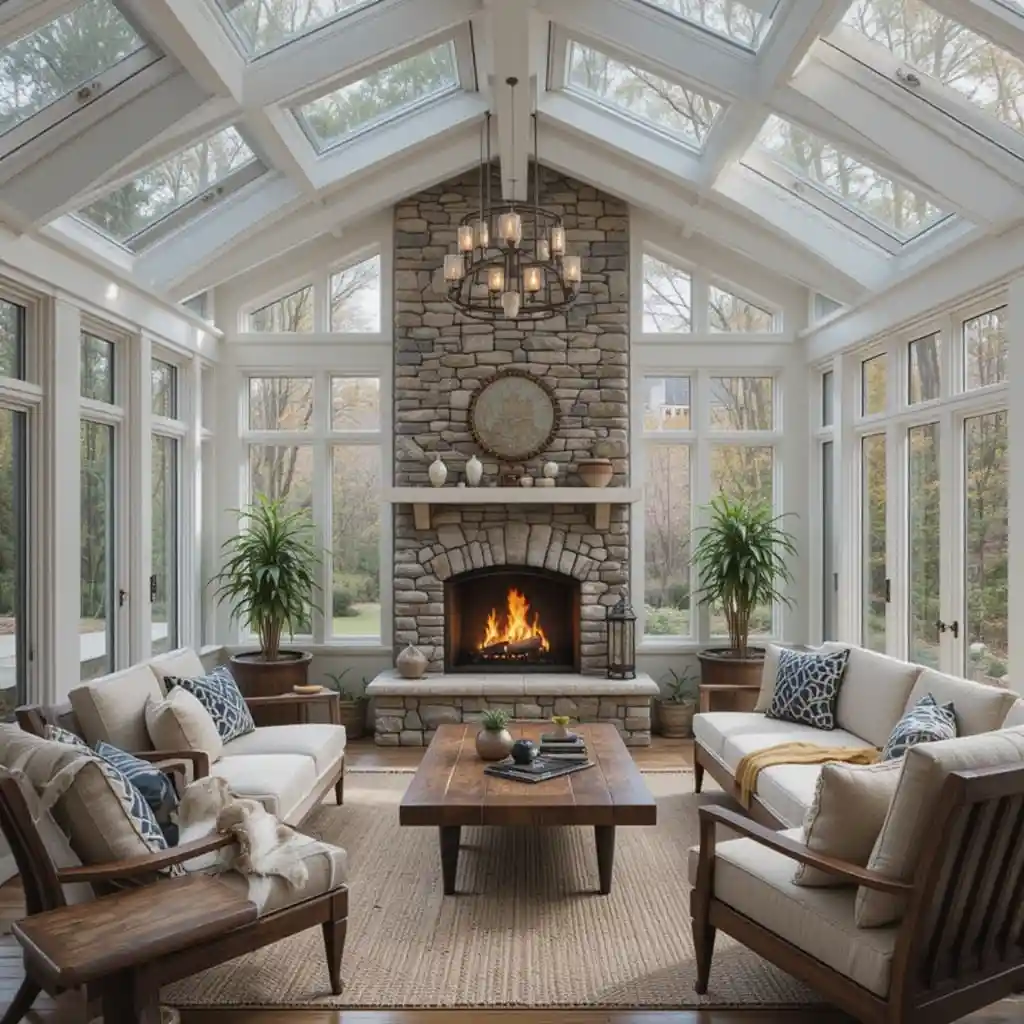
Building a heavy, floor-to-ceiling natural stone fireplace makes your addition feel like an upscale, rustic lodge retreat. It brings immediate physical warmth to the floor plan and becomes a beautiful, comforting focal point for family gatherings during freezing winter months. The rough, earthy texture of the masonry contrasts cleanly with smooth glass planes, adding rich visual depth.
4. Choose Neutral Walls for Seasonal Flexibility
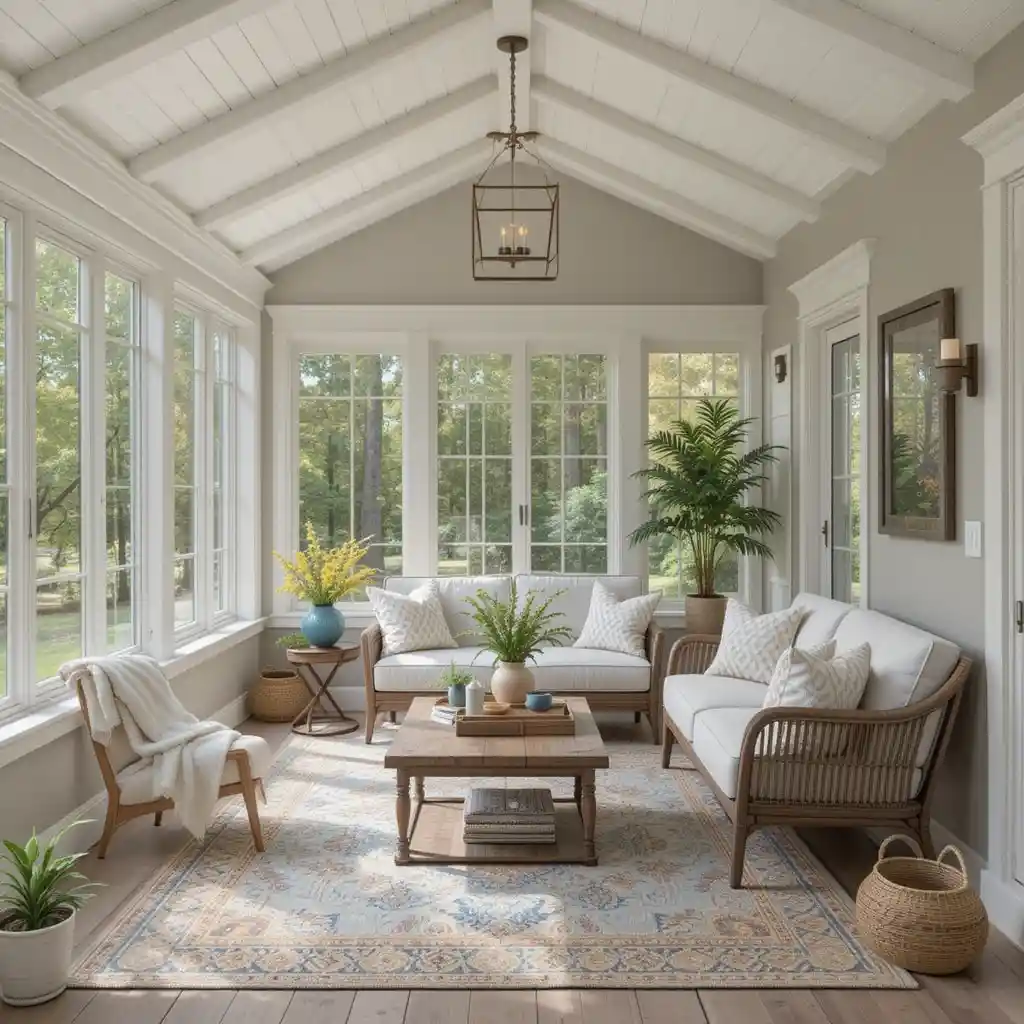
Painting your solid structural support walls and window trim headers in soft neutral tones like warm beige, crisp white, or soft gray provides an excellent canvas. These timeless hues blend effortlessly with your changing seasonal holiday decorations without fighting for attention. A clean, quiet backdrop allows shifting outdoor tree colors to take center stage across your glass panels.
5. Bring in Indoor Plants for All-Year Greenery
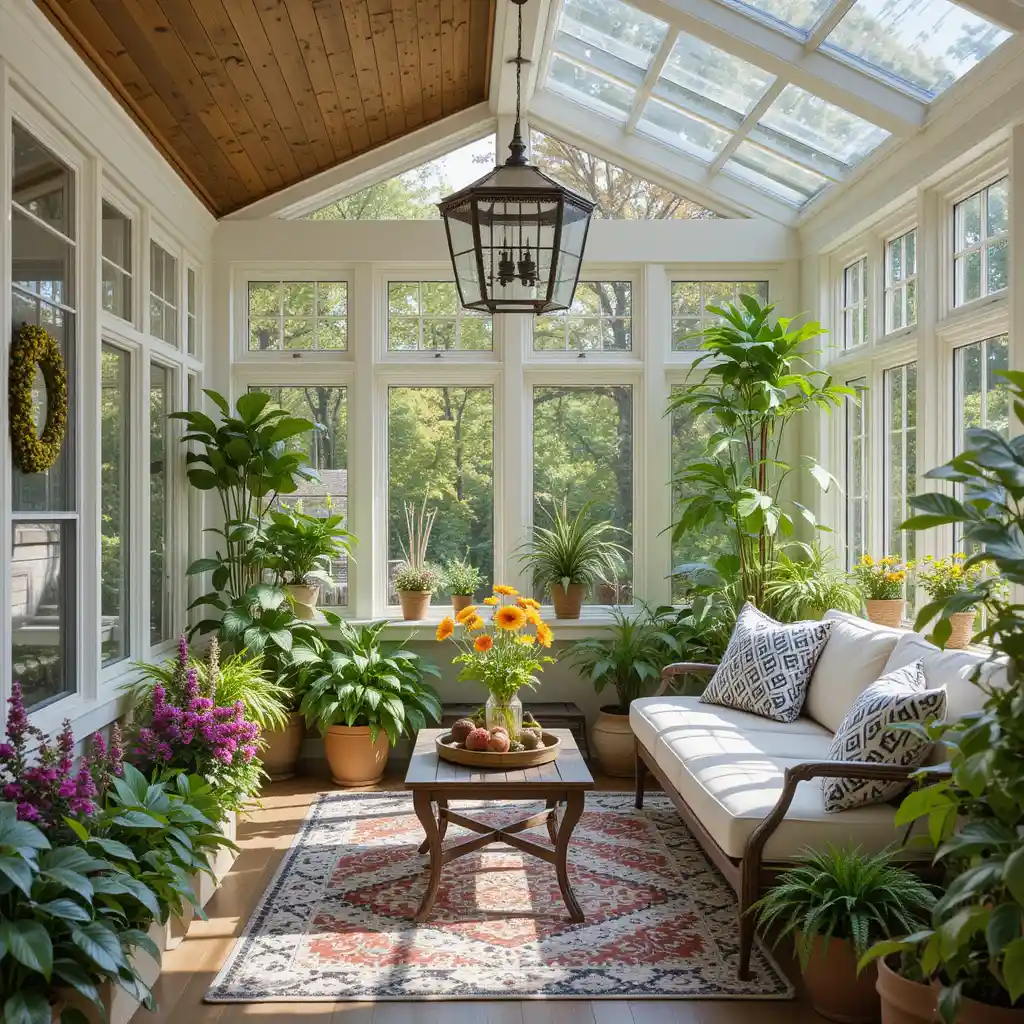
Including a variety of low-maintenance indoor tropical plants like fiddle-leaf figs, monstera deliciosa, and sweeping snake plants capitalizes on the abundant daylight. These biological accents thrive in sunny rooms, working naturally to purify your indoor air currents while adding vibrant color year-round. Cluster them in corners of varying heights to soften sharp structural intersections.
Thermal Upgrades and Interior Layering Secrets
6. Install Radiant Heated Flooring
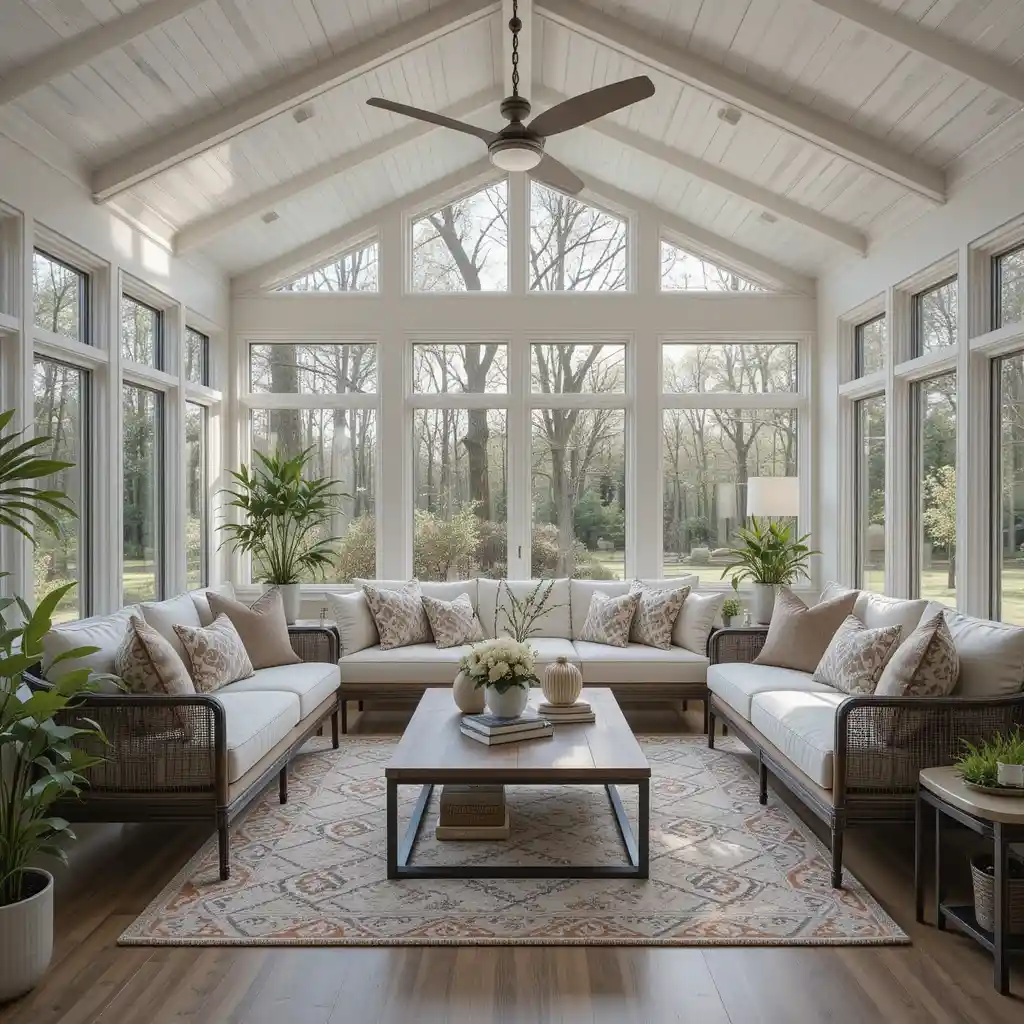
Heated floor grids provide an incredibly luxurious level of underfoot warmth during freezing winter mornings while keeping your layout clean, sleek, and modern. This hidden heating system radiates warmth upwards evenly across your entire floor footprint, completely bypassing the cold drafts common with traditional forced-air wall vents. Pair this invisible luxury with thick porcelain stone tile or stable engineered hardwood planks for maximum longevity.
7. Layer with All-Season Textiles
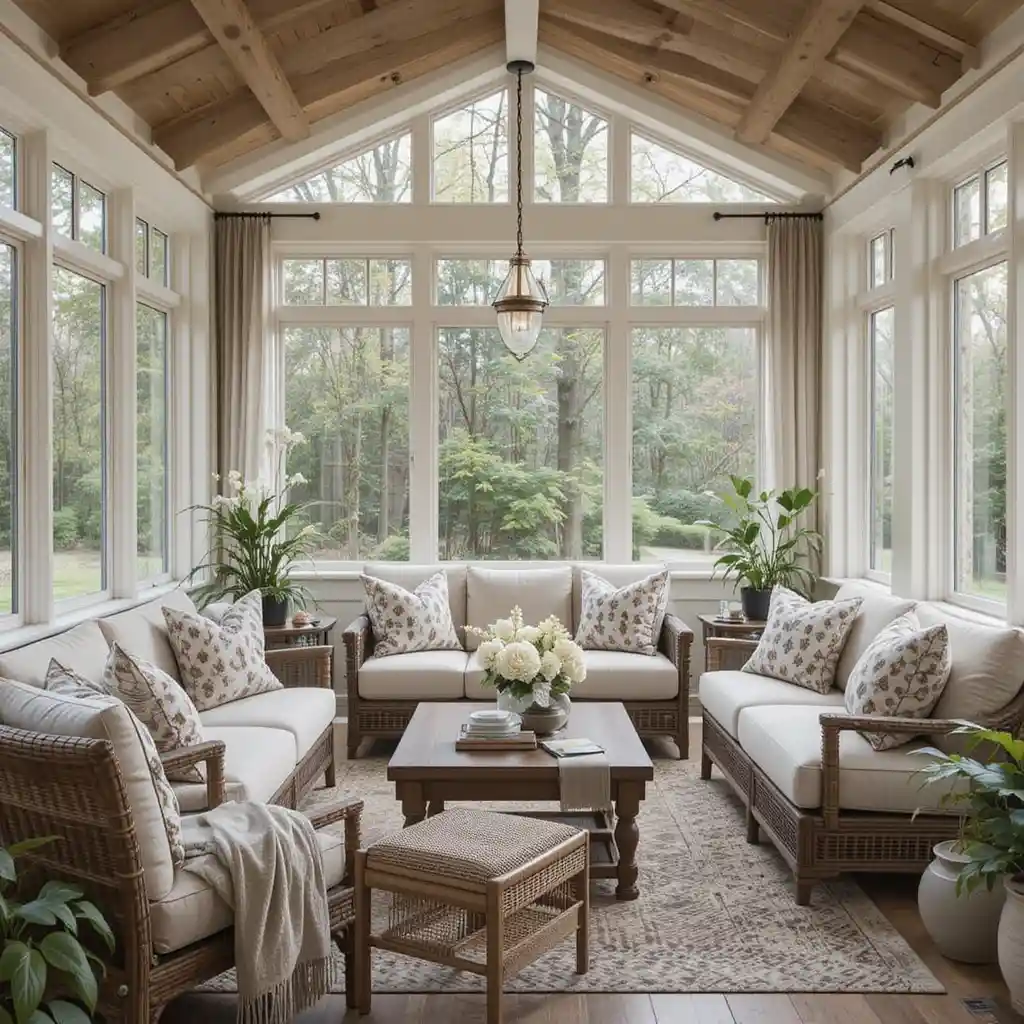
Using plush furniture cushions, chunky knit throw blankets, and woven drapery panels allows you to adjust the room’s sensory weight as temperatures change. I always swap out lightweight, airy linens during humid summer months for thick, insulating wool fabrics when winter rolls around. This simple habit keeps your interior styling feeling current, responsive, and deeply comforting all year long.
8. Incorporate Skylights for Overhead Sunshine
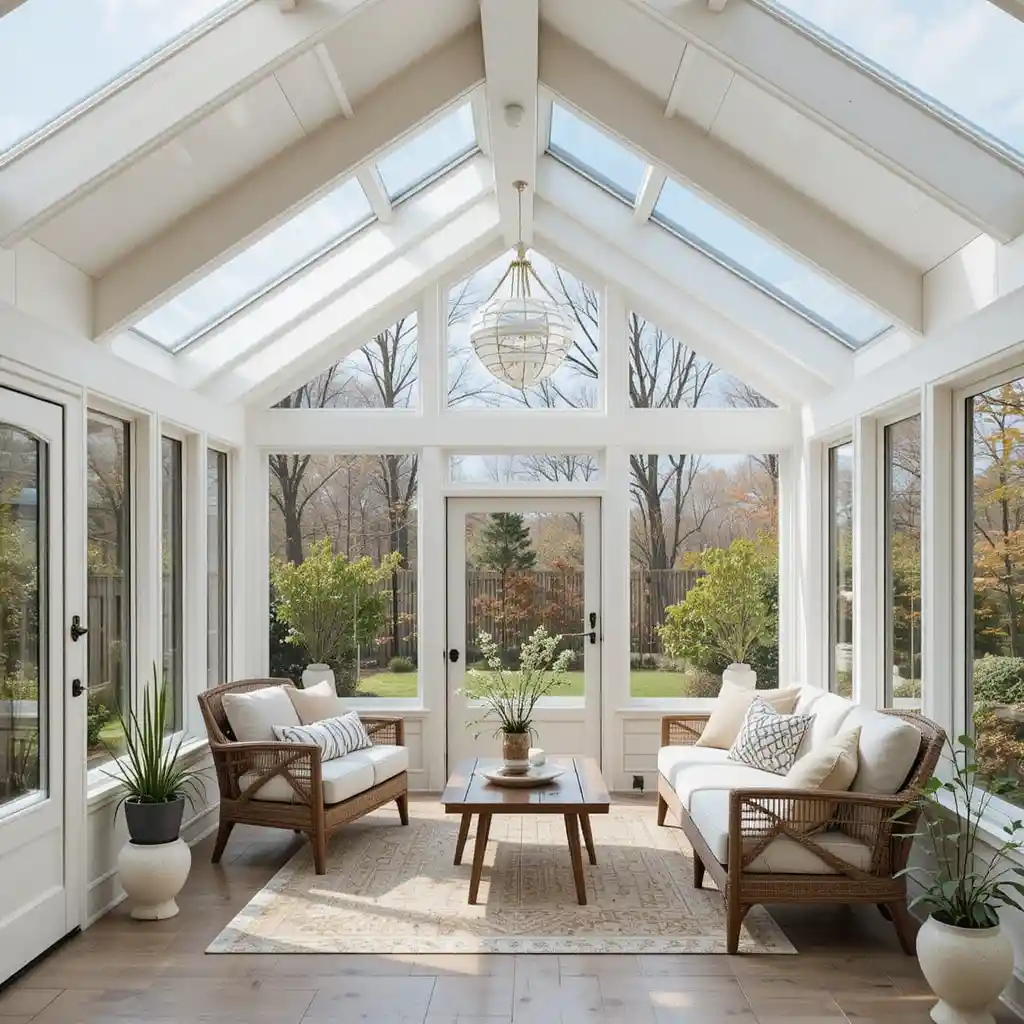
Cutting insulated skylight panels directly into your roof deck brightens up your living space even on cloudy, low-light winter afternoons. These overhead glass fields expand your sightlines upward, introducing fun opportunities for nighttime stargazing while boosting natural air ventilation during warmer seasons. Secure manual or motorized opening models to release trapped rising heat currents quickly.
9. Create a Reading Nook with Built-In Seating
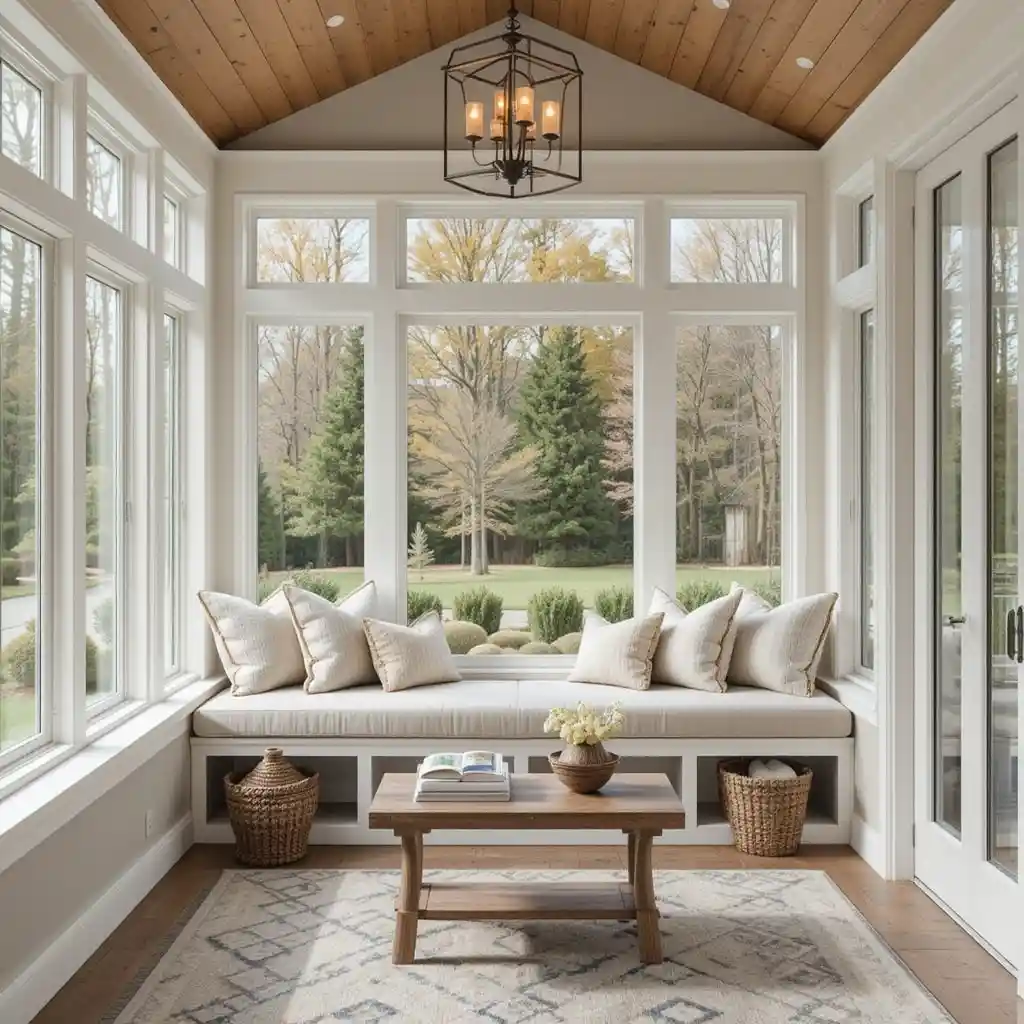
Installing a custom window bench flanked by hidden storage drawers optimizes small corners by turning dead space into a high-value retreat. Piling this built-in bench high with performance fabrics and outdoor-grade down pillows creates a cozy, sun-drenched reading escape. It forms an exceptional spot to enjoy a morning coffee while watching winter snow fall right past your shoulder.
10. Opt for All-Weather Wicker Furniture
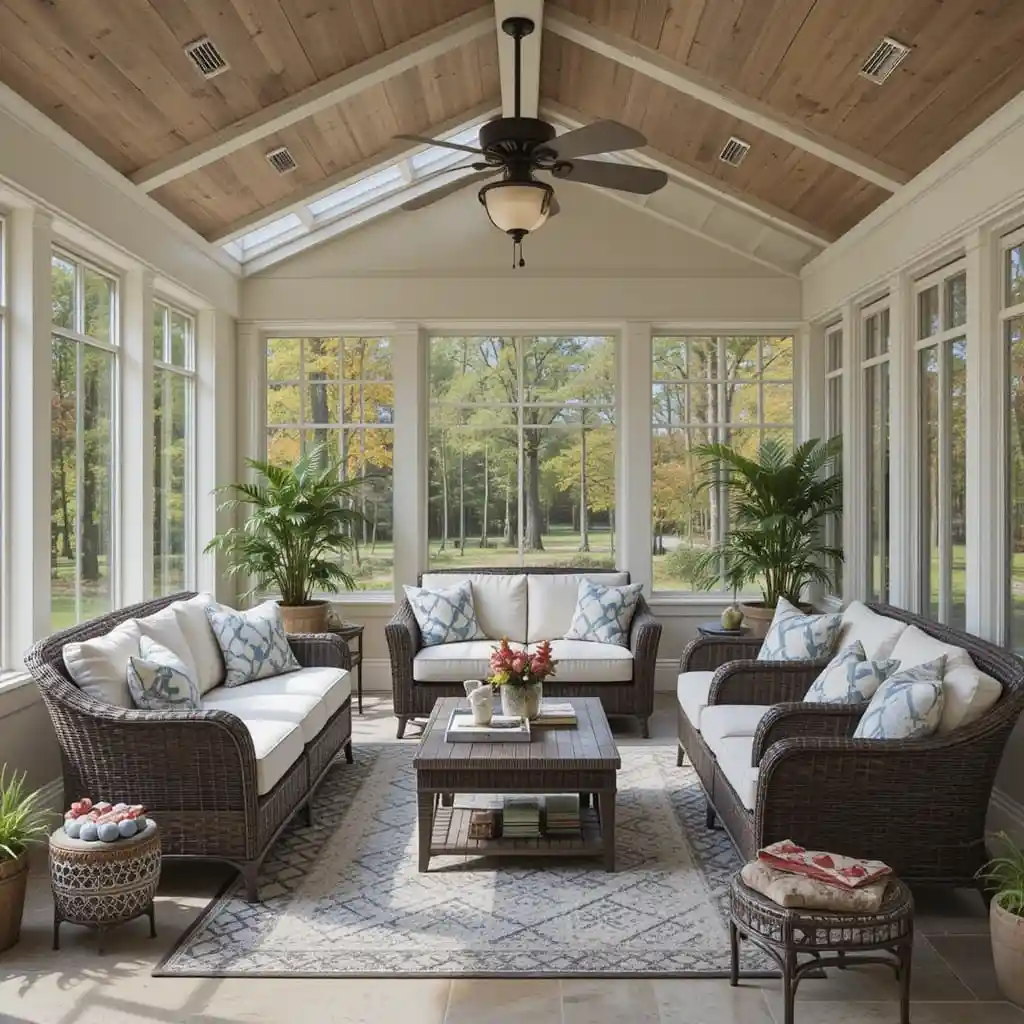
Choosing premium, high-density resin wicker furniture sets over traditional solid wood keeps your layout light and resilient against heavy daily UV rays. High-quality synthetic wicker stands up to direct sun, deep cold, and changing humidity levels without warping, splitting, or fading. Pair these sturdy frames with thick, high-density foam cushions wrapped in stain-resistant performance canvases.
Architectural Statements and Spatial Flow Solutions
11. Use a Vaulted Ceiling for Added Space
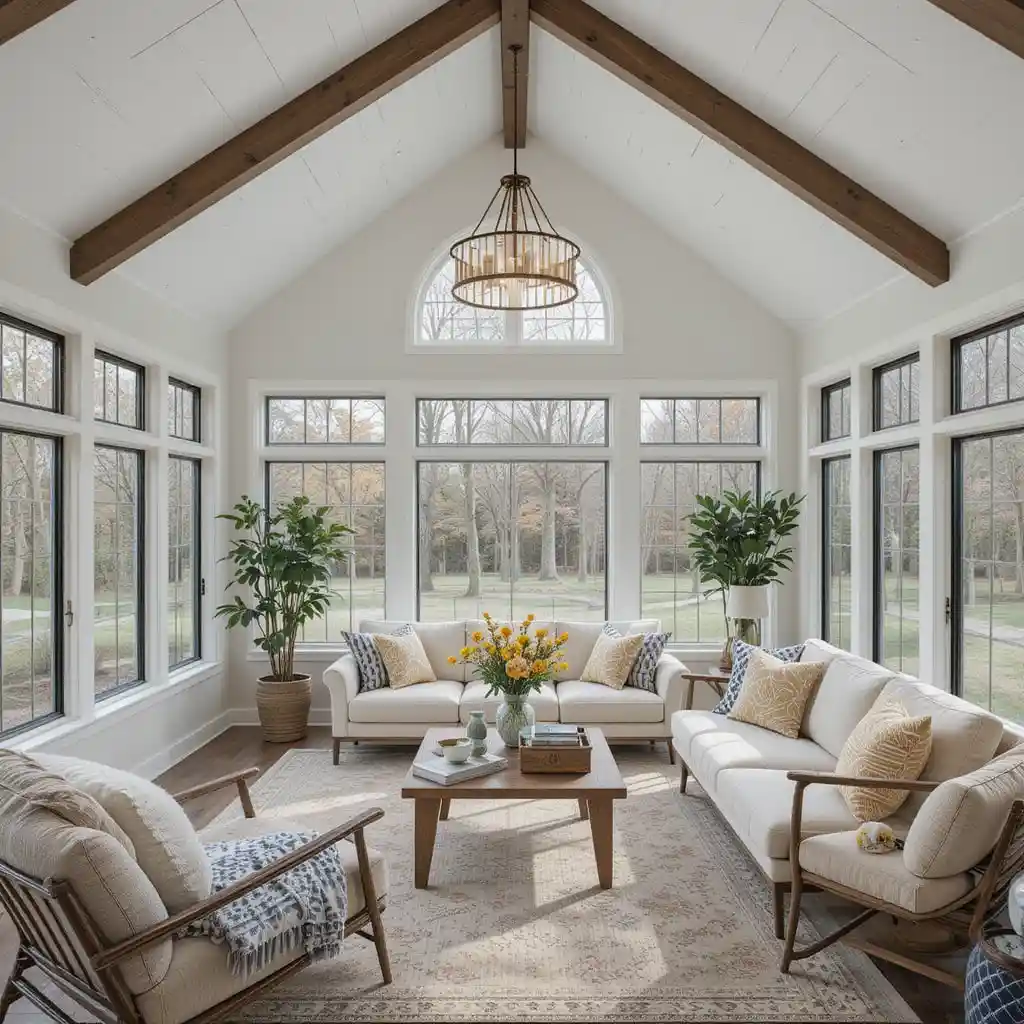
Designing a lofty vaulted ceiling adds immediate architectural interest, making compact room footprints feel open, grand, and airy. Exposing heavy natural timber support beams across the upper ceiling ridge introduces a rustic modern vibe that works across all design styles. The extra vertical volume captures and balances high daylight streams beautifully, preventing a cramped box feel.
12. Install Ceiling Fans with Reversible Blades
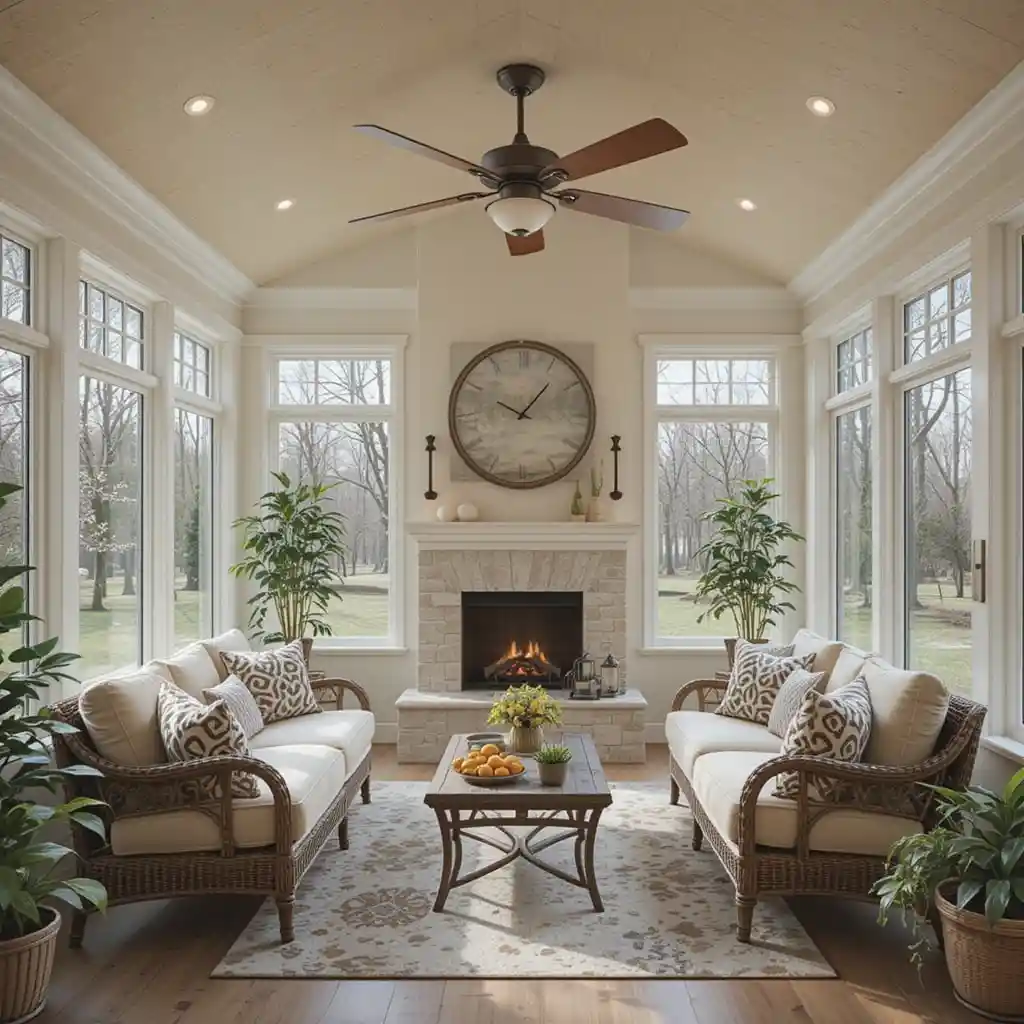
Mounting a dual-function ceiling fan at the highest point of your ceiling vault optimizes your room’s airflow path through all four seasons. Running the fan blades forward during summer creates a cooling breeze, while reversing the rotation in winter pushes rising warm air back down to the seating level. Look for sleek, minimalist designs featuring quiet DC motors and convenient remote controls.
13. Add Sliding Glass Doors for Easy Outdoor Access
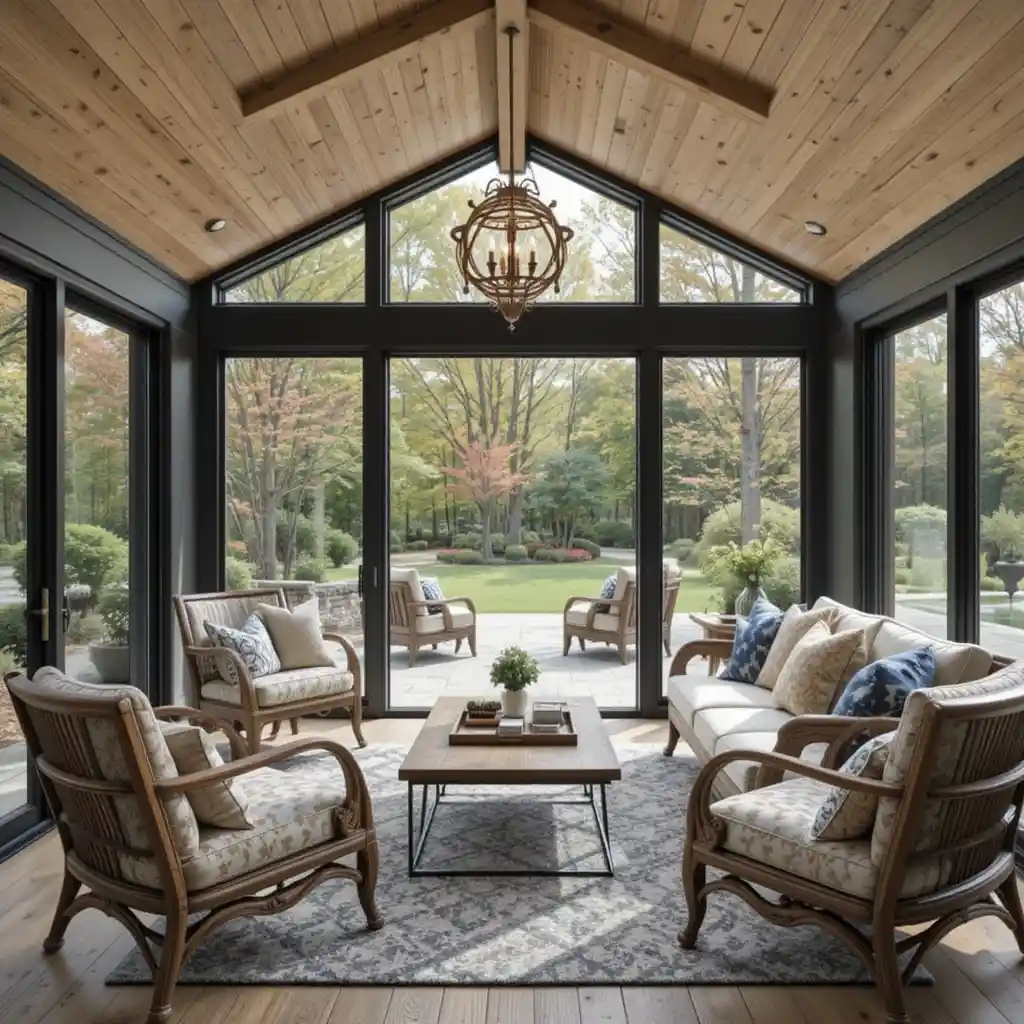
Integrating wide, multi-panel modern sliding glass doors allows you to connect your sunroom to your back patio, deck, or garden smoothly. This flexible opening multiplies your entertaining zone layout, encouraging a natural, breezy flow during summer family barbecues. Choose low-profile track systems that sit flush with your interior floors to avoid tripping hazards.
14. Decorate with Seasonal Accents
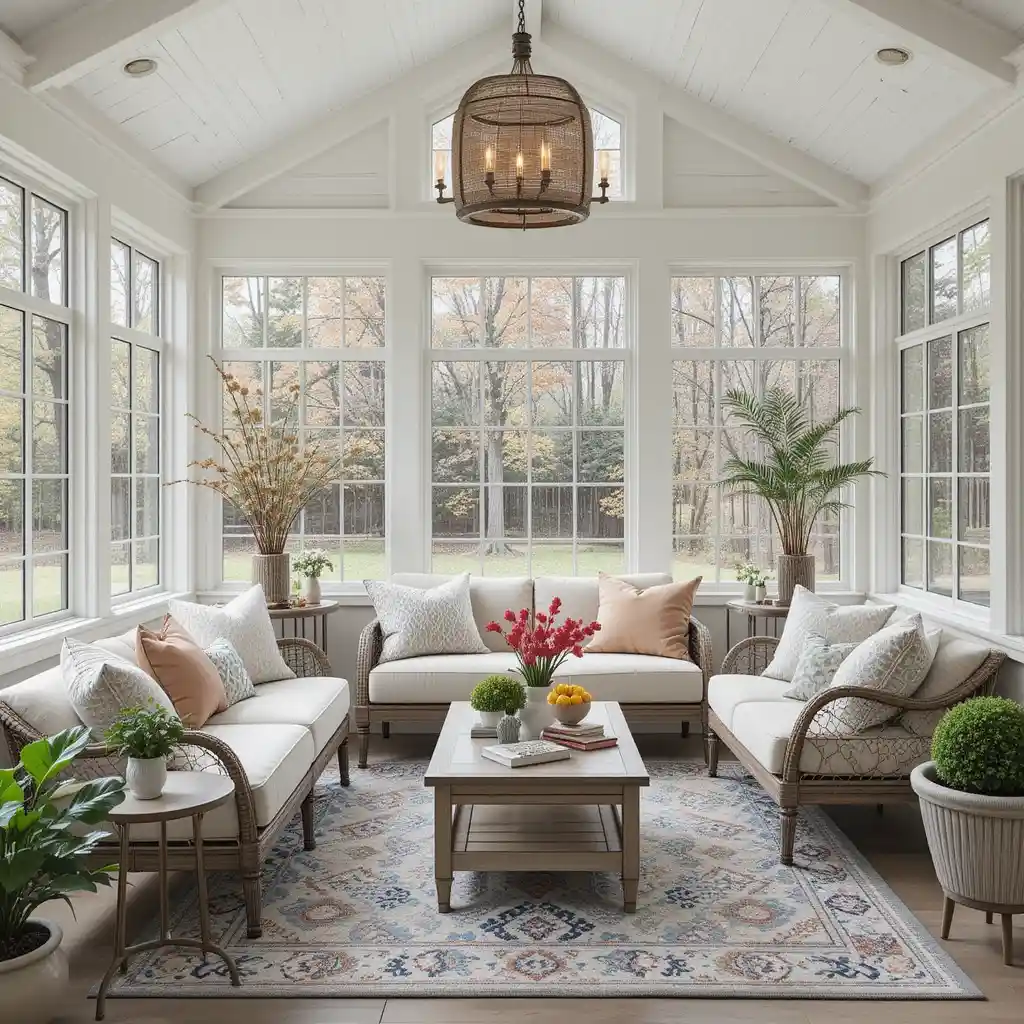
Switching out small decorative layers like throw pillows, area rugs, and ceramic tabletop vases is an affordable way to refresh the space. I recommend utilizing soft pastel accents during spring, deep ochres and rust tones for autumn, and crisp icy blues or silvers for winter. This rotating style strategy ensures your sunroom feels deeply connected to the natural rhythms happening right outside your windows.
15. Build Around a Central Coffee Table
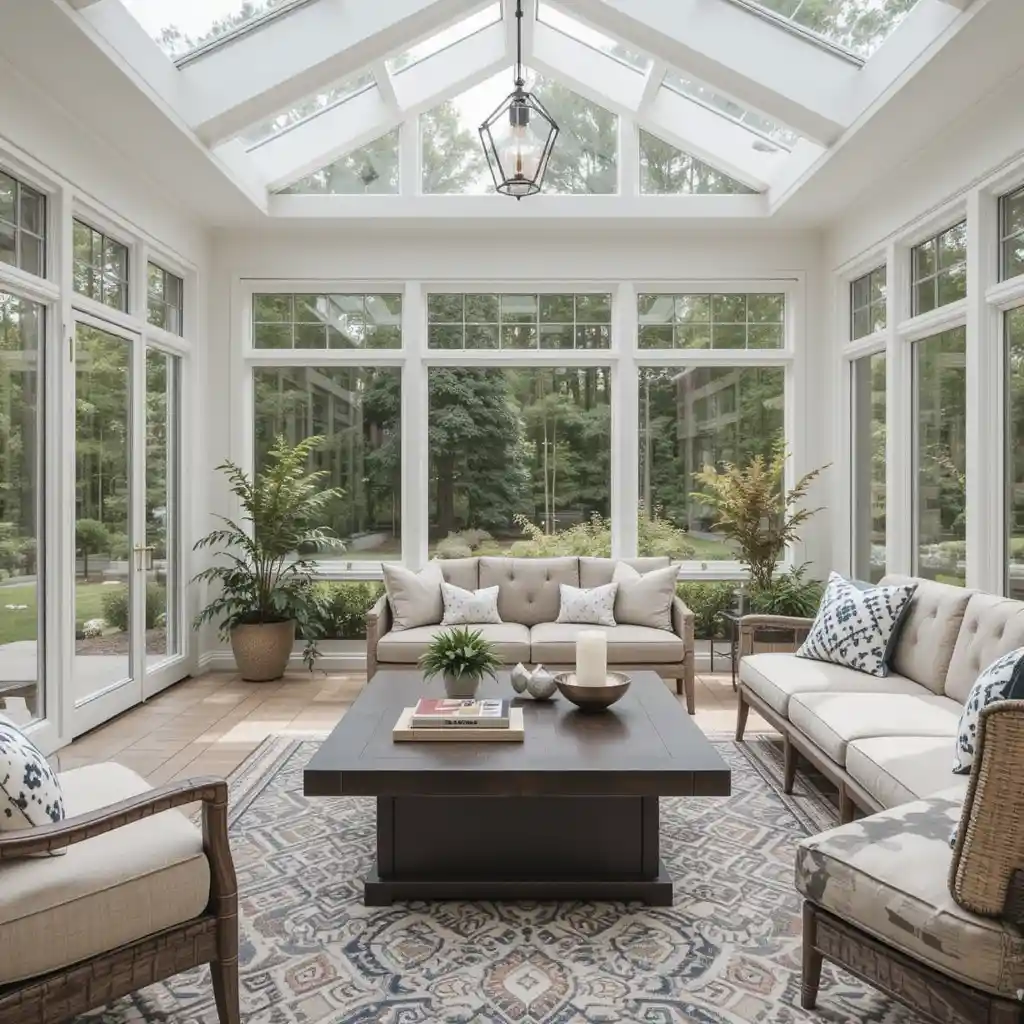
Positioning a large, durable modern coffee table right in the center anchors your primary seating arrangement beautifully. This surface serves as a reliable multi-functional asset, acting as an entertaining tray holder, a board game platform, or a casual spot for afternoon snacks. Select a sturdy base material like concrete, wrought iron, or reclaimed teak to handle heavy sunlight exposure without cracking.
Environmental Controls and Functional Multitasking
16. Choose Motorized Shades for Light Control
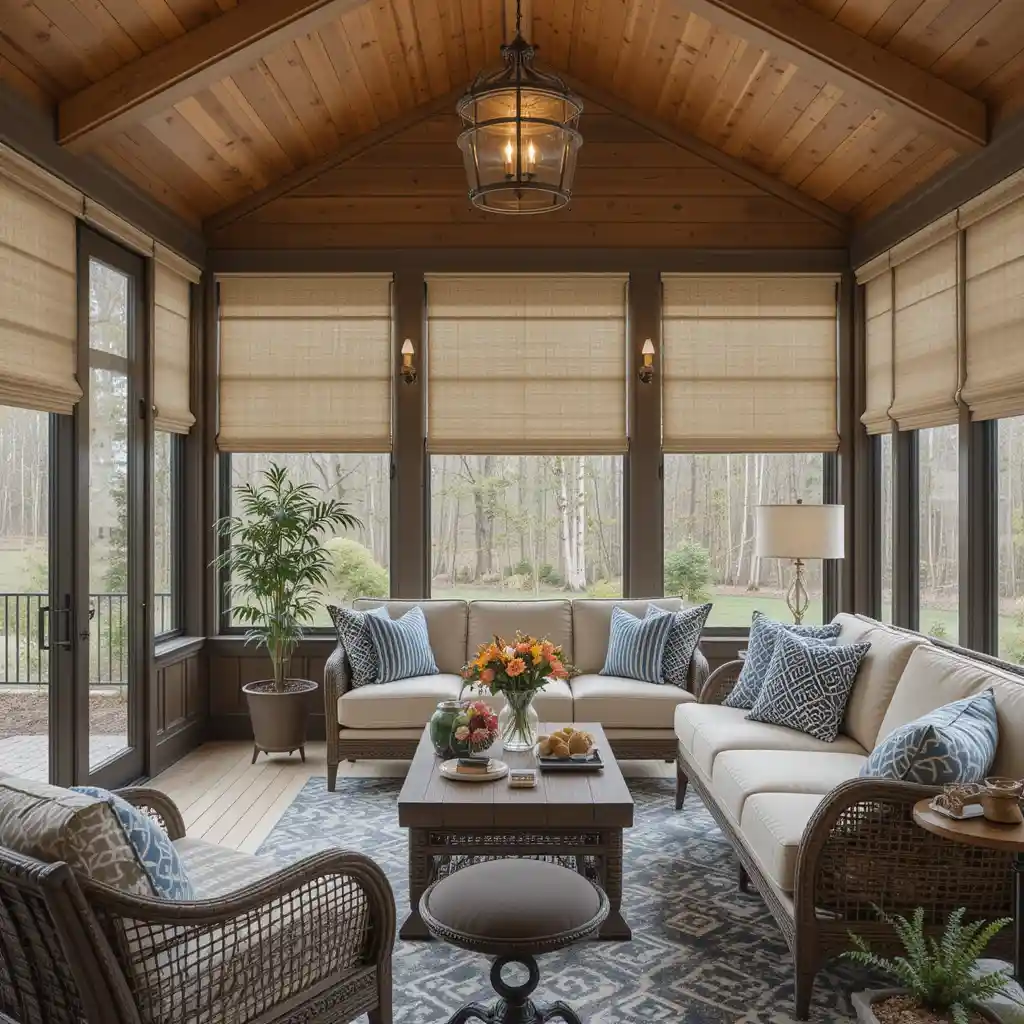
Smart window treatments allow you to adjust incoming glare and control solar heat gain at the push of a button or via automated voice commands. This high-tech upgrade is perfect for blocking damaging ultraviolet rays during midday peaks, protecting your interior furniture fabrics from fading over time. When lowered, these shades provide instant evening privacy while adding an extra layer of thermal insulation.
17. Install Soundproof Glass for a Quiet Retreat
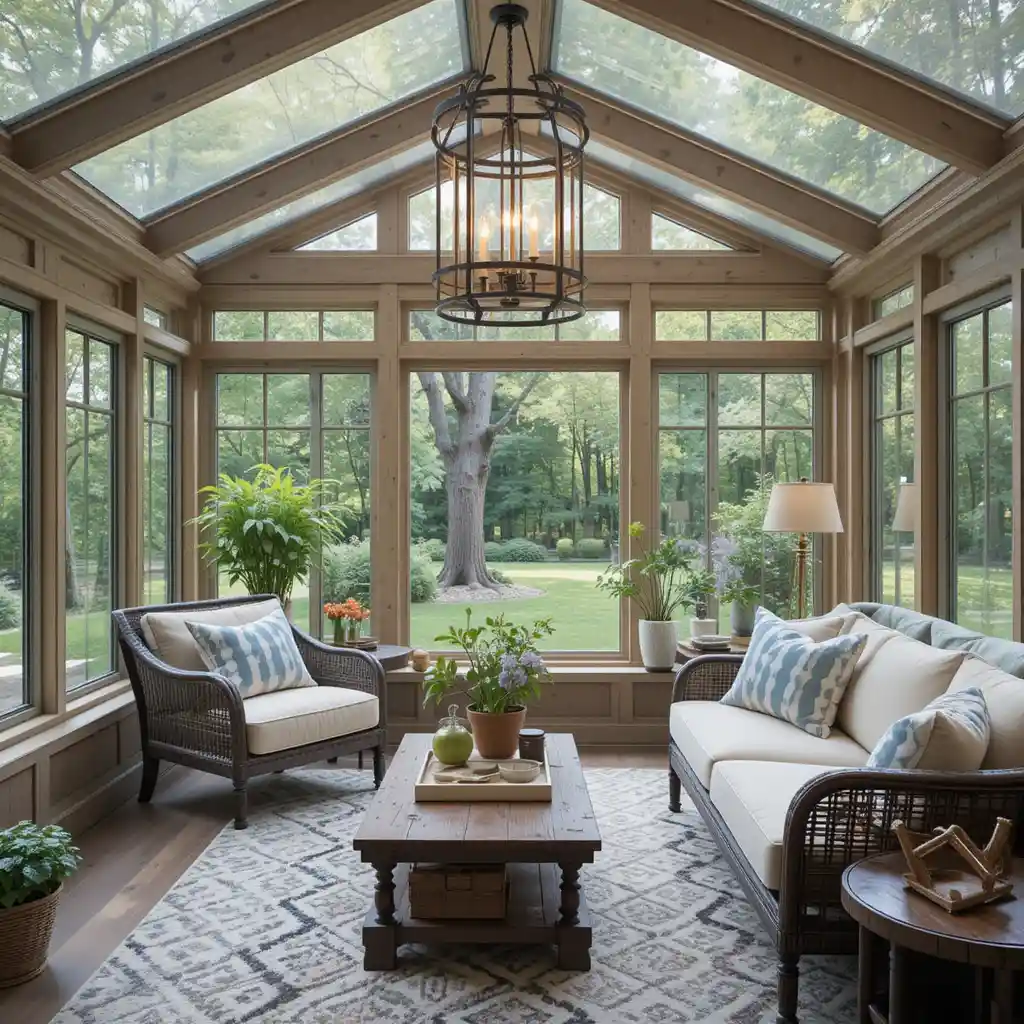
Specifying acoustic sound-insulated glass panels ensures your sunroom remains peaceful, serene, and quiet, even during heavy rainstorms or busy neighborhood afternoons. This specialized sound barrier blocks out external city noises, creating a tranquil escape from daily chaos. It is a fantastic option if you intend to use the sunroom as an intimate conversation space or an everyday escape.
18. Add Built-In Shelves for Display and Storage
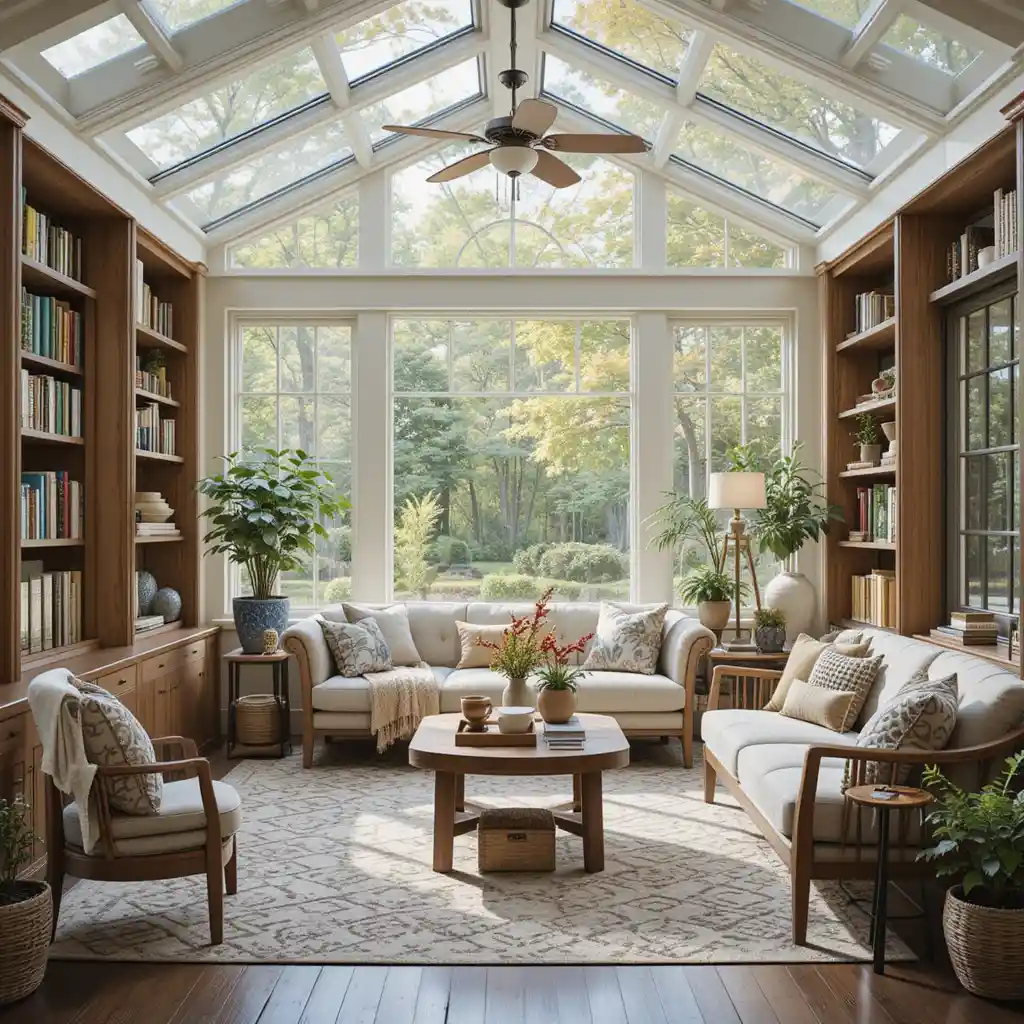
Custom built-in cabinetry and open floating shelves offer excellent storage capacity without encroaching on your open floor plan. Staging these shelves with curated hardback books, organic clay pottery, and trailing plants brings an authentic living room quality to the space. This structural layout keeps floor areas open, clean, and entirely free of unorganized clutter.
19. Use Recessed Lighting for Evening Ambiance
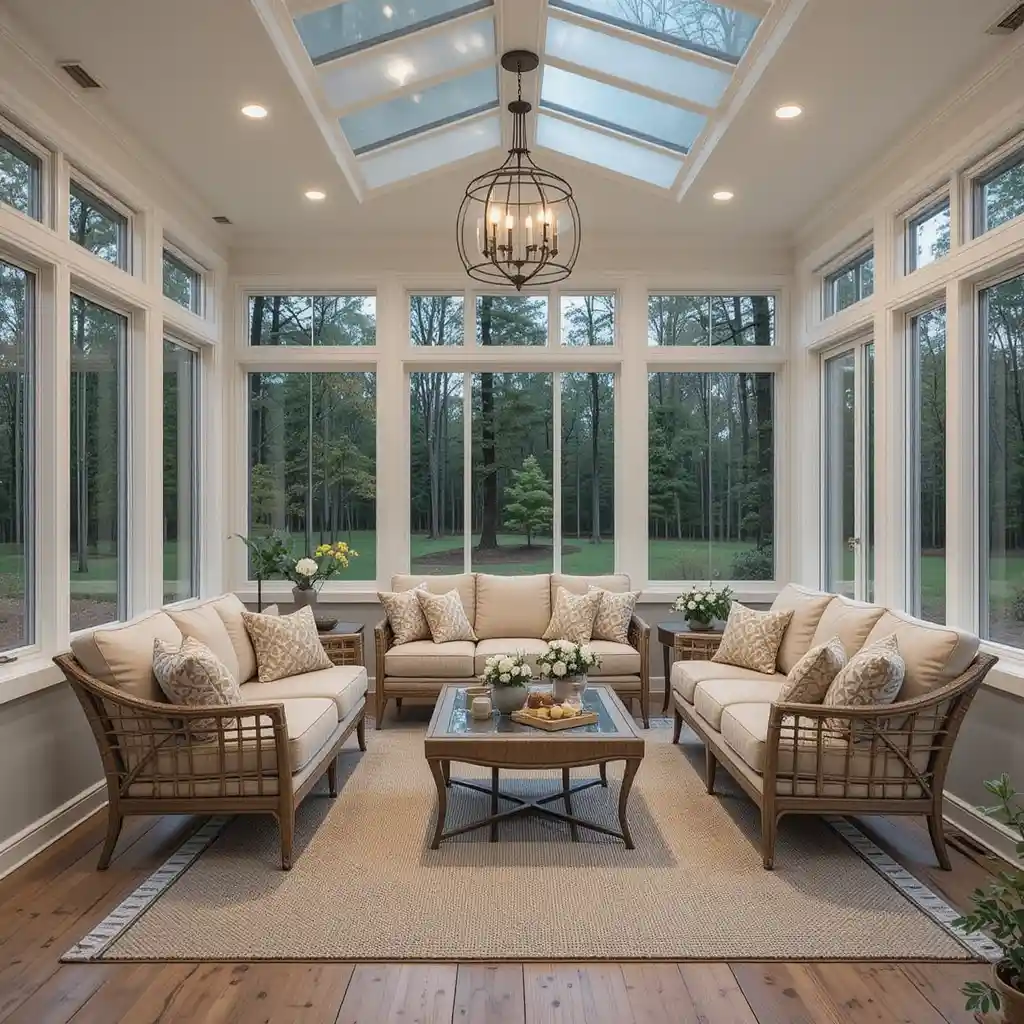
Installing flush-mounted recessed LED ceiling lights introduces a warm, balanced glow across the entire room after the sun sets. Spacing these lights evenly preserves the clean, unobstructed architecture of the glass roof lines, avoiding the need for heavy standalone lamps. Always mount these fixtures to independent dimmer switches to dial in the perfect intimate vibe for evening entertaining.
20. Keep Flooring Consistent with the Rest of the Home
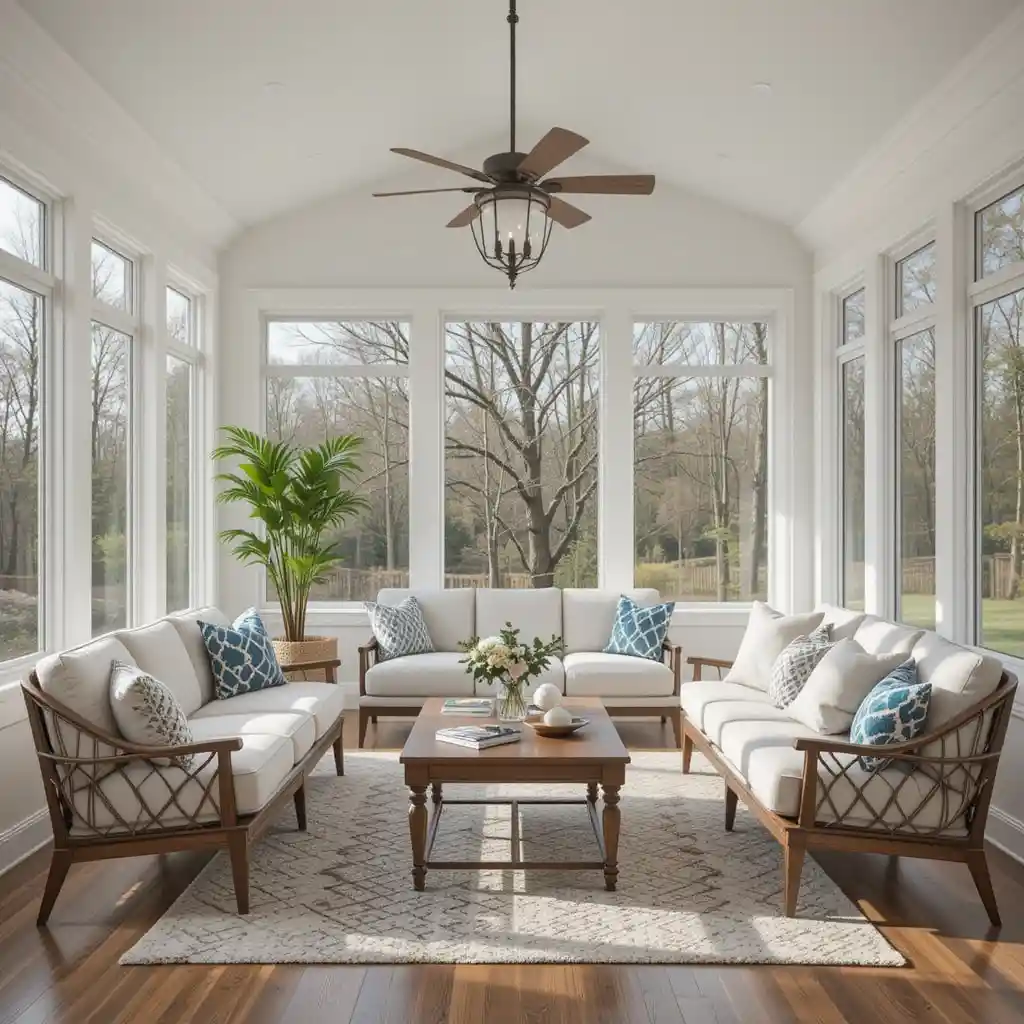
Using matching hardwood planks or high-performance luxury vinyl tile creates a seamless transition from your main home into your new space. Extending your interior flooring right past the threshold tricks the brain into viewing the sunroom as a natural, built-in part of your home rather than a cheap add-on. This simple trick adds great visual flow and boosts your property’s market value.
21. Choose a Coastal Theme for Year-Round Escape
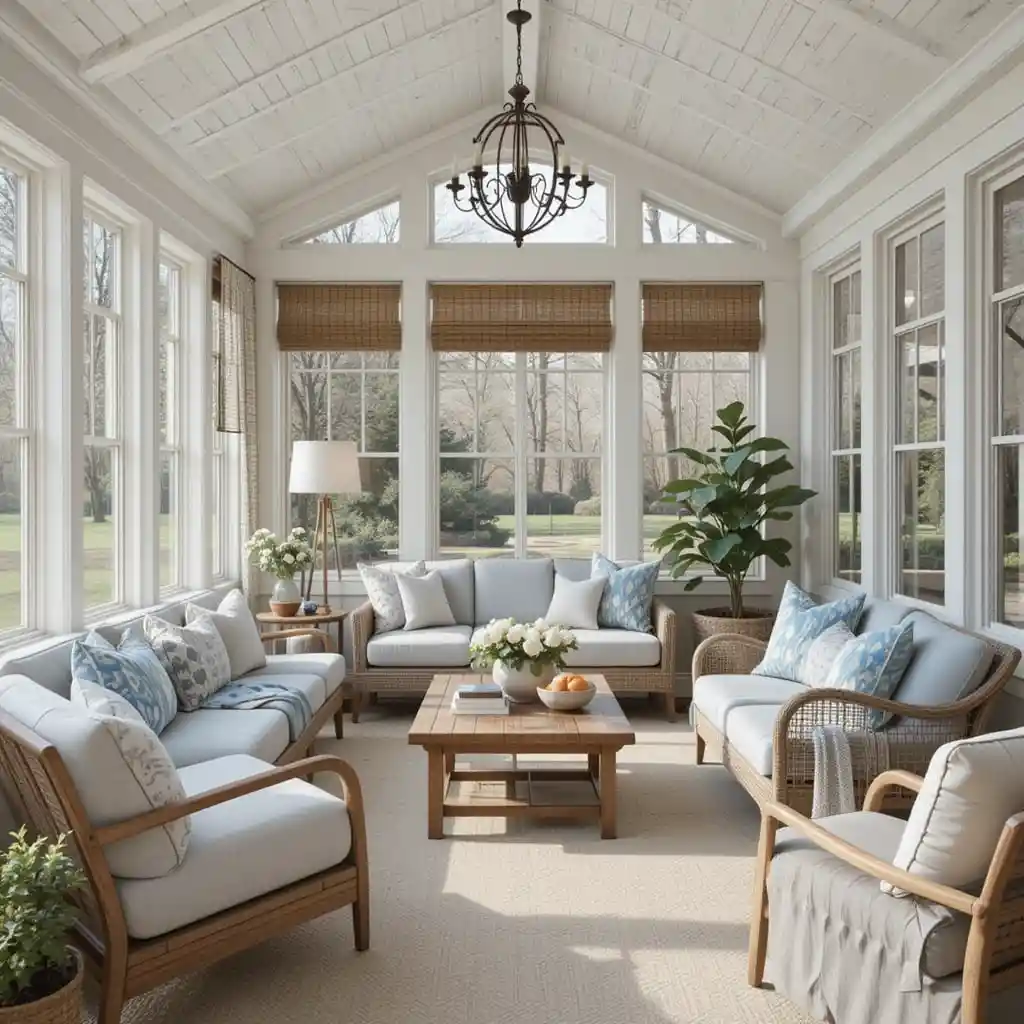
Building a relaxing, breezy color story centered on soft misty blues, sandy beiges, and crisp whitewashed woods fosters a permanent vacation feel. This lightweight palette reflects natural daylight streams, keeping the space bright and uplifting even on dark winter days. Pair these calm tones with woven jute rugs and open linen fabrics to capture an elegant, coastal-inspired look.
22. Design for Multi-Functionality
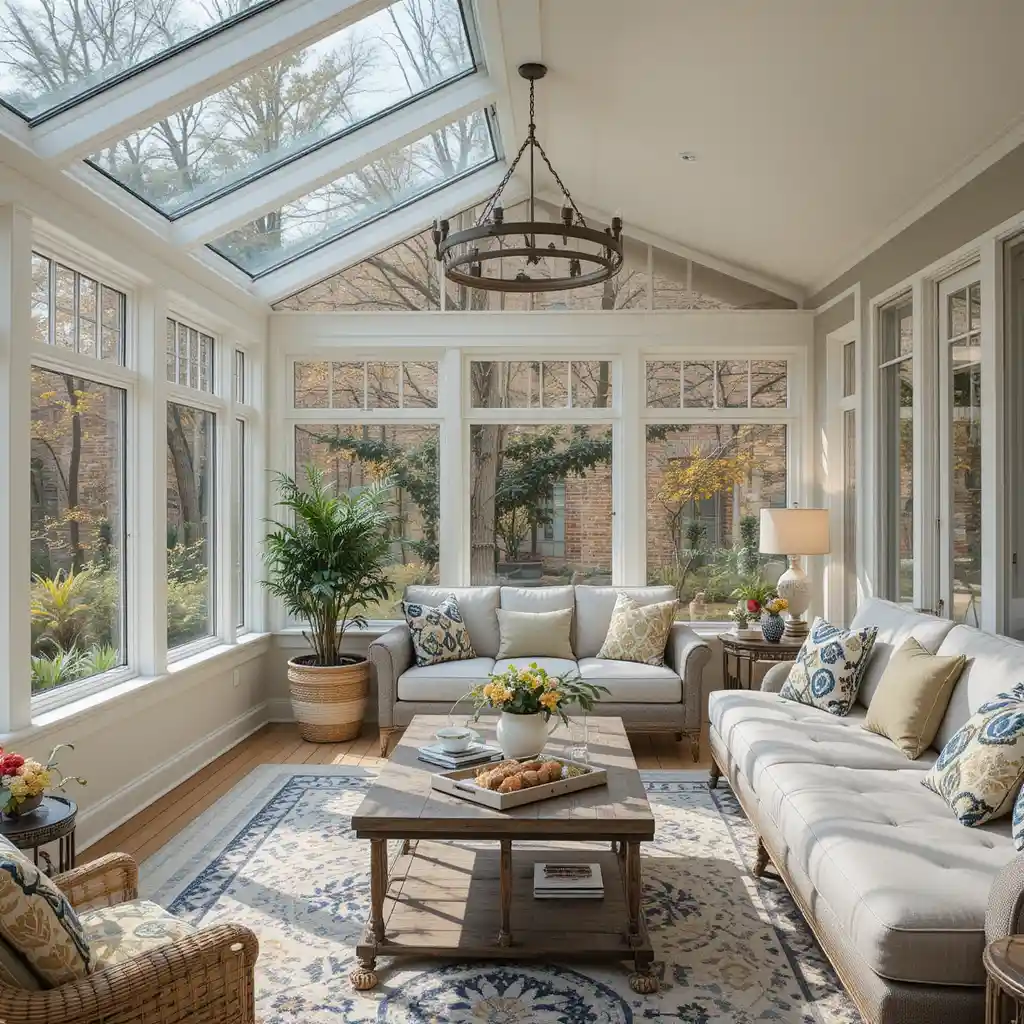
Furnishing your sunroom with flexible, adaptable furniture layouts allows the space to adapt to your changing daily lifestyle needs. A well-planned sunroom layout can easily transition from an inspiring home office during the morning hours to a peaceful yoga studio or a relaxing cocktail lounge by evening. Prioritizing rolling nesting tables and versatile sectionals ensures you maximize every square foot of your home all year long.
Optical Tricks / Pro Styling Hacks
When you are trying to maximize standard room dimensions using advanced architectural features, using these interior physics rules alters how your brain maps out the space:
The Infinite View Secret: Avoid positioning tall, solid bookshelves or bulky high-back armchairs directly against your main window glass lines. Keeping your furniture outlines lower than the outer window sills prevents visual blocks, allowing your eye to travel past the property boundaries and faking an open space.
The Dark Trim Frame: Paint your interior window sash profiles in a rich, matte black tone while keeping your primary ceiling structures a bright reflective white. The dark borders act like a crisp picture frame around your outdoor view, tricking the brain into perceiving the outdoor landscaping as a dynamic piece of art.
The Strategic Mirror Reflection: Mount a large, minimalist floor-length mirror onto the solid back wall directly opposite your main window bank. This clean placement captures incoming daylight streams and bounces them deep into your home’s interior corridors, doubling the room’s apparent size.
Scientific / Surprising Facts Section
The specific daylight levels we choose to expose our daily routines to alter our subconscious biological resting cycles far more than basic design aesthetics suggest. According to specialized data from environmental psychology and spatial lighting physics:
The Neurological Value of All-Season Sunrooms: Pure, high-contrast artificial lighting sources bounce light reflections erratically, forcing the human visual cortex into a state of continuous focus adjustment that can elevate daily eye strain. Introducing an expansive, glass-enclosed envelope featuring an unrestricted natural daylight flow stabilizes human circadian rhythm patterns, which actively coordinates healthy melatonin production. This balanced visual landscape lowers sympathetic nervous system activity, helping reduce daily cortisol markers right as you step into the room.
Furthermore, integrating natural wood structures next to these daylight paths provides a material counter-weight that stabilizes our subconscious perception of the room’s temperature and security.
Frequently Asked Questions (FAQ)
How do you heat and cool a four season sunroom efficiently?
The most efficient, reliable solution for year-round temperature control is installing an independent ductless mini-split heat pump system. This allows you to heat or cool the glass space separately from your main house HVAC grids, saving energy.
What is the primary difference between a three season and a four season sunroom?
The primary difference lies in the framing insulation and glass technology. A three season sunroom lacks thermal breaks and thick insulated glass, while a four season build utilizes heavy insulated framing, double- or triple-pane glass, and dedicated HVAC connections.
Can I use real hardwood flooring inside a four season sunroom?
Yes, but you must ensure the space is fully climate-controlled and built over a stable, moisture-sealed concrete foundation. If your room experiences extreme humidity shifts, opting for premium engineered hardwood or luxury vinyl planks provides much better stability.
Final thoughts
Refreshing your living environment with a thoughtful exterior connection is an exceptionally effective way to express your design perspective without launching a messy, expensive interior renovation project.
Whether your personal taste centers on clean modern minimalism, warm organic textures, or traditional heritage styles, smart Four Season Sunroom Ideas supply an adaptable foundation that elevates every piece of furniture you own. By supporting your walls with proper lighting paths, rich fabric textures, and smart layout scales, you can easily turn simple drywall into a custom design masterpiece.
Trust your eye for visual balance, embrace the restorative properties of soft light layers, and enjoy your beautiful, relaxing new sanctuary for many years to come.
