

Creating a peaceful, restorative bedroom requires balancing smart spatial layout, cozy layered textiles, and functional storage that keeps daily clutter completely out of sight.
To turn your room into a true sanctuary, focus on eliminating common design annoyances like improper lighting, cramped walkways, and poorly fitted bedding.
By implementing targeted design tweaks, you can instantly upgrade your sleep environment into a beautiful, stress-free oasis that supports deep rest Tips and Solutions for Bedroom.
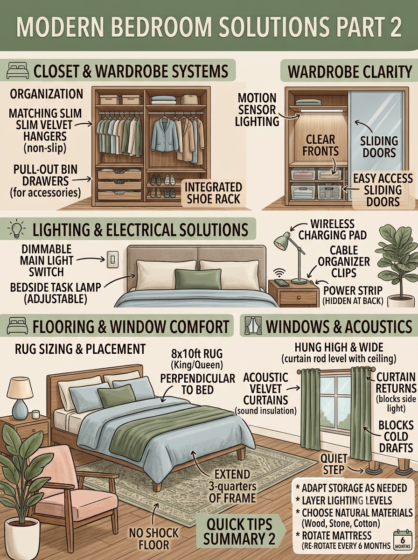
Quick Answer:
Position your bed mindfully by keeping it centered on a main wall with at least 2 feet ($60\text{ cm}$) of clearance on both sides for easy movement.
Invest in blackout window solutions to block streetlights and morning sun glares, drastically improving your overall sleep quality.
Control your lighting by introducing soft, dimmable bedside lamps or wall sconces to create a relaxing evening routine.
Maximize hidden storage zones like the space under your bed and inside your closet to keep visual surfaces tidy and dust-free.
How Can You Fix Common Bed and Mattress Frustrations?
Your bed is the absolute centerpiece of your sanctuary, meaning any discomfort here directly compromises your sleep.
Here’s the thing: we often tolerate minor bedding and frame annoyances for months when simple, affordable fixes are right at our fingertips. Let’s look at how to restore ultimate comfort to your sleep setup.
Sagging or Lumpy Mattress
If you wake up with an aching lower back, your mattress has likely lost its structural integrity over years of use. Before spending $500 / £400 on a brand-new model, try adding a thick, high-density memory foam or down-alternative mattress topper from brands like Dunelm or Target. If the mattress is simply uneven, placing a sturdy plywood bunkie board beneath it can offer immediate, firm support.
Squeaky or Creaking Bed Frame
A loud, rhythmic squeak every time you roll over at night can easily disrupt your deepest sleep cycles. Grab a wrench or screwdriver and tighten every single bolt along your bed frame’s joints, as loose hardware is usually the main culprit. For wooden frames that rub together, rubbing a bit of dry bar soap or candle wax into the touching joints lubricates the wood and silences the noise instantly.
Mattress Shifting or Sliding Off the Base
A mattress that constantly slides to one side leaves awkward gaps and makes your bed look messy. Place a cheap, rubberized non-slip rug pad between your bed base or box spring and the mattress itself. The textured rubber creates just enough friction to lock the mattress firmly in place, even if you toss and turn.
Uncomfortable Pillows Causing Neck Pain
Sleeping on a flat, worn-out pillow forces your neck into unnatural angles, leading to morning stiffness. Swap out generic fiberfill options for a contoured memory foam or adjustable shredded foam pillow from a brand like Wayfair. These conform directly to the space between your ear and shoulder, keeping your spine aligned perfectly all night long.
Too Many Decorative Pillows to Remove Every Night
Piling ten different accent cushions on your duvet looks beautiful on Instagram, but it makes bedtime feel like an exhausting chore. Limit your decorative accents to two large Euro shams and one long lumbar pillow for a clean, boutique-hotel look. Keep a stylish woven wicker basket from HomeGoods or Next Home nearby to drop them into before you climb under the covers.
Fitted Sheets Constantly Popping Off the Corners
Waking up with your fitted sheet tangled around your feet because a corner snapped loose is incredibly frustrating. Switch to sheets with extra-deep pockets, or purchase a set of adjustable elastic sheet straps that clip underneath the mattress corners. These tension straps hold the fabric taut, ensuring a smooth, crisp surface every single night.
Heavy Blankets Trapping Heat and Causing Night Sweats
Thick synthetic duvets trap heat against your body, causing you to wake up overheated and uncomfortable during humid summer months. Trade out polyester comforters for breathable, temperature-regulating natural fibers like French linen, eucalyptus, or 100% Egyptian cotton. Layering a lightweight cotton gauze blanket from H&M Home allows you to adjust your warmth easily as seasons change.
PRO TIP: When buying a mattress topper, choose one infused with cooling gel or copper micro-particles. These materials actively dissipate body heat, preventing that trapped, sweaty feeling common with traditional memory foam.
What Layout Alterations Keep Your Bedroom Flowing Beautifully?
A cramped, awkward furniture arrangement makes your entire room feel disorganized and chaotic from the moment you step inside.
Now here’s where it gets interesting: moving your bed just a few inches can completely change how spacious the room feels.
Bed Pushed Tightly Into a Corner
Shoving your bed against two walls might seem like a space-saver, but it makes changing the fitted sheets a miserable workout. Pull the bed out and center it along your main wall, leaving at least 24 inches ($60\text{ cm}$) of breathing room on both sides. This balanced setup allows both you and your partner to get in and out of bed without climbing over each other.
Wardrobe or Closet Doors Hitting the Bed Frame
If you can’t open your wardrobe doors completely because they bash into your footboard, your daily routine will feel restricted. If your floor plan is exceptionally tight, consider replacing traditional hinged wardrobe doors with sleek sliding doors. Alternatively, removing the doors entirely and hanging a beautiful, heavy linen curtain panel creates a soft, bohemian look that requires zero clearance.
No Room for Walking Around the Bed
Squeezing through a tiny 10-inch gap between your bed and the wall forces you to walk sideways just to navigate your own room. Maintain a minimum clearance of 2 feet ($60\text{ cm}$) along all main walking paths to keep the space feeling open. If needed, swap out a bulky king-size frame for a streamlined double or queen-size platform bed to reclaim precious floor space.
Bed Directly Facing the Entrance Door
In many cultures and design practices, sleeping with your feet pointing directly out the open bedroom door compromises your sense of privacy and security. If your layout allows, position your bed on the wall diagonal from the entryway. This keeps the bed out of the direct line of sight from the hallway while still allowing you to see who is entering the room.
Blocked Path to the Bathroom or Closet
Stumbling over the corner of a heavy dresser on your way to the en-suite bathroom in the dark is an accident waiting to happen. Map out a completely straight, unobstructed path of travel between your bed, the closet, and the bathroom. If a piece of furniture breaks this natural line of movement, relocate it to an underutilized wall or a different room entirely.
No Clear Walkway to the Window
Blocking your windows with heavy furniture prevents you from opening them easily for fresh air and blocks precious natural light. Avoid placing tall dressers or wardrobes directly in front of window panes. Instead, keep the area beneath your windows clear, or use low-profile pieces like a small storage bench to anchor the window zone beautifully.
How Do You Design the Perfect Lighting and Electrical Setup?
The right lighting setup transitions your brain from hectic daytime energy to a deeply relaxed state ready for sleep.And this is my favorite part: controlling your lighting directly from your mattress completely upgrades your comfort.
Blinding Overhead Ceiling Lights
Flicking on a bright, un-shielded overhead light fixture first thing in the morning shocks your eyes and mimics harsh office lighting. Swap out harsh white bulbs for warm white 2700K LED bulbs, and install a simple dimmer switch on your wall. This allows you to gradually lower the illumination levels as you wind down for bed in the evening.
Bedside Lamps That Are Too Short for Reading
If your bedside lamp is too low, the shade will cast a harsh shadow right onto your book pages, forcing you to lean uncomfortably. Look for bedside table lamps that stand tall enough so the bottom of the lampshade aligns with your chin when you’re propped up against your pillows. This ensures the light pools directly over your reading material without glaring into your eyes.
Inaccessible Light Switches From the Bed
Having to get out of a warm, cozy bed to trudge across a cold floor just to flip off the main light switch kills your sleepy vibe instantly. Screw a smart LED bulb into your existing fixtures so you can control your lights via a smartphone app or voice command. Alternatively, use plug-in remote control outlet switches to turn off lamps with a simple bedside clicker.
Phone Chargers and Extension Cords Tangled on the Floor
A chaotic nest of plastic charging wires trailing across your carpet gathers thick dust bunnies and looks messy. Thread your cords through a sleek adhesive cable organizer attached directly to the back or side of your nightstand. You can also purchase a nightstand with built-in USB ports from IKEA or John Lewis to keep wires completely hidden from view.
Bright Electronic Standby Lights Keeping You Awake
The tiny, piercing blue and red LED indicator lights on televisions, air purifiers, and humidifiers can disrupt melatonin production. Cover these bright little sleep-stealers with small pre-cut circles of black out-light blocking tape. This dimming tape blocks 100% of the light output while keeping your essential electronics fully functional.
Lack of Convenient Outlets Near the Nightstands
Older homes across the UK and Europe often feature only one or two wall outlets, usually located far away from where you actually want your bed. Fix this safely by mounting a heavy-duty, surge-protected power strip to the back of your nightstand using dual-lock Velcro strips. This brings multiple safe outlets right to your fingertips without cluttering up your floor.
What Are the Best Tips and Solutions for Bedroom Nightstands and Storage?
When your surfaces are cluttered with daily objects, your mind struggles to fully switch off and rest.Let’s look at how to optimize your storage options so your bedroom feels visually light and organized.
Tiny Nightstands Overflowing With Items
A small bedside table can quickly become a chaotic dumping ground for half-empty water glasses, phone wires, and unread books. Swap out open, leggy side tables for a nightstand that features at least two deep drawers to hide daily clutter out of sight. Keep only three intentional items on top: a lamp, a small catch-all dish for jewelry, and your current book.
Nightstand Height Mismatch With Mattress Level
If your nightstand sits significantly higher or lower than the top of your mattress, reaching for a glass of water in the dark becomes awkward. Aim for a nightstand surface height that sits level with or within 2 inches ($5\text{ cm}$) of your mattress top. This creates a clean horizontal line across your room layout while making everything incredibly easy to reach.
Cluttered Dresser Tops Gathering Dust
Leaving your entire jewelry collection, makeup bottles, and loose change spread across your dresser looks messy and makes dusting impossible. Corral loose items using a series of beautiful ceramic trays, wooden boxes, or clear acrylic organizers from HomeGoods. Grouping items together into dedicated zones instantly makes the surface look curated and intentional.
Under-Bed Storage Space Overflowing and Visible
Shoving loose plastic storage bins under your bed looks disorganized if they peek out from underneath the frame. Switch to low-profile fabric storage bags with zip tops from IKEA, which slide deep under the bed and keep dust out. Conceal the entire zone beautifully by adding a tailored, neutral-colored bed skirt that drops all the way to your floor.
Overstuffed Clothes Hampers Spilling Onto the Floor
An open plastic laundry basket overflowing with dirty clothes ruins the serene visual vibe of your bedroom space. Upgrade to a tall, double-compartment woven rattan hamper that features a solid lid and removable canvas liner bags. This keeps your laundry hidden away out of sight while making sorting lights and darks simple on washing day.
Floating Shelves Looking Unorganized and Heavy
Piling heavy stacks of books and random decor items onto a thin floating shelf can cause it to sag forward and look cluttered. Apply a light editing hand by styling your shelves with a mixture of books laid both horizontally and vertically. Leave about 30% of the shelf space completely empty to give the display a sense of balance.
How Can You Streamline Your Closets and Wardrobes?
An organized wardrobe saves you time and reduces stress every morning when you’re getting dressed.
Now here’s where it gets interesting: you don’t need a massive walk-in closet to achieve an organized, boutique look.
Mismatched, Bulky Hangers Tangling Together
A chaotic mix of free plastic, wire, and wooden hangers takes up twice as much hanging space and hooks together constantly. Toss out old mismatched hangers and replace them with a matching set of slim, non-slip velvet hangers. These ultra-thin hangers instantly reclaim up to 30% of your closet rod space while preventing silky tops from sliding off onto the floor.
Dark Closet Interiors With Zero Visibility
Trying to tell the difference between a navy blue and a black sweater in a dark, unlit closet corner is a frustrating way to start the morning. Stick a few battery-operated or rechargeable LED motion-sensor light bars onto the underside of your closet shelving. These light up automatically the moment you open the doors and turn off when you close them, illuminating your wardrobe beautifully.
Squeaking or Stuck Sliding Wardrobe Tracks
Sliding wardrobe doors that stick, jump off their tracks, or squeak loudly can be incredibly annoying during a quiet morning routine. Vacuum out the lower metal tracks thoroughly to remove trapped dust, loose carpet fibers, and hair. Spray a tiny amount of dry silicone lubricant or rub a bit of wax paper along the runner tracks to make the doors glide smoothly.
Lack of Specific Shelving for Shoes or Bags
Tossing your shoes into a messy pile on the floor of your closet ruins their shape and makes finding a matching pair difficult. Install a simple stack of expandable shoe shelves, or hang a clear over-the-door shoe organizer from a brand like Target or Dunelm. This keeps your footwear visible, organized, and off the floor.
Deep Shelves Where Clothes Get Lost in the Back
Deep wardrobe shelves often become a black hole where folded sweaters get pushed to the back and forgotten for seasons. Fix this by inserting shallow, pull-out wire baskets or clear acrylic storage drawers onto the shelves. This allows you to slide the contents forward easily, giving you full access to everything in the back without messing up your stacks.
What Are the Best Tips and Solutions for Bedroom Windows and Curtains?
Window treatments balance privacy, light control, and insulation while adding a soft texture to your walls.Let’s look at how to hang and style your window treatments to support a great night’s rest.
Streetlights Leaking Through Thin Curtains
A bedroom that remains semi-bright at night due to outdoor streetlights can interfere with deep, restorative sleep cycles. Replace sheer or thin cotton panels with heavy, lined blackout curtains from brands like Next Home or John Lewis. If you love your current decorative curtains, simply add an inexpensive clip-on blackout liner panel behind them.
Morning Sun Piercing Through Gaps Above the Window Rod
Standard curtain rods leave a prominent 2-inch gap at the top and sides where bright morning sunlight can stream in and wake you up early. Install a curved, wrap-around blackout curtain rod that returns all the way to the wall surface, sealing off the sides. This simple swap blocks peripheral light leaks completely, allowing you to sleep in comfortably on weekends.
Dust-Heavy Blinds or Heavy Drapes Blocking Fresh Air
Traditional fabric drapes can accumulate airborne dust over time, which can trigger morning allergies or stuffiness when the windows are open. Take your heavy drapery panels down once a season to run them through a gentle wash cycle or have them dry-cleaned. For everyday maintenance, use the brush attachment on your vacuum cleaner to clear dust from top to bottom.
High-Water Curtains Hanging Way Above the Floor
Curtains that stop a few inches short of the carpet look awkward and visually shorten the height of your walls. Your curtain panels should always skim the floor surface lightly or pool by a fraction of an inch for an elegant finish. When shopping online, opt for standard 96-inch or 108-inch lengths rather than short 84-inch panels, cutting and hemming them to fit perfectly if needed.
Windows Rattling Loudly During Windy Nights
An older window pane that shakes and rattles inside its track during an autumn storm can keep you awake for hours. Apply a fresh strip of self-adhesive foam weatherstripping tape along the inside of the window frame sash to cushion the glass. This eliminates the irritating rattling noise completely while adding a layer of thermal insulation to your home.
How Can You Keep Your Flooring and Rugs Feeling Luxurious?
Step-off comfort is an essential consideration for bedrooms, as nobody enjoys stepping onto an icy floor first thing in the morning.
Let’s explore some quick ways to warm up your floors, silence noisy spots, and protect your finishes beautifully.
Step-Off Shock on Cold Hardwood Floors
Stepping out from a warm, cozy duvet onto freezing hardwood or tile flooring in the winter is an unpleasant way to start the day. Place a soft, high-pile sheepskin or plush faux-fur runner rug right alongside your bedside. This ensures your feet land on a warm, cloud-like surface every single morning, regardless of the outdoor weather.
Undersized Rug Disappearing Entirely Under the Bed
Buying a small $5\times7$ foot rug and centering it directly under a king-size bed means the rug disappears completely under the mattress. For a queen or king bed, opt for an $8\times10$ foot ($2.4\times3\text{ meters}$) or a $9\times12$ foot area rug. Position the rug perpendicular to the bed, sliding it about three-quarters of the way under the frame so it extends out past the sides and footboard.
Hardwood Floor Scratches From Heavy Dressers
Sliding a heavy wardrobe or dresser during a room redesign can leave deep, permanent gouges across your hardwood or laminate. Always stick heavy-duty, self-adhesive felt furniture pads onto the bottom of every furniture leg before placing it in the room. This allows you to slide heavy items smoothly across the floor for cleaning without scratching the finish.
Squeaky Floorboards Right Next to the Bed
A loud floorboard creak right where you step out of bed makes it impossible to slip away quietly to the bathroom without waking your partner. Dust a generous amount of talcum powder or powdered graphite lubricant directly into the seams between the noisy floorboards. Step on the boards repeatedly to work the powder down into the cracks, which eliminates the friction squeak.
Rug Corners Curling and Causing Nighttime Trips
Woven area rug corners that curl upward are an annoying trip hazard, especially when navigating the room in the dark. Dampen the curled corner slightly with water, place a clean towel over it, and weigh it down with a heavy stack of design books overnight. For a permanent fix, apply a set of double-sided, washable silicone rug grippers to lock the edges flat to the floor.
What Are the Best Tips and Solutions for Bedroom Walls, Colors, and Decor?
Your bedroom walls and decor pieces dictate the overall visual energy and mood of your personal retreat.
And this is my favorite part: applying a light, intentional editing hand can make a sterile room feel incredibly cozy.
Blindingly Bright or Aggressive Wall Paint Colors
Painting your bedroom walls a vibrant, high-energy red or bright neon yellow stimulates brain activity and can make winding down difficult. Opt for calming, low-saturation hues that promote relaxation, such as soft sage greens, gentle warm taupes, or muted slate blues. Brands like Farrow & Ball and Benjamin Moore offer beautiful matte finishes that absorb light softly.
Heavy, Stressful Artwork Hanging Directly Over the Headboard
Hanging a massive, heavy glass frame directly above your head can introduce a subconscious feeling of unease or worry while you rest. Instead, opt for lightweight canvas prints, woven wall tapestries, or unframed textile art prints for this specific zone. Keep your subject matter peaceful, choosing abstract landscapes or minimal botanical prints over busy designs.
Mirrors Reflecting the Bed Directly
Placing a large floor-length mirror opposite your mattress can catch your movement in the dark, which can startle you awake or distract you. Position your mirrors so they run parallel to the bed or face your closet door instead. This allows you to check your outfit easily in the morning without seeing your sleeping reflection from the pillows.
Peeling Wallpaper or Scuffed Wall Trim
Peeling seams on wallpaper or dark scuffs along your baseboards can make an otherwise gorgeous bedroom look tired and neglected. Use a small tube of specialized wallpaper seam repair adhesive to smooth down loose edges, pressing them flat with a clean damp sponge. For scuffed baseboards, a quick wipe with a melamine foam magic eraser removes dark marks without needing a full repaint.
Blank, Sterile Walls That Echo Sound
A bedroom with completely bare drywall surfaces can feel cold and echoey, bouncing television sound and voices around uncomfortably. Soften the space visually and acoustically by hanging a gallery wall of framed family photos, or installing a beautiful woven wall hanging. Introducing these soft textures helps dampen echoing sound waves, making the room feel cozy and quiet.
How Do You Optimize Bedroom Climate and Acoustics?
True comfort extends far beyond what you can see; it also involves how your bedroom feels, sounds, and breathes.
Let’s look at how to regulate your ambient climate and block out annoying noises for a better night’s rest.
Loud, Rattling Ceiling Fans or AC Units
A constant, metallic ticking sound from a loose ceiling fan blade can easily keep a light sleeper awake all night long. Turn off the power and check the mounting screws on each individual blade, as tightening loose screws usually eliminates wobbling and noise. If the internal fan motor is clicking, a quick drop of specialized fan lubricant oil can restore quiet operation.
Drafty Windows Letting in Cold Winter Air
Breezy drafts leaking through old window casings can create uncomfortable cold spots across your bed during the winter months. Seal up loose exterior gaps by applying a fresh line of clear silicone caulk along the window perimeter seams. For an easy interior fix, place a stylish fabric draft stopper along the window sill to block cold air currents.
Stale Air and Lack of Ventilation
Sleeping with the bedroom door and windows tightly closed traps carbon dioxide and humidity, leading to a stuffy morning environment. Crack your bedroom window open by just an inch ($2.5\text{ cm}$) at night to promote consistent fresh air circulation throughout the space. Alternatively, use a compact, ultra-quiet HEPA air purifier to continuously filter out dust, pollen, and pet dander.
Echoing Footsteps and Poor Sound Insulation
If you live in a bustling urban area or a multi-story home, footsteps from upstairs or street noises can disturb your sleep. Introduce thick, plush textiles to act as a natural acoustic barrier against unwanted sound waves. Layering a heavy, high-pile wool area rug over your flooring and hanging thick velvet drapes does wonders for dampening external noise.
Radiator or Heating Vents Blocked by Furniture
Pushing a massive solid wood dresser or platform bed directly over your heating vents traps warmth, making your room chilly while wasting energy. Rearrange your furniture layout so your main heating sources have at least 12 inches ($30\text{ cm}$) of completely clear clearance around them. This simple adjustment allows warm air to circulate freely, keeping your space cozy during the winter.
Frequently Asked Questions About Tips and Solutions for Bedroom Design
Q: What is the single best paint finish to use on bedroom walls?
A: A matte, flat, or eggshell paint finish is ideal for bedroom walls because it absorbs light softly rather than reflecting it. This creates a rich, velvety texture that helps disguise minor drywall imperfections, unlike high-gloss finishes which can look clinical under overhead lighting.
Q: How can I make a small, windowless bedroom feel less claustrophobic?
A: Focus on layering multiple warm light sources, including tall lamps and warm LED strip lighting under furniture bases to mimic natural daylight. Hang a large, beautifully framed wall mirror to bounce light around the room, and keep your color palette light, using soft shades of cream, ivory, or pale sage.
Q: How often should I rotate or flip my mattress to prevent sagging?
A: It is a great practice to rotate your mattress 180 degrees every six months to ensure even wear and extend its lifespan. If you own a traditional double-sided mattress, you should also flip it over entirely once a year to keep the internal springs and foam comfort layers properly balanced.
Q: Can I use an area rug if my bedroom already has wall-to-wall carpeting?
A: Absolutely, layering an area rug directly over standard builder-grade carpeting is a wonderful way to add color, texture, and pattern to your space. Choose a rug with a distinct texture, like a flat-weave or a chunky knit wool rug, to create a beautiful contrast against the low-profile carpet beneath it.
Q: What is the ideal nightstand height relative to my bed?
A: Your nightstand surface should ideally sit level with or within 2 inches ($5\text{ cm}$) of the top of your mattress. This alignment keeps your sleeping lines clean and organized while making it comfortable to reach for your phone, water glass, or reading lamp without straining.
Wrapping It All Up
Transforming your personal retreat into a restorative oasis comes down to identifying and fixing the minor functional details that interrupt your daily routines. By applying these practical tips and solutions for bedroom styling and organization, you can easily elevate both the comfort and visual flow of your space. Take a look around your room today and choose just one small update to tackle first—whether that’s organizing a nightstand or adjusting your curtain height—to experience a cozier, more peaceful evening tonight. Explore our latest decoration guides for even more intentional design ideas to elevate your home.
