

Conquering everyday clutter comes down to strategic Storage & Organization solutions that fit your specific daily routine. By applying smart zoning, vertical dividers, and modular containers, you can transform chaotic, overcrowded cabinets into calm, highly functional spaces.
Quick Answer:
Pantry Zoning: Group items by category in clear bins on deep shelves to prevent lost, expired food.
Container Control: Nest food containers inside one another and store lids vertically in a dedicated divider.
Heavy Cookware Racks: Use pull-out or expandable racks so you never have to unstack heavy iron pots again.
Vertical Tray Storage: Install vertical tray dividers for baking sheets, cutting boards, and platter storage.
Spice Streamlining: Mount a door-tiered rack or use a shallow drawer insert to keep labels instantly visible.
Under-Sink Systems: Maximize pipe-surrounding space using two-tier sliding mesh drawers and waterproof mat liners.
Key Lighting Options for Organized Spaces
| Lighting Type | Best Application | Primary Advantage |
| Motion-Sensor LED Pucks | Dark pantries, deep cabinets | Hands-free illumination that triggers instantly upon opening |
| Water-Resistant Strip Lights | Under-cabinet wet zones | Continuous, even task lighting without exposed harsh wiring |
| Cable Management Boxes | Workstations, coffee bars | Conceals bulky power strips and tangled surplus cords |
| Surface-Mounted Raceways | Rented kitchens, finished walls | Routes surface cords cleanly without drilling or permanent installation |
How Do You Stop Food from Getting Lost on Deep Pantry Shelves?
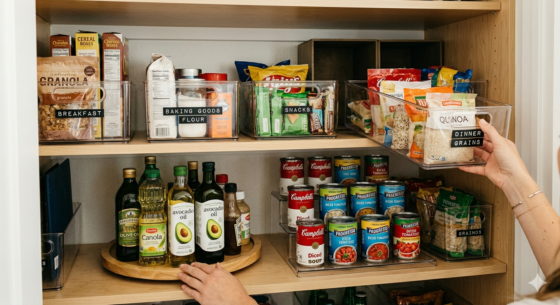
Deep pantry shelves feel like a blessing until you pull out an expired jar of pasta sauce from three years ago. The fundamental issue with deep shelving is depth without visibility, which turns the back of your cabinet into a visual black hole.
Here is the thing: if you cannot see an item in three seconds, you will inevitably end up buying a duplicate. To fix this, start by completely emptying the pantry and grouping items into clear categories like baking essentials, dinner grains, and breakfast snacks. Instead of pushing loose items onto the bare shelf, invest in deep, clear acrylic bins or woven storage baskets from stores like Target, HomeGoods, or IKEA.
Treat these bins like pull-out drawers; you simply slide the whole container out to reach what is stored at the back. For canned goods, tier them on a three-step riser so every label remains fully visible at a single glance. If your budget allows ($30–$60 / £25–£50), install wooden Lazy Susans in the corners to keep oils, vinegars, and condiments spinning smoothly into reach.
PRO TIP: Label the front of each clear bin with its specific category using a chalk marker or label maker so family members actually put things back where they belong.
What Is the Best Way to Tame a “Tupperware Avalanche”?
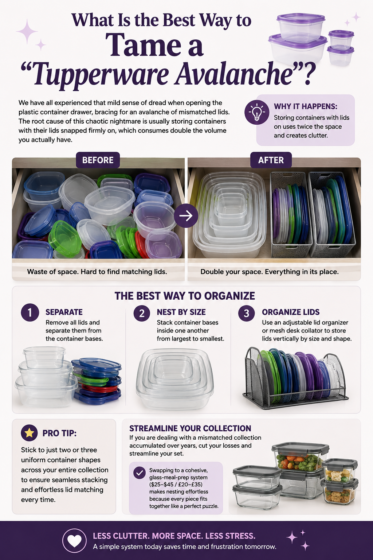
We have all experienced that mild sense of dread when opening the plastic container drawer, bracing for an avalanche of mismatched lids. The root cause of this chaotic nightmare is usually storing containers with their lids snapped firmly on, which consumes double the volume you actually have.
Now here is where it gets interesting: you can instantly double your cabinet real estate simply by separating the tops from the bottoms. Nest identical container bases inside one another by size, stacking them vertically from largest to smallest. For the lids, purchase an adjustable lid organizer or a simple mesh desk collator from Next Home or Wayfair.
Position this organizer right alongside your nested stacks so you can slot lids in vertically, arranged by shape and size. If you are dealing with a mismatched collection accumulated over years, cut your losses and streamline your set. Swapping to a cohesive, glass-meal-prep system ($25–$45 / £20–£35) makes nesting effortless because every piece fits together like a perfect puzzle.
PRO TIP: Stick to just two or three uniform container shapes across your entire collection to ensure seamless stacking and effortless lid matching every time.
How Can You Organize Heavy Pots and Pans Without Stacking Them?
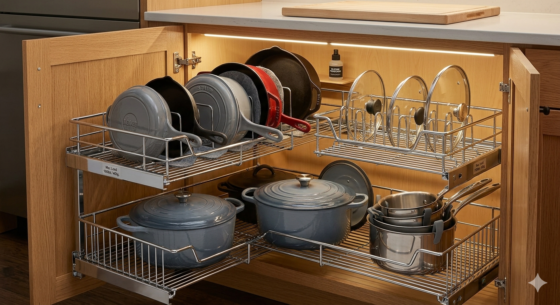
Lifting a ten-pound cast-iron skillet out from underneath a stack of three heavy saucepans is a recipe for wrist strain and chipped cabinet doors. Stacking cookware creates friction, scratches non-stick surfaces, and makes prepping a simple dinner feel like an exhausting workout.
The secret to effortless pan access lies in converting horizontal cabinet space into functional vertical slots or smooth slide-out systems. Heavy-duty pan organizers allow you to store skillets, sauté pans, and lids sideways on their edges rather than flat on top of one another. You can buy expandable wire rack inserts from John Lewis or Dunelm that adjust to match the exact thickness of your pans.
For deeper lower cabinets, consider retrofitting a heavy-duty metal pull-out drawer ($40–$80 / £35–£70). These wire baskets glide forward smoothly on ball-bearing tracks, bringing heavy Dutch ovens straight out to you without any awkward reaching or heavy lifting. If you are renting and cannot screw tracks into cabinets, tension rods placed vertically inside a deep drawer offer a damage-free, budget friendly way to keep frying pans standing upright and separated.
PRO TIP: Place soft felt or silicone pan protectors between your cookware items to prevent scratches and reduce noisy clattering when sliding them out.
Why Should You Store Baking Sheets and Cutting Boards Vertically?
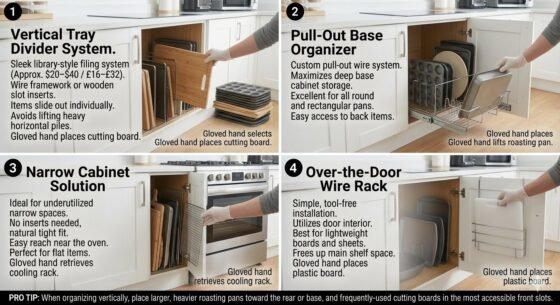
Storing baking sheets, muffin tins, and large wooden cutting boards flat in a horizontal stack is one of the most common layout mistakes home cooks make. Every time you need the one tray lying right at the bottom, you have to lift the entire heavy pile above it.
And this is the part most people overlook: vertical space is almost always underutilized in standard base cabinets. By adding vertical tray dividers, you transform a chaotic flat pile into a sleek, library-style filing system where every single board slides out individually. You can purchase wire framework dividers or wooden slot inserts from H&M Home or Wayfair that screw directly into the base of your cabinet.
If you have a narrow, awkward cabinet right next to your oven, this is the absolute best home for it. Slide your tall cutting boards, roasting pans, cooling racks, and pizza stones upright into individual slots. This simple tweak saves precious preparation time during busy weeknight meals and prevents your metal sheets from scraping against one another.
PRO TIP: Mount an over-the-cabinet-door wire rack on the inside of a lower door to hold lightweight cutting boards completely off the main shelves.
What Is the Most Efficient Way to Organize Spice Jars?
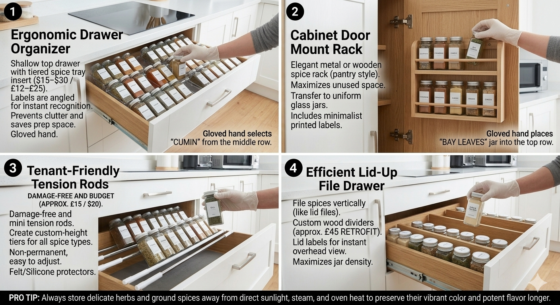
A crowded cluster of mismatched spice bottles scattered across the countertop near your stove creates instant visual noise and takes up valuable food prep space. Worse yet, heat and steam from cooking directly over the stove cause delicate herbs and spices to degrade and lose flavor rapidly.
To streamline your seasoning collection, transition your spices into a designated drawer or dedicated wall-mounted rack. A shallow top drawer fitted with a tiered spice tray insert ($15–$30 / £12–£25) is by far the most ergonomic option available. When you open the drawer, every jar lies at a slight angle, exposing every single label instantly so you can grab what you need while cooking.
If drawer space is limited, mount an elegant metal or wooden spice rack onto an empty pantry wall or the inside of a cabinet door. Transferring your bulk spices into uniform glass jars with minimalist printed labels instantly elevates the aesthetic from cluttered to custom-designed.
PRO TIP: Always store delicate herbs and ground spices away from direct sunlight, steam, and oven heat to preserve their vibrant color and potent flavor longer.
How Do You Fix an Under-Sink Cabinet Mess with Leaking Bottles?
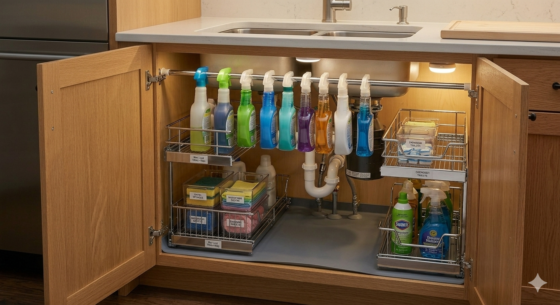
The cabinet underneath the kitchen sink is notoriously difficult to organize due to plumbing pipes, garbage disposals, and constant moisture risks. Unchecked cleaning bottles, spare sponges, and dish soaps quickly pile up in the dark corners, creating a soggy mess that is painful to navigate.
Start your under-sink restoration by laying down a flexible, waterproof silicone tray mat along the cabinet floor. This affordable barrier protects your expensive cabinetry from unexpected plumbing leaks, chemical drips, and water rings. Next, tackle the irregular space around your plumbing pipes by using two-tiered sliding metal drawers from stores like Dunelm, HomeGoods, or Target.
These sliding units utilize vertical height without hitting low-hanging drain pipes, allowing you to slide lower baskets out effortlessly. Use clear, stackable totes on one side to hold extra sponges, microfiber cloths, and dishwasher tablets. Hang everyday spray cleaner bottles by their triggers from a sturdy tension rod mounted across the top interior of the cabinet frame to keep the base completely clear.
PRO TIP: Stick a small battery-powered LED puck light to the top inside of your under-sink cabinet so you can actually see into the deep, dark back corners.
Lighting Solutions for Storage & Organization FAQs
Effective lighting plays a massive role in functional space planning, directly bridging the gap between visible organization and electrical setup.
Illuminating Dark Cabinets: Motion-sensor LED puck lights or stick-on strip lights eliminate deep cabinet shadows, ensuring every item is instantly visible to prevent duplicate purchases.
Safety Near Water Sources: Damp-rated, water-resistant LED strip lights are safe near kitchen taps when installed at a secure distance and paired with adhesive wire clips to keep power cords clear of wet zones.
Hiding Workstation Cords: Mounted cable management boxes, under-desk wire trays, and adhesive cord wrappers attached directly to appliance backs keep loose power cords safely out of sight.
Mitigating Visual Clutter: Harsh shadows and dim lighting create visual dark spots that make even neat shelving look chaotic; layering ambient task lighting brightens surfaces evenly for a cleaner, more expansive feel.
In-Cabinet Electrical Upgrades: Certified electricians are recommended for custom built-in charging stations, while surface-mounted, stick-on cable raceways provide a safe, damage-free alternative for renters.
Wrapping It All Up
Transforming your home through practical Storage & Organization does not require a complete renovation or a massive budget. By taking on one zone at a time—whether it is tameing the spice drawer or adding vertical dividers to your bakeware—you create a seamless, stress-free space that works effortlessly for your daily routine. Take a quick look around your kitchen today, pick the single spot that frustrates you most, and start enjoying a beautifully organized home!
