

Is your favorite spot on the couch starting to feel more like a crater than a cozy retreat? Addressing common sofas & seating issues and their solution is the secret to transforming a tired living room back into a comfortable, beautiful sanctuary without spending fortune.
By diagnosing structural sag, fabric wear, and layout mistakes early, you can easily rescue your beloved furniture and elevate your entire home.
Quick Answer:
Fix Sagging Cushions: Insert high-density foam cores or add affordable polyester fiberfill layers to restore original plumpness.
Repair Sinking Springs: Use heavy-duty sag-correction supports or replace broken zig-zag springs underneath the frame.
Eliminate Fabric Pilling: Safely remove unsightly fuzz balls using a electric fabric shaver or a specialized pumice stone.
Optimize Layouts: Pull seating away from walls to create cozy, conversational zones that improve room flow.
Stop Sliding Chairs: Apply heavy-duty rubber caster cups or non-slip silicone pads beneath furniture legs.
Why Are Your Sofa Cushions Sagging and How Do You Fix Them?
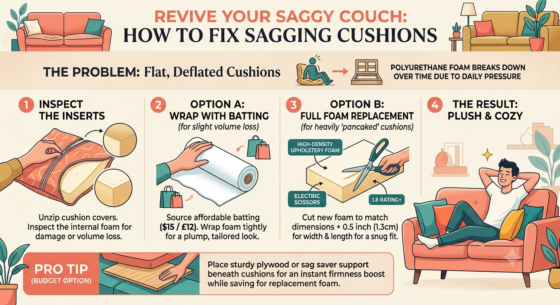
Imagine sinking down for a relaxing movie night, only to feel the hard wooden frame instead of plush support. Flat, deflated cushions are among the most frequent sofas & seating issues and their solution is surprisingly simple for any homeowner. Over time, the polyurethane foam inside your cushions breaks down due to daily pressure, leaving your sofa looking sad and feeling worse.
Here is the thing: you do not need to buy a completely new couch just because the seats have lost their bounce. Start by unzipping the cushion covers to inspect the internal inserts. If the foam is still intact but lacks volume, wrapping it in a layer of inexpensive dacron or polyester batting can work wonders. You can source affordable batting from stores like Dunelm or Hobby Lobby for around $15 / £12, wrapping it tightly to create a plump, tailored look.
For cushions that are completely pancaked, a full foam replacement is your best path forward. Look for high-density upholstery foam with a rating of 1.8 or higher to ensure long-lasting resilience. Cut the new foam to match your cushion dimensions, adding an extra half-inch to the width and length for a snug, professional fit.
PRO TIP: If you are on a tight budget, place a pre-cut piece of sturdy plywood or a commercial couch-sag saver cushion support directly beneath the cushions. This provides an instant, temporary firmness boost while you save up for high-grade replacement foam.
What Should You Do When Your Couch Springs Start Sinking?
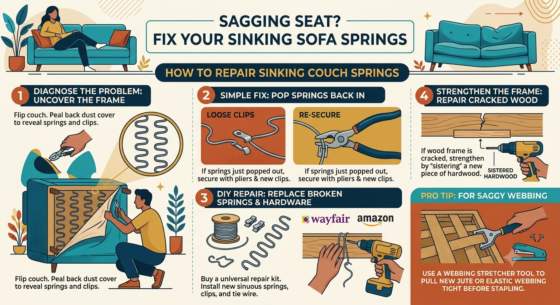
Now here is where it gets interesting because a sinking seat isn’t always caused by weak cushion foam. If your cushions look perfectly fine but you still feel like you are falling into a black hole, the true culprit lies deeper within the frame. The suspension system, usually consisting of metal sinuous springs or thick woven webbing, can stretch out, detach, or break entirely after years of heavy use.
Flip your sofa completely over and carefully pull back the dust cover fabric on the bottom to inspect the underpinnings. You will likely see zig-zagging metal wires running across the seating area. If these springs have simply popped out of their plastic or metal clips, you can easily pop them back in using a pair of heavy-duty pliers. However, if the springs have snapped or the wooden frame where they attach has cracked, you will need a more robust fix.
For broken components, purchasing a universal couch spring repair kit from Wayfair or Amazon is an affordable DIY weekend project. These kits typically include replacement sinuous springs, heavy-duty clips, and tie wire to keep everything aligned. If the wood itself is damaged, sistering a new piece of hardwood alongside the cracked section will restore the structural integrity beautifully.
PRO TIP: When dealing with saggy webbing instead of metal springs, use a specialized webbing stretcher tool to pull new jute or elastic webbing tight before stapling it securely to the frame. This ensures a taut, supportive base that rivals brand-new showroom models.
How Can You Easily Remove Pilling From Upholstery Fabric?
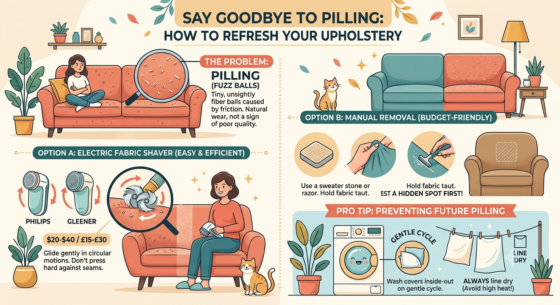
And this is the part most people overlook when assessing their living room furniture: aesthetic wear can make a perfectly comfortable sofa look completely worn out. Fabric pilling occurs when loose fibers break, twist together, and form tiny, unsightly fuzz balls on the surface of your seating. It is a natural result of friction from clothing, pets, and regular movement, especially on synthetic blends or loosely woven textiles.
Thankfully, pilling is not a sign that your fabric is ruined or cheap. To fix this, invest in a dedicated electric fabric shaver from trusted brands like Philips or Gleener, which typically cost between $20 and $40 (£15 to £30). Gently glide the device over the affected areas in circular motions, taking care not to press too hard against the seams or tufts. The rotating blades will safely shear off the pills, leaving the fabric feeling smooth and looking fresh.
If you prefer a manual approach, a sweater stone or a standard disposable razor can work in a pinch. Hold the fabric taut with one hand and scrape the razor lightly across the surface at a shallow angle. Be sure to test this method on a hidden spot first, like the back of the sofa, to ensure you do not accidentally snag the weave.
PRO TIP: To minimize future pilling, wash your throw pillow covers and removable cushion casings inside out on a gentle cycle. Always line dry them instead of using a tumble dryer, as high heat breaks down fibers and accelerates fuzzy surface wear.
Why Is Pushing Your Sofas Stiffly Against the Wall a Design Mistake?
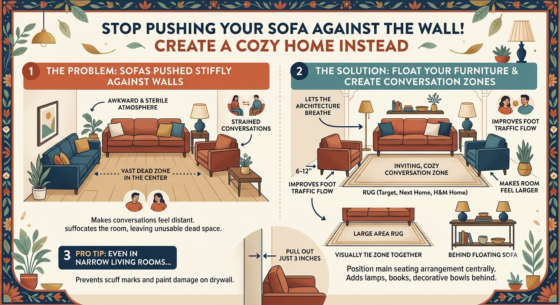
Many renters and homeowners automatically push their seating tightly against the living room walls to maximize floor space. While this seems logical, it often creates an awkward, sterile atmosphere that makes conversations feel strained and distant. Shoving furniture against boundaries suffocates the room, leaving a vast, unusable dead zone right in the center of your living space.
Instead, try floating your furniture by pulling your sofa and armchairs at least six to twelve inches away from the walls. If you have a larger room, positioning your main seating arrangement completely in the center can create an inviting, cozy conversation zone. This layout encourages better foot traffic flow and allows the architecture of your home to breathe, making the room feel larger rather than smaller.
Consider anchoring this new floating arrangement with a large area rug from Target, Next Home, or H&M Home. Ideally, all the front legs of your sofa and chairs should sit comfortably on top of the rug to visually tie the zone together. If space allows, place a slim console table directly behind the floating sofa to hold table lamps, books, and decorative bowls.
PRO TIP: In narrow living rooms where you must place the sofa near a wall, pull it out just three inches. This small gap prevents the furniture from rubbing against the drywall, stopping ugly scuff marks and paint damage before they start.
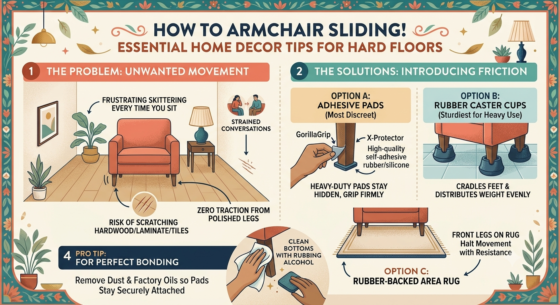
How Do You Stop a Constant Armchair From Sliding on Hard Floors?
There is nothing more frustrating than an armchair or loveseat that skitters backward every single time you sit down. This constant sliding is highly annoying, but it also poses a serious risk of scratching your beautiful hardwood, laminate, or tiled floors. Smooth furniture legs combined with polished flooring offer zero traction, turning your heavy seating into a moving hazard.
To solve this permanently, you need to introduce friction between the furniture legs and the floor surface. The easiest and most discreet remedy is applying heavy-duty, self-adhesive rubber or silicone furniture pads to the bottom of each foot. High-quality non-slip pads from brands like GorillaGrip or X-Protector grip the floor firmly, staying completely hidden from view while keeping your seating locked in place.
For heavy armchairs that experience a lot of forceful movement, rubber caster cups are an even sturdier alternative. These small cups sit directly under the legs, cradling the furniture feet and distributing the weight evenly across a non-slip rubber base. Alternatively, positioning the front legs of the sliding chairs onto a heavy, rubber-backed area rug will provide enough resistance to halt any unwanted movement.
PRO TIP: Before applying adhesive rubber pads, clean the bottom of the furniture feet thoroughly with rubbing alcohol. Removing built-up dust and factory oils ensures the adhesive bonds perfectly, preventing the pads from peeling off when the chair is moved.
Frequently Asked Questions About Sofas & Seating Issues and their Solution
Q: How often should I rotate and flip my sofa cushions to prevent uneven wear? A: You should flip and rotate your loose seat and back cushions every two to three weeks. This simple routine distributes everyday friction and body weight evenly across the foam cores, dramatically extending the life of your furniture.
Q: Can I use a regular clothing iron to smooth out wrinkled couch fabric? A: Yes, but you must use extreme caution and check the manufacturer’s care tag first. Use a low heat setting with plenty of steam, and always place a clean cotton towel between the iron and your upholstery to avoid melting synthetic fibers.
Q: What is the best way to clean a velvet sofa without ruining the pile? A: Regularly vacuum your velvet sofa using a soft brush attachment to remove loose dust and debris. If the fabric gets matted, gently brush the velvet using a soft-bristled clothes brush in the direction of the nap to restore its luxurious texture.
Q: Is it worth reupholstering an old sofa, or should I just buy a new one? A: Reupholstering is highly worth it if your sofa has a solid, heavy hardwood frame and sentimental value. However, if the frame is made of cheap particleboard, buying a new piece from a retailer like IKEA or John Lewis is usually more cost-effective.
Q: How do I know if my couch sag is caused by the cushions or the frame? A: Take your cushions completely off the sofa and place them directly on the floor. Sit on them; if they feel firm and supportive on the floor, your sagging issue is rooted in a weak or broken frame suspension underneath.
Mastering common sofas & seating issues and their solution is the ultimate way to maintain a comfortable, welcoming, and stylish living space. By tackling these quick fixes, you protect your wallet while ensuring your favorite furniture looks beautiful for years to come. Ready to dive deeper into home improvement? Check out our step-by-step guides to mastering living room layouts and choosing textiles that stand the test of time!
