

Fixing everyday electrical setups and handling your home’s unique Lighting & Electrical Issues and their Solution requires an intentional mix of layered secondary fixtures, correct bulb warmths, and smart cable management
. By moving away from singular, intense central overhead light fittings and choosing warm color temperatures, you can instantly redefine your home’s atmosphere. Strategically placing your task lamps and concealing your trailing extension leads ensures a safe, beautifully balanced environment throughout every single season Lighting & Electrical Issues.
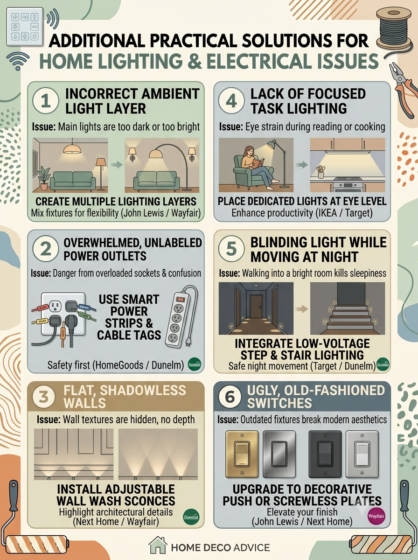
Quick Answer:
Resolve cold, clinical spaces by scattering multiple accent lamps at various eye-level heights around your room.
Swap out blue-white daylight bulbs for cozy warm white LEDs rated between 2700K and 3000K.
Clean up dangerous cord clutter along your main walkways by using paintable baseboard raceways.
Stop blinding television screen reflections by switching to opaque fabric shades and installing rear bias lighting.
Why Does Your Main Overhead Ceiling Light Feel Like an Interrogation Room?
Walking into your main living area after a long day should feel like an immediate relief, but flicking on a harsh central ceiling fixture can instantly break that cozy dream. A significant percentage of properties across the US, UK, and Europe suffer from this sterile setup because builders usually place one single electrical outlet right in the geometric center of a room. This basic building decision creates a severe downlight effect that casts deep shadows under your eyes, emphasizes plaster imperfections, and flattens your beautiful furniture arrangements.
Here is the thing: relying on one central source makes it completely impossible to sort out your primary Lighting & Electrical Issues and their Solution because the vertical angle strips away any natural architectural depth. Instead of a relaxing sanctuary to enjoy winter evenings, your lounge ends up looking like a cold medical clinic. To fix this design mistake immediately, you need to turn off that main ceiling switch and focus on building a rich, layered scheme using portable secondary fixtures. You can easily introduce a mixture of floor lamps and decorative table models from accessible stores like Target, John Lewis, or Next Home.
Now here is where it gets interesting: by bouncing soft illumination horizontally off your walls rather than blasting it straight down from the ceiling, you create an inviting atmosphere. Try setting up an adjustable metal arc lamp in an empty corner and placing two matching ceramic table lamps on your sideboards. This layout spreads the visual interest across the space and highlights the genuine undertones of your wall colors. If you still want to use your main center fixture occasionally, consider replacing the standard toggle switch with a high-quality trailing-edge dimmer unit. This simple hardware upgrade costs roughly $20 / £15 at local shops and lets you instantly dial down the brightness to fit quiet family movie nights.
PRO TIP: When shopping for new lampshades to fix these ambient issues, look for options with a gold, copper, or warm cream interior lining to bounce an incredibly rich glow back into your room.
How Can You Fix Blinding Blue-White Daylight Bulbs inside Cozy Living Spaces?
Picking out the incorrect replacement bulb can instantly sabotage a beautiful room layout and worsen any existing Lighting & Electrical Issues and their Solution. Many well-meaning homeowners head down to Dunelm, HomeGoods, or Wayfair and buy high-kelvin bulbs labeled as “daylight” because they mistakenly assume these will bring a natural sunshine feel indoors.
And this is the part most people overlook: these cool, high-kelvin options emit a powerful blue-spectrum glow that registers at 5000K to 6500K. When this intense illumination fills your room, it actively fights against your cozy decor, turning rich warm wood tones grey and making clean neutrals look completely clinical. To fix this look, you must check the technical specifications printed on the packaging and move to bulbs labeled “Warm White.” This means selecting energy-saving LED bulbs that sit strictly within the 2700K to 3000K range, which perfectly mimics the soft radiance of classic incandescent filaments.
Imagine relaxing during a cold winter evening with a soothing, golden ambiance that makes your velvet sofas and textured throws look wonderfully rich. If you want total control over how your home lighting changes from dawn to dusk, consider investing in smart LED bulbs from IKEA or Philips Hue. These smart devices allow you to adjust the warmth level through a simple mobile app or voice command. By matching your artificial indoor temperatures to the natural lighting shifts outside, your interior environment will always feel cozy and intentional.
PRO TIP: Keep your workspace bulbs crisp at 4000K for focus, but keep your main relaxation zones at a strict 2700K maximum to protect your natural sleep cycles.
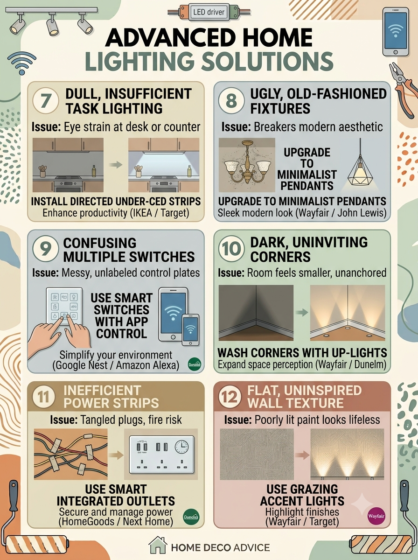
What Is the Most Effective Way to Conceal Hazardous Extension Cord Trails?
A stunning interior design scheme can be totally undermined if your baseboards are covered by a tangled mess of black and white electrical leads. As we add modern tech like media consoles, gaming setups, smart displays, and multiple accent lamps, we quickly overwhelm the few outlets found in traditional properties.
Here is the thing: running basic plastic extension blocks across your main walkways is an eyesore that breaks the room’s design and acts as a dangerous tripping hazard. To solve these specific Lighting & Electrical Issues and their Solution cleanly without paying a professional electrician to open your drywall, utilize paintable D-line cable raceways. These slim, self-adhesive tracks can be bought at HomeGoods or B&Q for around $15 / £12 per pack and stick directly along the top of your existing baseboards. You can paint the exterior surfaces using the exact same shade as your walls, causing the tracks to blend into the background invisibly.
For rented properties where using strong wall adhesives might threaten your security deposit, you can use clever furniture layouts to hide the wire clutter. Place large decorative elements like a low bookcase from IKEA or an armchair from Next Home directly in front of your main outlets. Use simple hook-and-loop fabric ties to bundle loose wires tightly against the back legs of your furniture pieces so they stay off the floor. Clearing your main floors of chaotic cords restores the clean lines of your room and lets guests focus on your beautiful decor.
PRO TIP: If an electrical cord has to stay partially visible near a reading chair, pick a premium woven fabric extension cable that complements your rug color rather than an ugly white plastic wire.
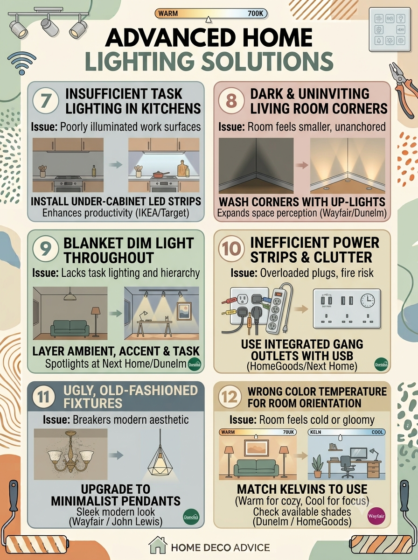
How Can You Eliminate Annoying Reflective Screen Glare on the Television?
Settling down for a weekend movie night only to find a huge, blinding bulb reflection across your television screen is incredibly annoying. This common issue happens when your table lamps or large windows sit directly opposite the main viewing display, turning the television glass into a dark mirror.
Now here is where it gets interesting: simply turning off every single light fixture in the room is not a healthy choice because watching a bright screen in absolute darkness causes major eye strain. To fix these frustrating Lighting & Electrical Issues and their Solution, you need to adjust the position and style of your secondary fixtures. Avoid using wide, open-topped lampshades that allow light to spill directly forward onto the face of your television monitor. Instead, look for dense fabric or structured drum shades from Wayfair or Dunelm that focus the illumination upward and downward, away from your screen’s direct sightline.
Another brilliant modern design fix is to install a dedicated bias lighting strip directly onto the back of your television panel. These low-voltage LED strips attach straight into the USB port of your TV and cast a soft, even glow onto the wall surface behind the device. This technique balances the light levels in the room, lowering eye fatigue while ensuring zero reflections bounce off the front screen glass. Additionally, if your display is mounted, consider upgrading to a tiltable wall bracket from John Lewis or Target, which lets you angle the screen downward by a few degrees to bounce glare away from your eyes.
PRO TIP: Choose flat or matte paint finishes for the wall surfaces directly opposite your media center to stop shiny paint from reflecting your light bulbs.
Frequently Asked Questions About Lighting & Electrical Issues and their Solution
Q: How do poor bulbs affect my overall interior design look? A: Cold daylight bulbs can alter your interior paint tones, making warm neutrals look pale or green. Switching to warm 2700K options ensures your room feels welcoming and your finishes match your design choices.
Q: Can I use smart lighting to fix an overly bright room layout? A: Yes, dimmable smart bulbs let you lower your light intensity and shift the color warmth on your smartphone. This modification lets you change a room’s atmosphere without needing to install new light fixtures.
Q: What is the safest non-permanent way to hide extension cords in a rental apartment? A: The cleanest non-destructive method is running paintable cable tracks along your skirting boards or bundling lines behind large furniture. This strategy keeps your floors clear of clutter without risking your deposit.
Q: Why does my living space look perfect at midday but clinical during the evening? A: Natural sunlight features a broad spectrum that makes interior colors look rich, whereas basic evening lighting can throw harsh downlights. Layering your floor and table lamps creates a soft glow that replaces lost daylight beautifully.
Q: How can I stop light fixtures from bouncing reflections off my TV screen? A: Use opaque fabric drum shades that contain the bulb’s horizontal light spill within the fixture. Placing low-voltage bias lights behind your television frame also helps balance contrast without creating glare.
Fixing common home setup design flaws and mastering your Lighting & Electrical Issues and their Solution comes down to choosing the right bulb warmth, layering fixtures, and concealing wires. When you step away from bright central ceiling lights and protect your entertainment zones from glare, your home becomes a true sanctuary. Take a look around your living room tonight, adjust your lamps, and create the comfortable home environment you deserve!
Solutions for Common Home Lighting & Electrical Issues
1. HARSH OVERHEAD LIGHT FIXTURES | 2. CLINICAL DAYLIGHT BULBS |
Issue: Severe shadows, cold feel | Issue: Blinding blue-white glare |
Solution: Turn off central lights | Solution: Use warm white LEDs |
Fix: Add table lamps & dimmers | Fix: Choose 2700K-3000K models |
Brand: Next Home / Target | Brand: Target / HomeGoods |
3. HAZARDOUS EXTENSION CORDS | 4. REFLECTIVE TV SCREEN GLARE |
Issue: Untamed wires on walkways | Issue: Mirror effect, eye strain |
Solution: Baseboard cable tracks | Solution: Change lamp placements |
Fix: Paintable D-line channels | Fix: Install rear bias lighting |
Brand: HomeGoods / IKEA | Brand: Wayfair / Dunelm |
+————————————+————————————+
Essential Guide to Light Bulb Color Temperatures
[ 2200K – 2500K ] –> Candlelight Glow –> Best for Accent Accent Lamps
[ 2700K – 3000K ] –> Warm White Light –> PERFECT FOR LIVING ROOMS & BEDROOMS
[ 3500K – 4000K ] –> Cool White Light –> Best for Workspaces & Kitchens
[ 5000K – 6500K ] –> Daylight Glare –> Avoid for Relaxation Areas
Smart Wire Management & Component Placement Layout
[ Wall Outlet ]
│
▼ (Keep wires behind furniture)
[ Back of Bookcase / Console Table ]
│
▼ (Run horizontally along floor)
[ Paintable D-Line Baseboard Raceway ] ──> (Matches Wall Paint Color Perfectly)
│
▼ (Power distribution)
[ Back of TV Display ] ──> [ Low-Voltage LED Bias Light Strip Attached ]
