

Is your living space feeling a bit cold, outdated, or lacking that warm seasonal charm as autumn approaches? Addressing common Fall decorate issues and their solution is the secret to transforming a tired, bland home into a cozy, beautiful sanctuary without spending a fortune.
By diagnosing poor color palettes, flat textures, lighting mistakes, and clutter early, you can easily elevate your interior styling and embrace the autumn season with professional flair.
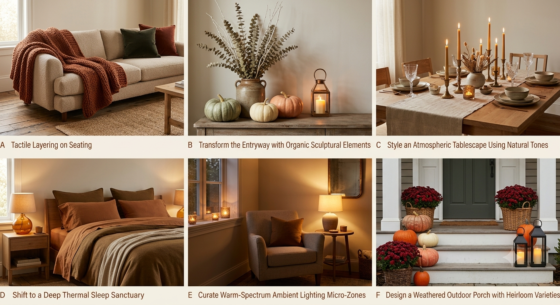
Table of Contents
Quick Answer:
Fix Dull Color Schemes: Transition from stark summer neutrals to rich, earthy tones like terracotta, warm amber, and deep rust.
Resolve Flat & Cold Textures: Layer chunky knit throws, washed velvet pillows, and plush wool rugs to add instant physical warmth.
Correct Overcrowded Decor: Avoid tiny plastic clutter by focusing on large, high-impact natural elements like heirloom pumpkins and tall dried branches.
Warm Up Harsh Lighting: Swap cool daylight bulbs for low-Kelvin amber lighting (2200K–2700K) and ambient beeswax candles.
Elevate Plain Entryways: Style your foyer with seasonal wreaths, woven baskets, and lanterns to create a welcoming first impression.
Why Does Your Fall Decor Feel Cold and How Do You Fix It?
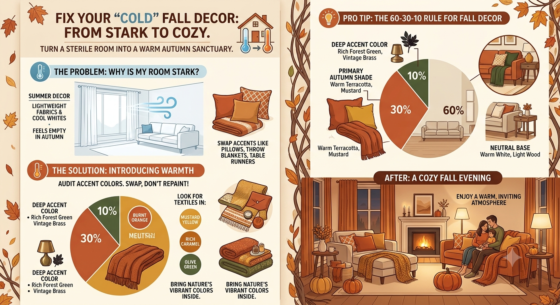
Imagine sitting down for a cozy evening, only to feel like your room still looks stark, sterile, and uninviting despite adding seasonal accents. Cold or unwelcoming rooms are among the most frequent fall decorate issues and their solution lies in mastering rich, natural color palettes. During summer, lightweight fabrics and cool white tones work beautifully, but when autumn arrives, those same elements can leave your home feeling empty.
Start by auditing the accent colors in your room. If your space relies heavily on bright whites, light blues, or cool grays, introducing warm earth tones will instantly shift the mood. You do not need to repaint your walls to achieve a cozy look; swapping out minor accessories like pillow covers, table runners, and throw blankets can completely alter the room’s atmosphere.
Look for textiles in shades of burnt orange, mustard yellow, rich caramel, and olive green. Combining these warm hues brings the vibrant changing colors of nature right inside your home.
PRO TIP: Stick to the 60-30-10 color rule when you fall decorate. Keep 60% of your room as a neutral base, apply 30% in a primary autumn shade (like warm terracotta), and use 10% for a deep accent color (like rich forest green or vintage brass).
What Should You Do When Your Autumn Layering Looks Flat?
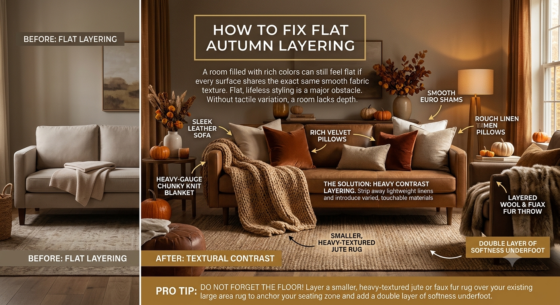
A room filled with rich colors can still feel flat if every surface shares the exact same smooth fabric texture. Flat, lifeless styling is a major obstacle when homeowners attempt to fall decorate their seating areas and bedrooms. Without tactile variation, a room lacks depth, making even the most expensive furniture appear generic and uninspired.
To solve this, focus on heavy contrast layering. Strip away lightweight summer linens and introduce varied, touchable materials across your sofas, chairs, and bedding. Pair a sleek leather sofa with a heavy-gauge chunky knit blanket, or stack smooth linen shams against rich velvet euro pillows.
Combining contrasting textures creates a visually rich environment that invites you to sit down and relax. When styling throw blankets, drape them naturally over the corner of a couch or chair rather than folding them perfectly to maintain a comfortable, lived-in feel.
PRO TIP: Do not forget the floor! Layer a smaller, heavy-textured jute or faux fur rug over your existing large area rug to anchor your seating zone and add a double layer of softness underfoot.
How Can You Easily Avoid Cheap Clutter When You Fall Decorate?
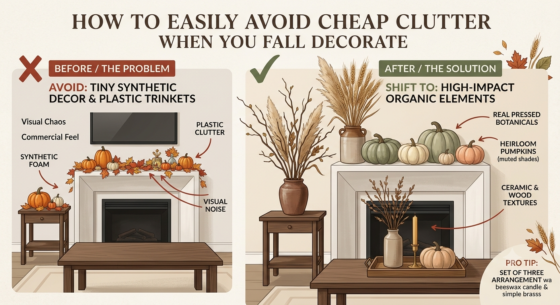
It is very easy to fall into the trap of buying dozens of small, cheap plastic autumn trinkets from mass retailers. However, scattering tiny synthetic leaves and small foam pumpkins across every flat surface creates visual chaos rather than sophisticated seasonal style. This cluttered appearance is a common mistake that distracts from your home’s natural architecture.
To fix this, shift your strategy toward high-impact organic elements. Swap out artificial greenery for real or preserved botanicals, such as tall dried pampas grass, wheat sheaves, or bare oak branches placed inside rustic ceramic stoneware jars.
Instead of dozens of tiny plastic pumpkins, select three to five organic heirloom pumpkins in varying sizes and muted colors like sage green, pale cream, and soft peach. Arranging a few large, high-quality items on a coffee table or fireplace mantel creates a clean, magazine-worthy look that feels grounded and high-end.
PRO TIP: Group your decorative objects in odd numbers—preferably sets of three—using varying heights. Place a tall vase with dried branches next to a medium-sized candle and a low heirloom pumpkin on a wooden tray for a balanced vignette.
Why Is Harsh Overhead Lighting Ruining Your Autumn Ambiance?
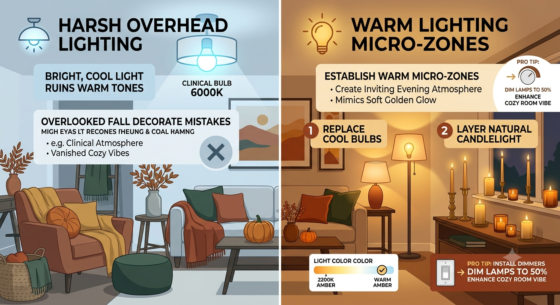
You can spend days styling beautiful textiles and natural accents, but if you flip on a bright, cool overhead ceiling light, all that cozy autumn atmosphere vanishes instantly. Harsh, clinical lighting is one of the most overlooked fall decorate mistakes, as bright blue-white light ruins the warm tones you have carefully added to your space.
To create an inviting evening atmosphere, turn off main overhead lights and establish warm lighting micro-zones throughout your room. Replace cool daylight bulbs in your table and floor lamps with warm amber-toned LED bulbs rated between 2200K and 2700K. This color temperature mimics the soft, golden glow of a late afternoon autumn sun.
Layer this soft electric light with natural flickering candlelight. Use lead-free beeswax taper candles or soy pillars in brass holders and amber glass votives along deep windowsills, console tables, and side tables to add flickering warmth.
PRO TIP: Install plug-in lamp dimmers or use smart LED bulbs that allow you to adjust brightness levels. Dimming your lamps to 50% in the evening signals to your brain that it is time to wind down while enhancing the cozy room vibe.
How Do You Style a Bare Entryway for a Warm Seasonal Welcome?
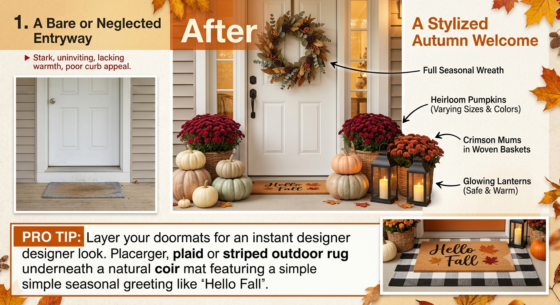
Your entryway or front porch is the very first area you and your guests see, yet it is often neglected during seasonal decorating transitions. Leaving a front door bare or cluttering it with a small, worn door mat makes your home feel unprepared for the season and reduces curb appeal.
Transforming your entryway into an inviting autumnal threshold sets a warm tone for the rest of your interior. Start at the front door by hanging a full wreath made of dried eucalyptus, pinecones, or preserved autumn foliage.
On the porch or inside the foyer console, stack clusters of weather-resistant heirloom pumpkins alongside potted deep-crimson chrysanthemums placed in rustic woven baskets. Add a pair of black metal lanterns with warm battery-powered timer candles to provide a safe, welcoming glow every evening when you return home.
PRO TIP: Layer your doormats for an instant designer look. Place a larger, plaid or striped outdoor rug underneath a natural coir mat featuring a simple seasonal greeting like “Hello Fall”.
Frequently Asked Questions About Fall Decorate Issues
What is the ideal color palette to fall decorate a modern home?
Stick to a refined palette of muted earth tones like camel, rust, olive green, warm taupe, and creamy off-white. These rich shades add seasonal warmth while maintaining a sleek, modern aesthetic without feeling dated.
How do I fall decorate on a tight budget?
Focus on free, natural elements. Gather fallen branches, pinecones, and colorful autumn leaves from your yard, placing them in glass vases you already own. Swap out pillow covers instead of buying whole new cushions, and stick to natural pumpkins from local markets.
When is the best time to start decorating for fall?
The ideal time to begin decorating is early to mid-September, just as the evening temperatures begin to cool down. This timing allows you to enjoy your cozy setup throughout the entire season until late November.
How can I make my fall decor smell as good as it looks?
Avoid strong synthetic sprays. Instead, use natural scented candles featuring notes of cinnamon, vanilla, cedarwood, or clove. You can also simmer a pot on the stove with apple slices, cinnamon sticks, and orange peels for a natural, subtle home fragrance.
Final Thoughts
Mastering how to fall decorate your sanctuary should never feel stressful, expensive, or overly complex. It is a slow, thoughtful seasonal ritual that honors the natural shift toward rest, connection, and indoor comfort. By focusing on rich tactile fabrics, warm ambient lighting, and organic natural elements, you can easily troubleshoot common decor issues and transform your house into an inviting home that wraps around you like a warm blanket all season long.
