

In my decade of hands-on interior design experience, I have noticed that students frequently view their temporary housing as a lost cause. Too often, they move into a sterile space with cinderblock walls and industrial furniture, assuming it cannot be made to feel like home without violating housing guidelines.
A truly successful small-space layout must balance intense daily utility with visual calm. In my practice, I utilize Dorm Room Decor not merely as cosmetic surface additions, but as critical tools for spatial layout optimization, mental focus, and emotional grounding during a massive transitional phase of life.
The secret to mastering a tiny, shared footprint lies in expanding your vertical real estate and introducing soft, high-texture design layers that mask institutional finishes. By establishing clean visual zones for sleeping, studying, and relaxing, you can instantly turn a basic room into an upscale, highly functional campus suite. Below is my blueprint alongside 22 expanded, professional design concepts to help you transform your room for the year ahead.
| Decor Concept | Structural Footprint Impact | Primary Aesthetic Vibe | Installation Tool Needed | Main Functional Benefit |
| Peel-and-Stick Accent | Zero Floor Impact (Vertical) | Modern Contemporary | Wallpaper Squeegee | Alters spatial proportions |
| Multi-Functional Ottoman | $18″ \times 18″$ Floor Base | Warm Transitional | None (Freestanding) | Conceals daily clutter |
| Over-the-Bed Shelving | Vertical Clearance Only | Sleek Minimalist | Tension Bars / Straps | Regains lost square footage |
| Acoustic Low-Profile Rug | Variable ($5′ \times 7’$ average) | Soft Biophilic | Double-Sided Rug Tape | Dampens institutional echoes |
Tools & Materials You Need
Before purchasing your new decorative assets, gathering these specific non-damaging installation tools and technical specifications will ensure your execution looks highly polished:
Heavy-Duty Damage-Free Adhesive Strips: Rated for at least 15 lbs per strip to secure heavy frames and fabric panels without chipping brittle university paint finishes.
Tension-Rod Shelving Frameworks: Expandable steel rods adjusting from 48 to 84 inches to build vertical storage over desks or beds without drilling into walls.
High-CRI Warm LED Light Strips: Select flexible strands operating at 2700K with a Color Rendering Index (CRI of 90+) to counteract cold, fluorescent overhead tubes.
Double-Sided Removable Rug Tape: Heavy-duty, low-residue mesh tape to secure thin area rugs flatly over low-pile commercial carpeting or vinyl composite tile floors.
Clear Acrylic Squeegee Tool: A flexible 6-inch plastic blade crucial for smoothing out air pockets and tracking straight edges during temporary wallpaper applications.
Detailed Step-by-Step Guide: 22 Layout Concepts
1. Bold Bedding as the Main Style Anchor
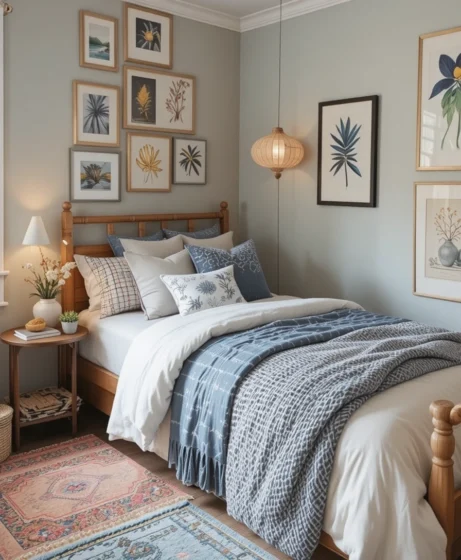
The mattress platform consumes roughly 40% of the visible horizontal real estate in a standard campus layout, making it your most powerful design tool. Choose a premium high-loft comforter or geometric duvet set to act as the primary anchor for your overall theme. I always recommend my clients select durable, long-staple cotton or performance linen blends that can withstand repeated commercial washings while maintaining a plush texture.
2. Soft LED String Lights for Instant Warmth
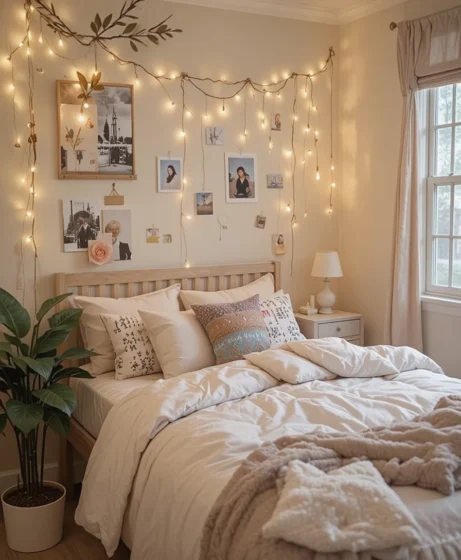
Standard institutional overhead lighting can feel incredibly harsh, stimulating your nervous system when you need to wind down. Suppress that glare by threading warm white fairy lights or soft frosted globe strands along your perimeter molding or bed rails. This low-level amber illumination scatters soft shadows across the ceiling plane, making the entire room look relaxed and inviting for evening study sessions.
3. Multi-Functional Furniture for Smart Space Use
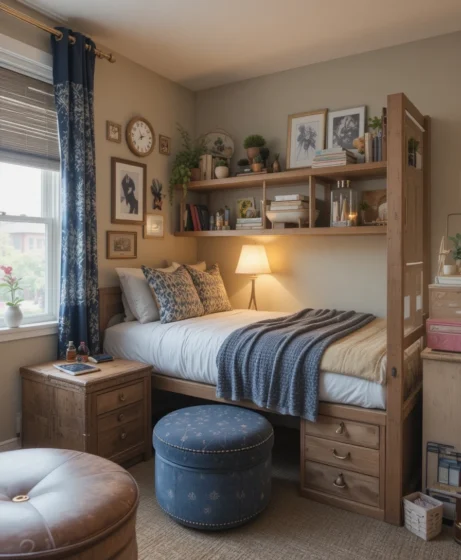
When working inside a strict, compact footprint, every single furniture asset must justify its placement by serving multiple functions. Invest in a structured storage ottoman wrapped in a high-density boucle or tailored performance canvas fabric. This single piece acts as a comfortable desk extension seat for guests, a sturdy step stool for elevated beds, and a hidden trunk to conceal extra textbooks or gym gear.
4. Peel-and-Stick Wallpaper for Easy Personality
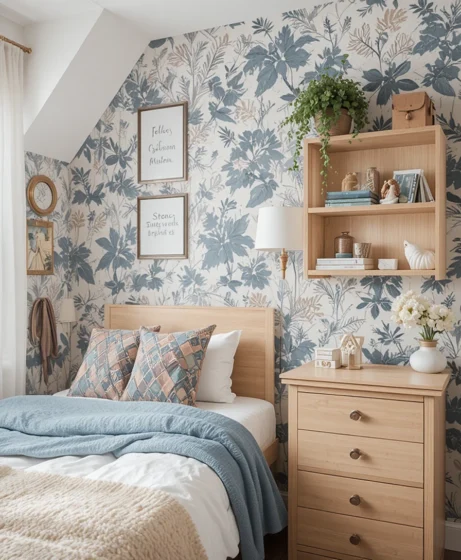
Plain white cinderblock or drywall surfaces can make a room feel cold and impersonal. Introduce an immediate editorial upgrade by applying a premium, removable peel-and-stick wallpaper to the wall directly behind your study desk or bed headboard. Opt for a minimal line-art pattern, a faux grasscloth texture, or a soft organic watercolor motif to introduce visual depth without risking your housing deposit.
5. Cozy Rugs to Warm Up the Floor
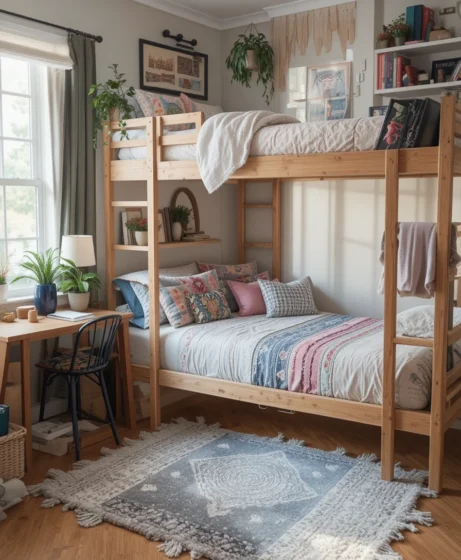
Most campus flooring choices favor high-durability luxury vinyl tile or industrial low-pile carpets, both of which feel cold and reflect echoing sounds. Drop a substantial $5′ \times 7’$ or $6′ \times 9’$ plush wool-blend or washable micro-fiber rug directly across the main walking lane. This layer anchors your layout, dampens footstep acoustics, and ensures your bare feet land on a comfortable texture every morning.
6. Open Shelving for Stylish Organization
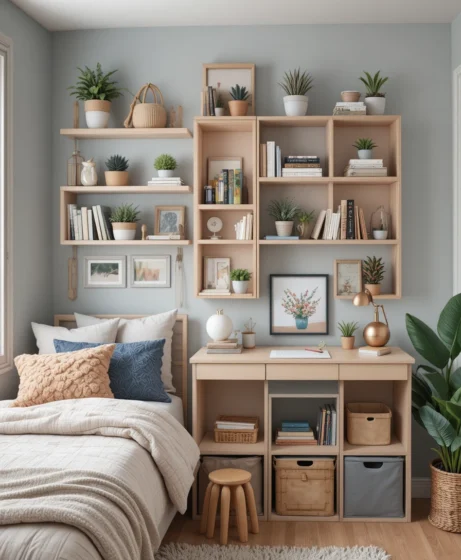
Maximize your available vertical storage space by mounting a series of lightweight, non-damaging floating ledges or a freestanding modular cube tower. Arrange your items using a strict aesthetic hierarchy—mix functional stacks of notebooks with decorative elements like ceramic catch-alls or framed art. Grouping your smaller essentials into cohesive color bins keeps the open shelves looking like an intentional display rather than cluttered chaos.
7. Personal Photo Gallery for Homey Energy
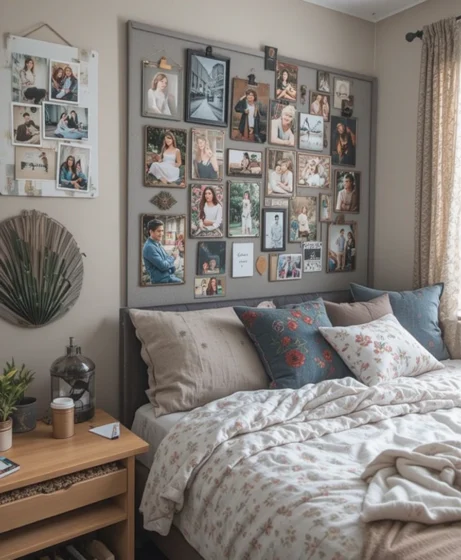
Being away from familiar environments can occasionally impact your emotional comfort and focus. Build a curated grid gallery wall by arranging personal prints, architectural postcards, and landscape photography using matching lightweight frames. Securing these items in a precise geometric layout rather than taping them up haphazardly preserves a mature, high-end look while injecting meaningful energy into your routine.
8. Desk Decor That Boosts Productivity
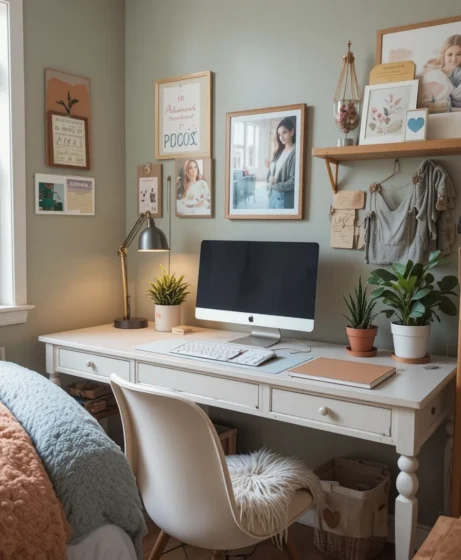
Your workspace should be styled like a professional office to encourage deep cognitive focus and organization. Incorporate a sleek, matte-finished adjustable task lamp operating at 3000K for clarity, a large vegan leather desk pad, and matching ceramic cup organizers. Limiting your color palette to calming tones like sage green, terracotta, or slate gray keeps your visual field clear during long study nights.
9. Over-the-Bed Storage for Extra Space
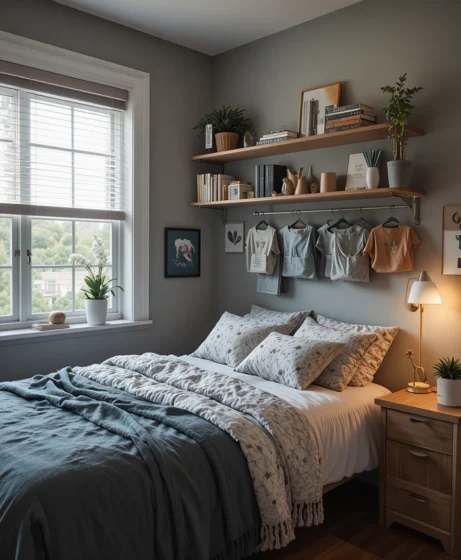
The empty wall clearance extending above a twin XL bed frame is one of the most under-utilized zones in small-space architecture. Install a tall, freestanding metal or wood tension frame that climbs directly to the ceiling line without touching drywall studs. This architectural asset creates a stable home for storage bins, reference books, or a small clock, keeping your actual mattress surface clear.
10. Layered Textures for a Cozy Feel
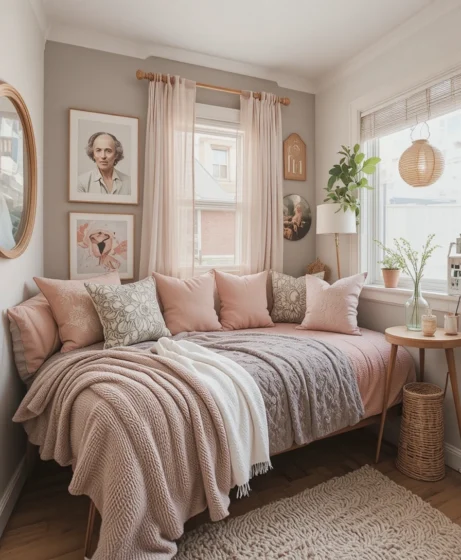
To prevent a monochromatic or neutral color scheme from looking flat or plain, you must layer varying textile weights against one another. Mix a flat-weave linen duvet cover with a heavy waffle-knit cotton throw blanket, and top the setup with a plush velvet lumbar cushion. This tactile contrast captures ambient room lighting beautifully, making a tiny bed feel exceptionally comfortable.
11. Neutral Color Palettes for a Bigger Look
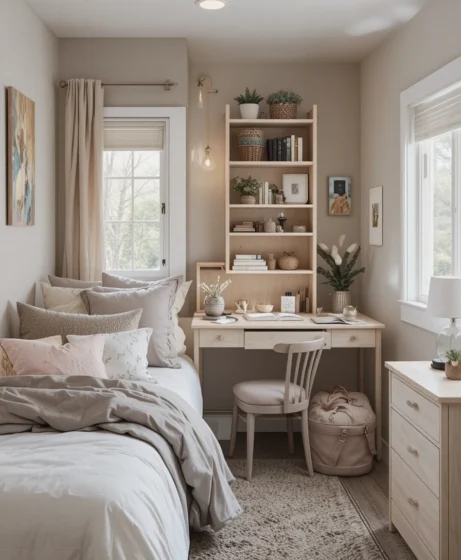
Bright, highly saturated primary colors can quickly overwhelm a small, enclosed room, making the walls feel like they are closing in on you. Instead, use a calming base of warm alabaster, soft taupe, and pale oatmeal for your major design surfaces. Introducing your favorite colors through small, deliberate accents like artwork or ceramics keeps the room looking spacious, airy, and sophisticated.
12. Small Plants for Natural Freshness
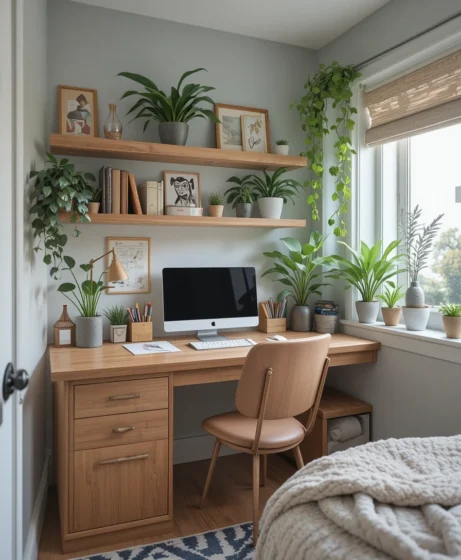
Incorporating live, biophilic elements into your room footprint introduces organic movement and fresh oxygen to the space. Select low-maintenance indoor varieties that thrive in medium window light, such as a sturdy snake plant, a trailing pothos vine, or a compact jade succulent. Placing these plants in matte terracotta or concrete planters adds an organic touch that grounds your design.
13. Hidden Under-Bed Storage for Clean Organization
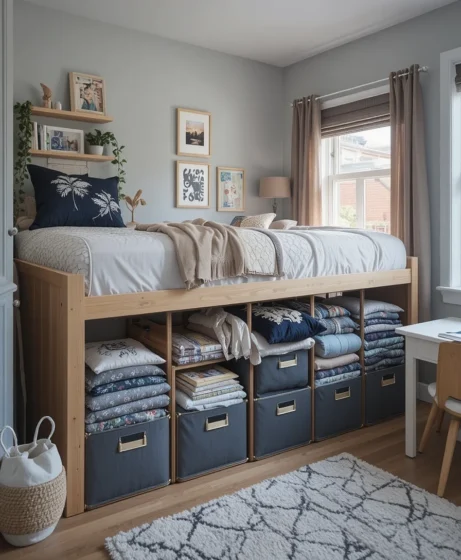
If your university bed frame can be lofted or raised, exploit that lower clearance to hide your bulky seasonal wardrobe layers. Slide uniform, long-format rolling storage trunks or heavy-duty vacuum bags neatly beneath the bed skirt frame. Utilizing identical, fully enclosed containers prevents visual clutter from spilling out into the open room, expanding your usable floor space.
14. Simple Window Treatments for Soft Lighting
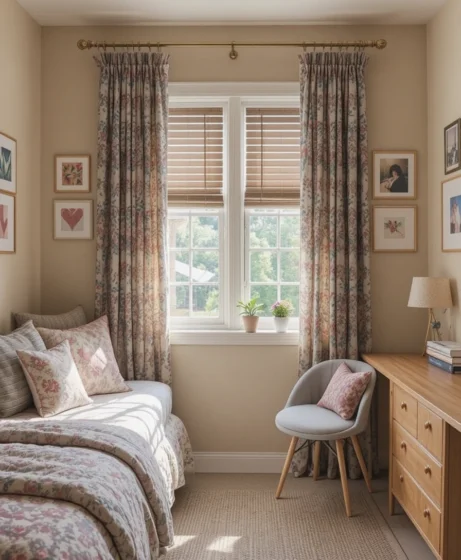
Standard metal or plastic blinds can look sterile and do a poor job of softening harsh morning light. Hang a lightweight, non-damaging tension curtain rod inside the window casing and add a pair of soft linen drapery panels. This layer diffuses glaring afternoon sunbeams into a gentle glow while adding a soft, hotel-like fabric frame to an otherwise boring window pane
15. Aesthetic Wall Tapestries for Instant Style
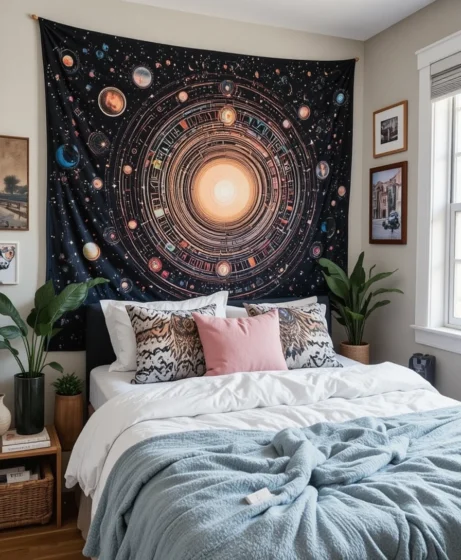
If you have a massive, empty wall expanse that feels cold, a large woven textile panel is an excellent way to add scale quickly. Look for tapestries crafted from heavy cotton canvas or woven linen that feature minimalist abstract art, geometric lines, or architectural prints. Hanging the fabric tautly with damage-free clips transforms the textile into a clean, modern wall hanging.
16. Color-Coordinated Storage Bins
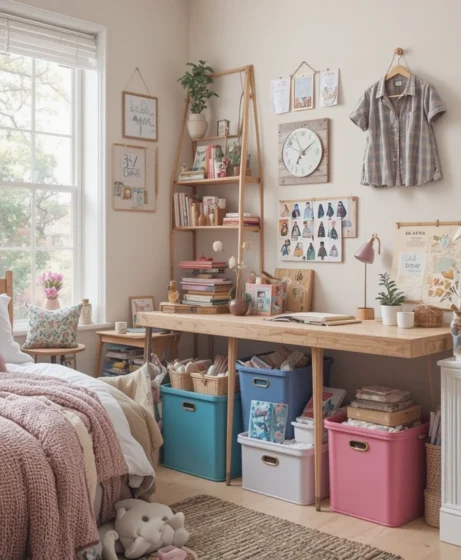
Clutter is the ultimate enemy of small-space design because it fractures your focus and disrupts the visual balance of the room. Source matching canvas, felt, or woven plastic bins within a strict color story that coordinates with your primary bedding. Using these uniform containers to hide small personal accessories keeps open closets and under-desk areas looking pristine.
17. Compact Nightstands with Extra Shelves
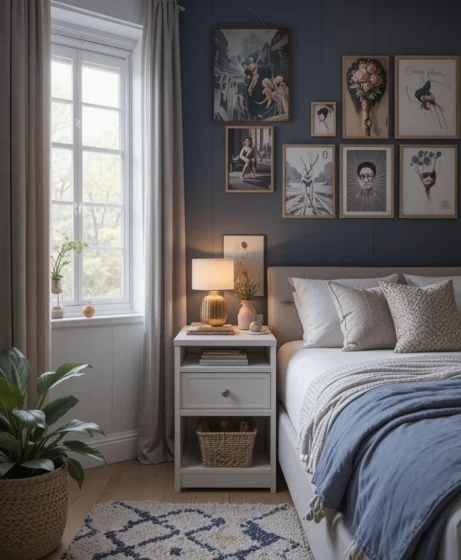
Do not let your phone, water glass, and glasses clutter your mattress corners or end up on the floor. Slide a ultra-slim, multi-tiered rolling cart or a narrow wooden bedside table into the gap between your bed frame and the wall. Selecting a vertical profile with integrated open shelves ensures you gain full utility without blocking necessary walkway clearances.
18. Personalized Name Signs or Letter Boards
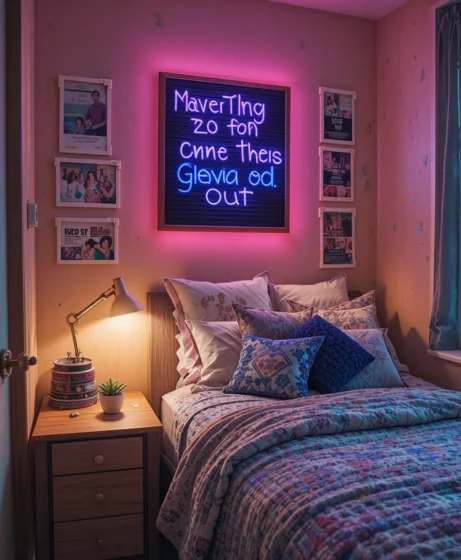
Injecting a bit of personal wit or motivation into your room keeps the space feeling uniquely yours. Mount a sleek felt letter board or a modern, low-voltage dimmable LED sign over your entry door or workspace. Displaying a favorite quote or a weekly schedule creates a clear focal destination while casting a gentle neon accent glow across the walls at night.
19. Minimal Mirrors to Brighten the Space
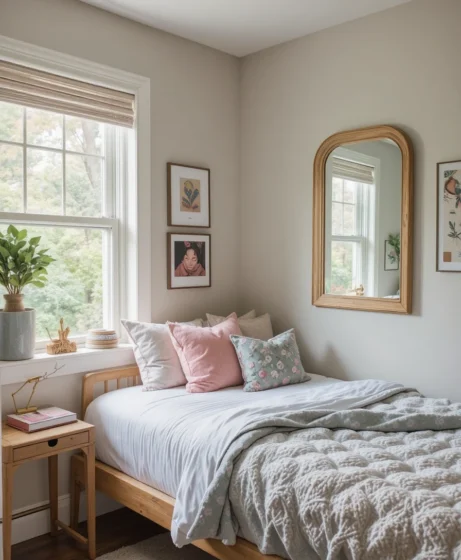
Mirrors are the oldest trick in a designer’s playbook for physically altering how a tight floor plan feels. Hang a long, frameless mirror or a thin oak-framed full-length mirror directly adjacent to your primary window source. This strategic placement captures incoming morning daylight and bounces it across the dark corners of the room, making the footprint feel twice as large.
20. Coordinated Roommate Décor for a Balanced Look
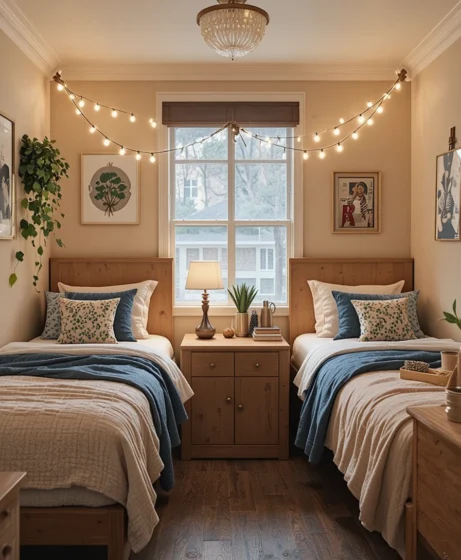
When two different design styles compete within a single small room, the layout can look fractured and visually stressful. Before moving in, text your roommate to establish a shared grounding color scheme—such as combining charcoal gray and cream. You don’t need identical bedding, but keeping your primary textile weights consistent builds a beautiful architectural harmony.
21. Small Accent Chairs for Comfort
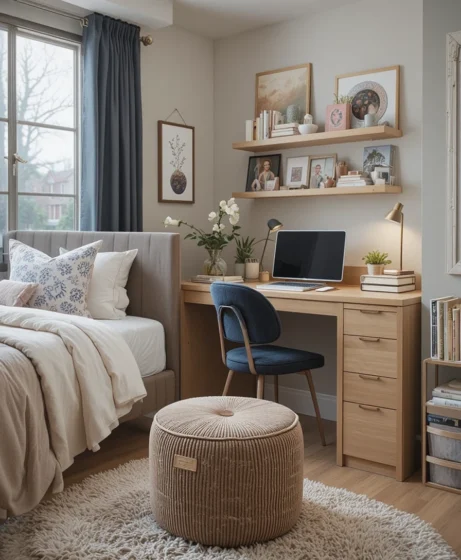
Avoid the habit of working, eating, and relaxing entirely on your mattress, as this can disrupt your natural sleep cycles. If your floor plan allows, add a single compact lounge chair or a structured boucle floor pouf into an empty corner. This separate seating option establishes a clear secondary destination within the room, perfect for reading or hosting friends.
22. Cute Trinket Trays and Desk Organizers
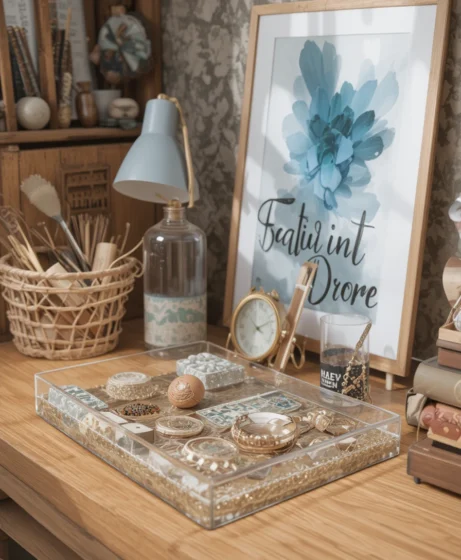
Small daily items like keys, jewelry, watches, and student IDs can easily scatter across surfaces, causing mental friction when you’re rushing to class. Place a heavy ceramic catch-all dish or a polished brass trinket tray right by your doorway console or on your desk. Grouping these loose items onto a dedicated tray turns potential clutter into a clean, intentional design detail.
Optical Tricks & Pro Styling Hacks
The Vertical 80-20 Placement Rule: To make your low ceiling lines feel much higher, keep 80% of your wall surfaces completely clean and free of heavy patterns, concentrating your artwork and shelves in the upper 20% of the wall space. This draws the eye upward, giving the illusion of open vertical space.
The Continuous Flooring Illusion: Try to keep as many items as possible elevated off the bare floor. Opt for floating desks, wall-anchored shoe racks, or furniture with slim, tapered legs. Seeing a continuous line of flooring extend all the way to the baseboards makes a small room look wider.
The Unified Sheen Principle: When purchasing temporary storage bins, desk lamps, or plastic organizers, stick to a uniform Matte or Satin finish. High-gloss plastics reflect raw light bulbs sharply, which can look inexpensive and highlight dust, whereas matte surfaces absorb light softly for an upscale look.
Scientific Data & Color Psychology
The Cognitive Load of Visual Complexity: Environmental psychology data shows that small spaces filled with high-contrast patterns and scattered clutter increase baseline cortisol production in the human brain. Limiting your layout to a low-contrast color palette reduces visual noise, allowing your prefrontal cortex to decompress and focus on complex study tasks.
Acoustic Absorption and REM Sleep Cycles: Architectural acoustics show that empty rooms with exposed cinderblock and tile surfaces bounce sound waves horizontally, creating high echo levels. Incorporating heavy window drapes, woven tapestries, and dense wool area rugs can absorb up to 25% of this echo, providing a quiet environment that supports deep sleep.
Frequently Asked Questions (FAQ)
How do I keep my area rug flat on slippery dorm tile floors?
Utilize heavy-duty, low-residue double-sided mesh rug tape along the entire perimeter of your rug padding. This locks the fabric securely to the tile surface to prevent dangerous sliding while ensuring it peels up cleanly at the end of the year without leaving sticky residue.
What are the best ways to hang heavy artwork without damaging walls?
Always use specialized foam-backed interlocking adhesive strips, ensuring you follow the full weight instructions on the package. Clean the wall surface with rubbing alcohol before applying the strip to guarantee a strong bond that won’t give out during temperature changes.
How can I make my twin XL bed feel as comfortable as a hotel mattress?
Layer your standard mattress with a high-density 3-inch gel-infused memory foam topper, followed by a breathable quilted cotton mattress pad. This combination provides excellent pressure relief and regulates your body temperature overnight, ensuring premium comfort.
Should I loft my bed frame if my room has lower ceilings?
Only loft your bed if you absolutely require the floor space below for a large desk or seating arrangement. If your ceilings are under 8 feet, fully lofting a bed can leave you feeling cramped near the ceiling line; a semi-lofted setup with storage bins underneath is often the better balance.
Final thoughts
Transforming a basic campus space using smart Dorm Room Decor is a wonderful opportunity to test your spatial design skills while crafting a deeply personal sanctuary. It proves that temporary living doesn’t have to feel sterile, cold, or chaotic to be highly functional and organized.
By paying close attention to your room’s vertical real estate, managing your textile weights, and layering your ambient light sources with intent, you can easily build an elegant retreat.
Take your time selecting your details, trust your layout dimensions, and enjoy your beautiful new space for the year ahead.
