

Fixing everyday Coffee Tables Issues and their Solution is the easiest way to bring true balance, functionality, and comfort back to the heart of your home.
Whether you are dealing with painful bruised shins, incorrect spacing, or stubborn water rings on your wood surfaces, these minor disruptions can completely throw off your room’s daily flow.
By tackling these structural and aesthetic problems with smart, practical adjustments, you can instantly upgrade your space without buying a whole new furniture set.
Quick Answer:
Soften Sharp Corners: Apply clear silicone edge guards or wrap geometric tables in custom upholstered fabric to prevent painful bruises.
Fix Wrong Heights: Aim for a table surface that sits exactly level with or up to two inches lower than your sofa cushions.
Perfect Room Layouts: Maintain a precise gap of fifteen to eighteen inches between your coffee table and the surrounding seating.
Erase Water Stains: Mix equal parts baking soda and toothpaste, or use a gentle iron-and-towel method to lift white water rings safely.
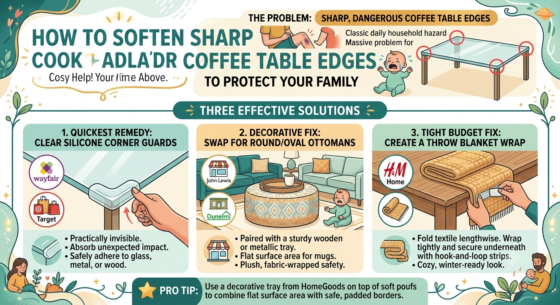
How Can You Soften Sharp Coffee Table Edges to Protect Your Family?
Imagine walking into your living room after a long day, only to catch your shin right on the razor-sharp corner of a rectangular glass table. These painful accidents are classic examples of daily household hazards, making sharp furniture corners a massive problem for families with young toddlers or tight spaces. Fortunately, making your central living space safe and family-friendly does not mean you have to sacrifice your personal interior design style.
Here is the thing: you can easily fix this hazard without throwing your beautiful modern table into the trash. The quickest remedy is investing in high-quality, clear silicone corner guards from home retailers like Wayfair or Target. Modern corner bumpers are practically invisible, adhering securely to glass, metal, or wood surfaces without ruining the sleek lines of your furniture. They absorb the force of unexpected impacts, keeping kids and adults safe from painful bumps during busy mornings.
If you want a more integrated decorative fix, consider swapping your sharp rectangular piece for an oval or round ottoman from John Lewis or Dunelm. Soft poufs and upholstered footstools serve as excellent central tables when paired with a sturdy wooden or metallic tray on top. You get the flat surface area required for holding mugs, alongside the safety of plush, fabric-wrapped borders.
PRO TIP: If your budget is tight, create a makeshift upholstery wrap using a stylish throw blanket from H&M Home. Fold the textile lengthwise and wrap it snugly around a sharp wooden table edge, securing it underneath with hidden hook-and-loop strips for a cozy, winter-ready look.
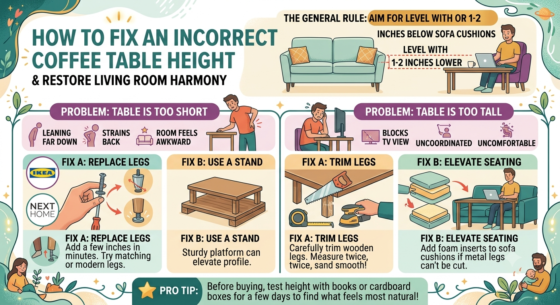
What Is the Secret to Fixing an Incorrect Coffee Table Height?
Now here is where it gets interesting because a table that sits too tall or too low can disrupt the visual harmony of your entire seating arrangement. If you have to lean down uncomfortably far to set your teacup down, or conversely, if the surface blocks your view of the television, the proportions are completely wrong. An imbalance here strains your back and makes the entire room feel uncoordinated and awkward.
As a general rule of thumb, your coffee table should sit level with or about one to two inches lower than the top of your sofa’s seat cushions. If you find yourself stuck with a beautiful antique table that is far too short, you can easily raise its profile. Look for screw-on replacement furniture legs from retailers like IKEA or Next Home, which allow you to add a few inches of height in minutes. Choosing legs in a matching wood stain or a contrasting matte black metal can give your old piece a fresh, mid-century modern aesthetic.
For tables that sit too high, the easiest solution involves addressing the legs from the bottom up. Many wooden tables can be carefully trimmed down using a basic hand saw, provided you measure twice and sand the raw edges smoothly afterward. If your table features metal legs that cannot be cut, consider balancing the proportions by adding thicker, high-density foam inserts to your sofa cushions to elevate your seating height instead.
PRO TIP: Before buying any new central furniture, use stacks of books or sturdy cardboard boxes to test different heights in front of your sofa for a couple of days. This hands-on test helps you find the exact height that feels most natural for your unique lounging habits.

How Far Apart Should Your Sofa and Coffee Table Really Be?
And this is the part most people overlook when analyzing room flow: the physical distance between your seating and your table can make or break the functionality of your space. Place the table too close, and you will find yourself awkward shuffling sideways just to get out of your seat. Place it too far away, and your guests will have to stretch uncomfortably every single time they want to reach for an appetizer or a drink.
To resolve these annoying Coffee Tables Issues and their Solution, you need to stick to the magic number discovered by professional interior designers: fifteen to eighteen inches. This specific distance offers plenty of legroom for stretching out while keeping the surface within arm’s reach. Grab a tape measure right now and check the clearance around your main sofa, loveseat, and accent chairs. If the gap is too wide, gently pull the table inward to establish a tighter, more intimate conversation zone.
If you are dealing with a tiny apartment or a narrow living space in the UK or Europe, a massive stationary table might not be your best bet. Instead, consider replacing it with a set of nesting tables from Next Home or HomeGoods. These clever, space-saving designs allow you to tuck the smaller tables away when you need open floor space, pulling them out to create customized surfaces only when guests visit.
PRO TIP: When planning your layout, ensure you also leave a main perimeter walkway of thirty to thirty-six inches between the coffee table and large outer pieces like TV consoles or bookshelves. This maintains a smooth traffic path across the room.
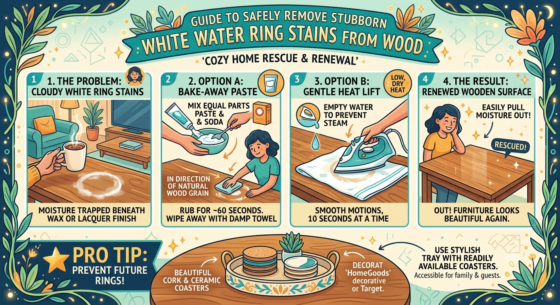
How Do You Remove Stubborn White Water Ring Stains Safely?
It happens to everyone eventually: a guest sets a hot mug of cocoa or a sweaty iced drink directly onto your wooden surface without using a coaster. A few hours later, you lift the cup to find a cloudy, white ring baked directly into the wood’s finish. This common blemish occurs when moisture gets trapped beneath the top layer of wax or lacquer, making your expensive furniture piece look neglected.
Thankfully, a white ring means the moisture has not penetrated into the actual wood grain yet, so you can easily pull it out using standard household items. Start by mixing equal parts of non-gel white toothpaste and baking soda into a thick paste. Gently rub this mixture directly onto the stain using a soft microfiber cloth, moving in the direction of the natural wood grain for about sixty seconds before wiping it away with a damp towel.
For deep, stubborn rings, turn to your laundry room iron. Empty all the water out of the iron to prevent steam production, and place a clean, dry cotton towel flat over the white ring stain. Set the iron to a low, dry heat setting and gently pass it over the towel-covered spot in constant, smooth motions for ten seconds at a time. The mild, dry heat warms the finish just enough to release the trapped moisture into the dry towel.
PRO TIP: Prevent future rings by styling a decorative decorative tray from HomeGoods or Target right in the center of your table. Fill the tray with a stack of beautiful cork or ceramic coasters, making them highly visible and easily accessible for family members and houseguests alike.
Frequently Asked Questions About Coffee Tables Issues and their Solution
Q: Can I use a round coffee table with a long sectional sofa layout? A: Yes, round tables work beautifully with large L-shaped sectionals because they soften the rigid angles and allow people sitting in the corner crook to move around easily. Just make sure the diameter is large enough so everyone can easily reach the surface.
Q: My glass coffee table shows fingerprints constantly; how do I stop this? A: To minimize constant cleaning, apply a thin coat of specialized automotive rain repellent or specialized glass wax to the surface. This creates an invisible barrier that resists oils, making daily smudges and fingerprints much easier to wipe away with a microfiber cloth.
Q: How do I choose the right table length relative to the size of my sofa? A: Your central table should measure roughly one-half to two-thirds the total length of your sofa. This structural ratio ensures that the table looks perfectly balanced visually while providing functional surface access to everyone sitting on the couch.
Q: What is the best way to clean a slate or stone tabletop without damaging it? A: Avoid using harsh chemical cleaners or acidic solutions like vinegar, which can permanently etch natural stone. Instead, use a few drops of mild dish soap mixed with warm water, wiping the surface down gently and drying it immediately with a soft towel.
Q: Is it safe to repair a deep scratch on a wood veneer tabletop? A: Yes, but you must be incredibly careful not to sand through the thin veneer layer. Use a matching wood furniture repair marker or wax filler stick from a local hardware shop to blend the scratch into the surrounding wood grain seamlessly.
Tackling these common Coffee Tables Issues and their Solution is the perfect weekend project to breathe fresh life into your living room arrangement. By correcting small details like spacing, corner safety, and surface stains, you will create a highly functional environment that welcomes relaxation. If you are eager to keep refining your home design, dive into our next expert guides covering brilliant living room lighting ideas and tips for picking the perfect area rug!
