

You selected the terracotta tiles, sourced a hand-painted sink, and painted the walls a desert tan, yet your space still feels cold, disconnected, or strangely outdated. In my 12 years of residential interior styling, I have seen this exact scenario play out dozens of times when clients attempt to design Southwestern Style Bathrooms. The missing link is rarely the individual items you bought; it is how those elements interact under specific lighting and spatial constraints.
Creating an authentic, warm oasis requires a disciplined system: balancing raw color proportions, pairing the right tactile materials, and layering warm lighting temperatures. Whether you are remodeling a tight powder room or a expansive master suite, my proven Color + Material + Light framework will help you convert sterile tile into a grounded, textured sanctuary. In this guide, I will walk you through every detail required to bring cohesive earthy bathroom aesthetics into your home without needing to consult another site.
Quick Summary Table
| Element | Best Colors | Best Materials | Pairs Well With |
| Walls | Terracotta (#C86D51), Warm Ochre (#CC7A00), Bone White (#F5F2EB) | Lime plaster, Tadelakt, Matte limewash paint | Reclaimed wood trim, raw copper, hand-cut stone |
| Flooring | Rust (#8B4000), Sand (#D2B48C), Charcoal (#36454F) | Unpolished Saltillo tile, slate, flagstone | Woven jute runners, matte black hardware |
| Furniture & Vanity | Weathered Walnut (#4A3B32), Distressed Pine (#8A5A36) | Reclaimed timber, carved mesquite wood | Hammered copper sinks, unlacquered brass taps |
| Window Coverings | Desert Sage (#98A591), Undyed Linen (#E3DCCB) | Loose-weave linen, woven bamboo shades | Black iron drapery rods, raw timber sills |
| Rugs | Crimson (#990000), Burnt Orange (#CC5500), Denim (#1560BD) | Hand-woven wool, coarse natural jute | Saltillo tile, dark slate floors, raw brass legs |
| Lighting | Antique Gold (#C5A059), Blackened Iron (#1A1A1A) | Raw unlacquered brass, wrought iron, frosted glass | Warm 2700K LED bulbs, limewash wall textures |
| Accessories & Accents | Turquoise (#40E0D0), Clay Red (#B65235), Mustard (#FFDB58) | Terracotta pottery, woven sweetgrass, raw stone | Floating timber shelves, matte plaster niches |
| Plants | Deep Forest Green (#228B22), Muted Olive (#556B2F) | Unglazed clay pots, lava rock planters | Natural daylight, travertine vanity tops |
Color Matching Master Guide
How Colors Work Together
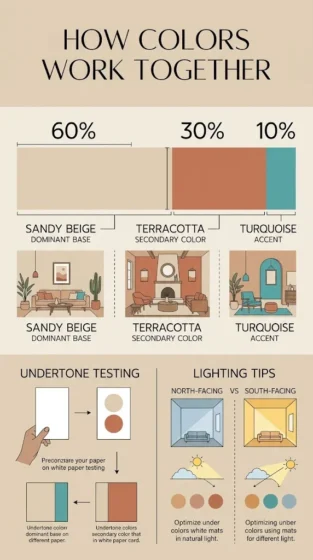
Successful bathroom color ideas within Southwestern design rely heavily on strict proportion and lighting awareness. I always recommend applying the classic 60-30-10 rule: 60% dominant base coat (such as sandy beige or soft bone), 30% secondary structural color (such as warm terracotta flooring or mesquite vanity wood), and 10% accent color (such as vivid turquoise or cobalt blue).
Undertones can easily make or break your room. To check your paint undertones, hold a sheet of pure white printer paper against your swatch under natural light; yellow, pink, or green undertones will immediately become obvious. Pay attention to your room’s orientation as well. North-facing spaces receive cool, bluish daylight that can turn muted tan paint into a dingy grey, requiring richer rust or warm clay tones to balance the atmosphere. South-facing rooms enjoy intense, warm sunlight that pairs exceptionally well with chalky lime plaster and soft sage greens.
Which Color Goes With What
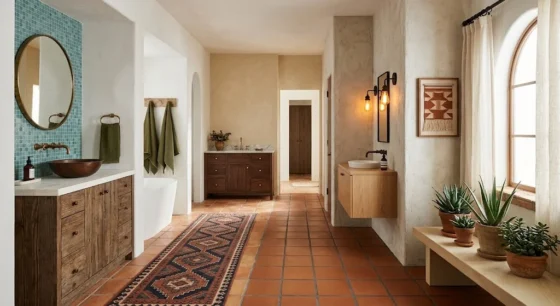
Walls: Sand (#E2D4B9) wall plaster pairs seamlessly with dark walnut vanities and unlacquered brass hardware.
Vanity & Cabinets: Weathered Pine (#8A5A36) cabinets pair effortlessly with honed white travertine countertops and copper vessels.
Curtains & Shades: Undyed Cream (#F5F2EB) linen panels pair beautifully with black iron drapery hardware and clay-tiled window sills.
Rugs: Terracotta and Navy (#1B263B) flatweave runners pair perfectly with natural Saltillo tile flooring.
Towels & Linens: Muted Olive (#556B2F) waffle-weave towels pair naturally with white lime-plastered walls and raw timber hooks.
Flooring: Burnt Ochre (#B3541E) clay tiles pair smartly with charcoal grey grout and floating light oak vanities.
Lighting Fixtures: Blackened Iron (#1A1A1A) sconces pair brilliantly with textured plaster walls and warm amber Edison bulbs.
Wall Art: Rust and Cream geometric weaving frames pair elegantly with smooth limestone shower walls.
Plants: Deep Aloe Green (#3F6844) foliage pairs flawlessly with unglazed clay pots placed on light sandstone benches.
Metals: Raw Unlacquered Brass (#C5A059) pairs harmoniously with turquoise mosaic backsplashes and dark wood stains.
Ready-Made Color Palettes
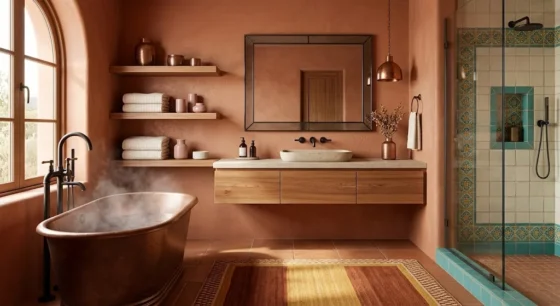
High-Desert Sun: Base: Sandstone (#E6D3B1), Secondary: Clay Rust (#B85B35), Accent 1: Turquoise (#3B9A9C), Accent 2: Burnt Sienna (#8A3319), Metal: Raw Brass. Use Sandstone on walls, Clay Rust on floor tiles, and Turquoise for shower niche tile trim.
Santa Fe Shadow: Base: Chalk White (#F7F5F0), Secondary: Charcoal (#343434), Accent 1: Adobe Red (#A94A2D), Accent 2: Desert Sage (#879883), Metal: Wrought Iron. Use Chalk White on plaster walls, Charcoal on vanity cabinetry, and Adobe Red for textiles.
Taos Twilight: Base: Muted Cream (#F2EBD9), Secondary: Denim Blue (#2C4D6F), Accent 1: Ochre (#D48C2E), Accent 2: Deep Walnut (#3D2B1F), Metal: Aged Copper. Apply Cream to upper walls, Denim Blue to wainscoting tiles, and Ochre for bath rug accents.
Sedona Sunset: Base: Warm Terracotta (#C86D51), Secondary: Raw Cedar (#965D34), Accent 1: Mustard Yellow (#E1A140), Accent 2: Ivory (#FFFFF0), Metal: Matte Black. Apply Terracotta to plaster walls, Raw Cedar for floating vanities, and Ivory for waffle-weave towels.
Mojave Minimalist: Base: Bone Plaster (#EAE5D9), Secondary: Muted Sage (#929A88), Accent 1: Dusty Rose (#C49A88), Accent 2: Warm Taupe (#7A6E65), Metal: Brushed Bronze. Use Bone Plaster overall, Muted Sage on vanity woodwork, and Dusty Rose for ceramic accessories.
Metals, Woods and Fabrics Pairing
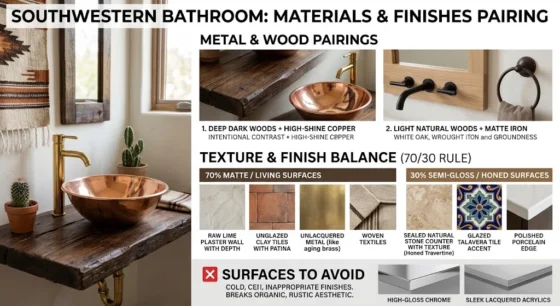
Mixing materials requires deliberate balance so your bathroom decor feels curated over time rather than bought as a matching set. Aged brass and hammered copper are the structural cornerstones of Southwestern interiors. Pair deep, dark woods like mesquite, stained oak, or walnut with high-shine polished copper to create intentional contrast. If you prefer light wood like natural ash or white oak, mix it with matte black iron or oil-rubbed bronze to maintain groundness.
When choosing finishes, aim for 70% matte or living surfaces (such as raw lime plaster, unglazed clay, and unlacquered metal) and 30% semi-gloss or honed surfaces (such as sealed stone counters or glazed Talavera tile accents). Avoid high-gloss chrome or sleek lacquered acrylics, as these cold surfaces instantly break the organic, rustic aesthetic.
Colors to Avoid Mixing
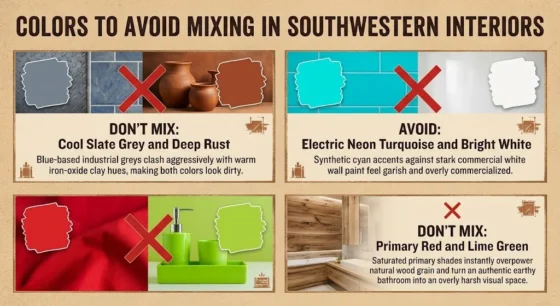
Cool Slate Grey and Deep Rust: Blue-based industrial greys clash aggressively with warm iron-oxide clay hues, making both colors look dirty.
Electric Neon Turquoise and Bright White: Synthetic cyan accents against stark commercial white wall paint feel garish and overly commercialized.
Primary Red and Lime Green: Saturated primary shades instantly overpower natural wood grain and turn an authentic earthy bathroom into an overly harsh visual space.
Tools / Materials You Need
Terracotta Floor Tile: 12×12 inch square or 8-inch hexagon unpolished Saltillo tiles (sealed with a matte water-based masonry sealer).
Hand-Painted Talavera Tiles: 4×4 inch ceramic tiles for backsplashes and accent niches [Internal Link: tile installation guide].
Plaster Finish: Waterproof lime plaster or Tadelakt for shower surrounds (applied at a minimum 1/8-inch thickness).
Vanity Dimensions: Solid wood unit measuring 21 to 24 inches deep, with a minimum width of 36 inches for single-sink setups.
Mirror Specifications: Arch-topped or rectangular iron-framed mirror measuring 24×36 inches (or scaled to 70% of vanity width).
Lighting Specs: Damp-rated wall sconces equipped with 2700K warm white LED bulbs (400 to 600 lumens per fixture).
Rug Size: 2×3 foot wool flatweave rug for small vanities, or a 2×6 foot runner for long double vanities.
Paint Specifications: Vapor-permeable matte or velvet-finish interior paint with built-in moisture resistance for non-plaster walls.
The Core List: 18 Numbered Ideas
1. Hand-Crated Saltillo Tile Flooring with Warm Grout
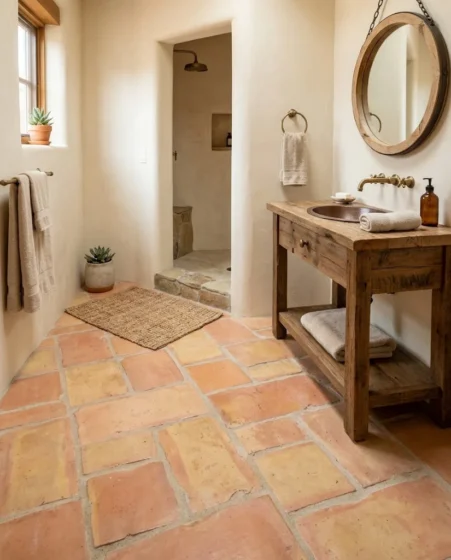
I always tell my clients that a authentic makeover starts underfoot, and nothing establishes ground level character like hand-shaped Saltillo clay tiles. These rustic pavers feature natural variations ranging from muted peach to deep burnt orange, instantly grounding modern fixtures. Laying them with a generous 1/2-inch wide grout joint in a warm buff or light tan color avoids harsh lines and honors authentic regional architecture.Budget Swap: Substitute expensive imported Saltillo with 12×12 inch porcelain terracotta-look tiles to save on both material costs and intensive sealing labor.
2. Sculpted Terracotta Lime Plaster Wall Finishes
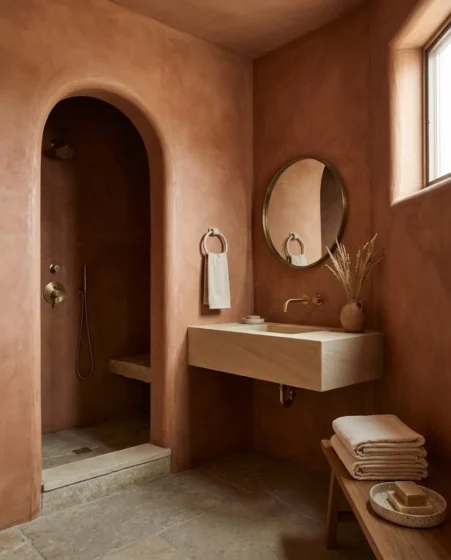
To recreate the historic adobe dwellings of the American Southwest, replace standard drywall textures with waterproof lime plaster or Tadelakt in warm clay (#C86D51). The hand-troweled process rounds off hard wall corners and leaves an organic, velvety texture that catches natural daylight softly. In my projects, this seamless application eliminates grout lines entirely on shower walls while offering exceptional moisture management.Budget Swap: Apply two coats of heavy-bodied limewash paint in a warm desert-tan hue over existing drywall using a wide masonry block brush.
3. Hammered Copper Vessel Sinks with Living Patina
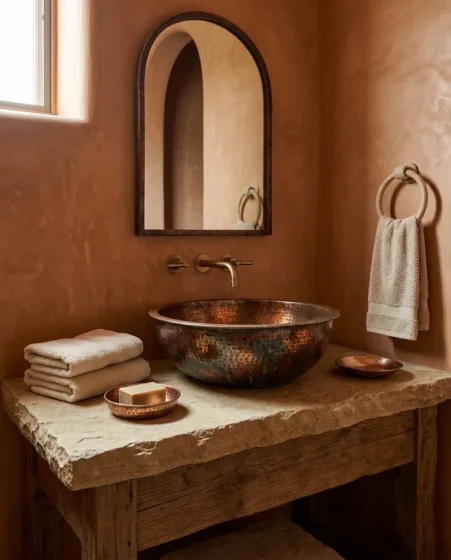
Installing a heavy gauge, hand-hammered copper vessel sink over a natural stone or raw wood countertop instantly creates an unmistakable focal point. The rich amber undertones of raw copper complement muted wall shades, and the untreated surface naturally oxidizes over time, building a living patina unique to your daily routine. Ensure your drain assembly matches the exact unlacquered copper finish to keep the plumbing continuous.Budget Swap: Choose a dark bronze ceramic vessel sink with subtle rim distressing to mimic the shape and weight of metal at a lower cost.
4. Talavera Ceramic Tile Backsplash Mirror Framing
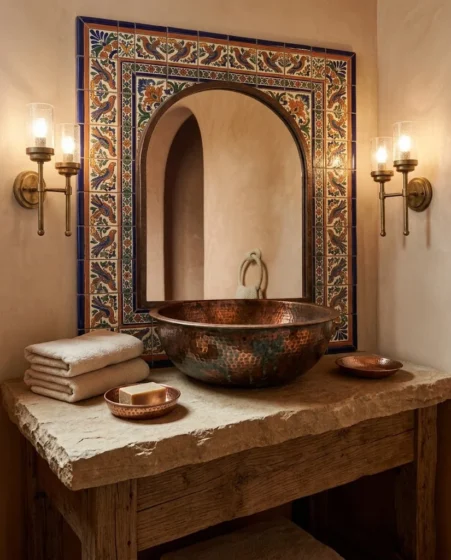
Integrate vibrant Mexican craft heritage into Southwestern Style Bathrooms by surrounding your vanity mirror with a double border of 4×4 inch hand-painted Talavera tiles. Mixing deep cobalt blue (#1C2833), terracotta orange, and bright mustard geometric motifs breaks up monochromatic plaster walls without feeling chaotic. Keep your countertop stone simple and neutral so this tile border remains the clear visual hero.Budget Swap: Install a single row of Talavera tiles directly above the vanity splash-guard rather than framing the entire mirror wall.
5. Reclaimed Mesquite Wood Vanity with Iron Strapping
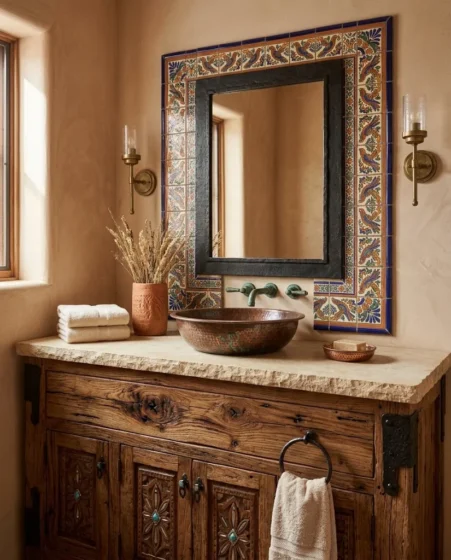
Custom cabinetry built from reclaimed mesquite or knotty pine brings deep historical texture and weight into an earthy bathroom. Look for vanity bases featuring hand-carved cabinet panel faces, visible wood grain, and heavy wrought-iron corner brackets. A clear, low-sheen polyurethane sealer protects the aged timber from humidity swelling while keeping the wood grain feeling touchable and raw.Budget Swap: Refinish an existing solid wood dresser using a dark walnut stain, replace modern knobs with black cast-iron pulls, and seal the top surface with waterproof varnish.
6. Framed Historic Native American Textile Art
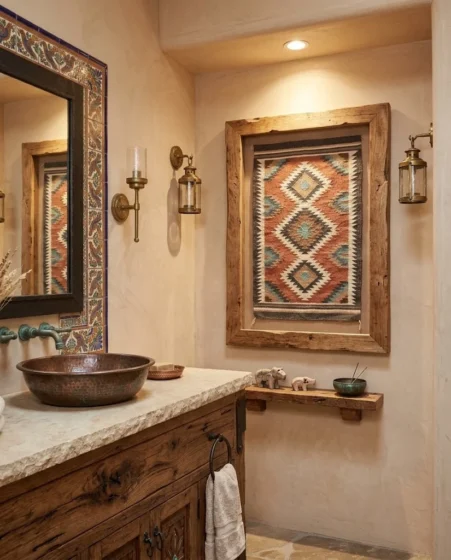
Instead of mass-produced framed canvas prints, display fragments of hand-woven wool textiles featuring traditional geometric diamond patterns. Mounting vintage rug remnants or woven tapestry swatches inside 16×20 inch floating shadowbox frames protects delicate natural fibers from humidity. Position these artistic frames on accent walls away from direct water splashes to add history and tactile warmth.Budget Swap: Frame high-resolution museum digital prints of vintage Southwestern textiles printed on matte textured cotton paper.
7. Raw Unlacquered Brass Wall Sconces
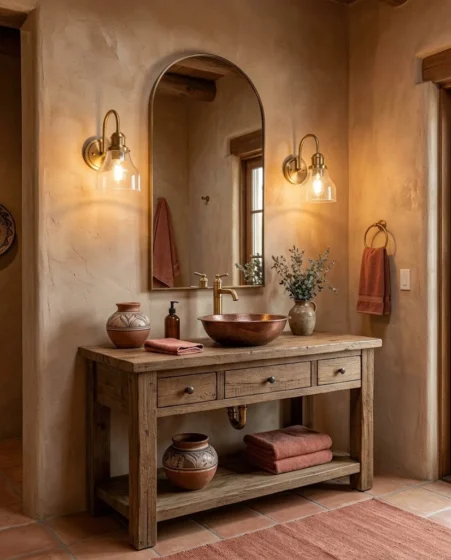
Lighting should illuminate plaster wall textures without casting harsh modern glares across your vanity mirror. Mount a pair of raw, unlacquered brass gooseneck sconces fitted with clear seeded glass shades directly beside your mirror at eye level (roughly 66 inches off the floor). The raw brass will age gradually alongside your copper fixtures, developing a rich, muted finish.Budget Swap: Spray paint sleek modern brass lighting fixtures with a outdoor-rated matte bronze or aged brass textured spray paint.
8. Exposed Ceiling Beams (Vigas) with Pine Latillas
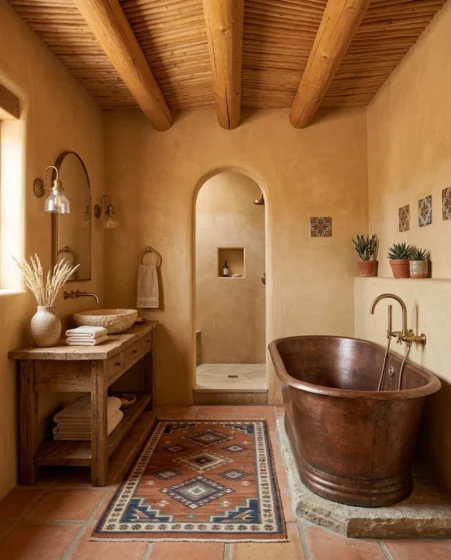
If your room features adequate vertical height, installing solid pine round ceiling logs—traditionally called vigas—adds immediate architectural character overhead. Lay smaller peeled pine branches (latillas) in a herringbone pattern between the main ceiling beams to completely transform flat drywall ceilings into authentic Santa Fe structures. Keep the timber unstained or treat it with a simple wax coat to maintain light, raw wood tones.Budget Swap: Install lightweight faux-wood polyurethane ceiling beams stained in a knotty pine finish to avoid structural ceiling reinforcement.
9. Wrought Iron Framed Architectural Arch Mirrors
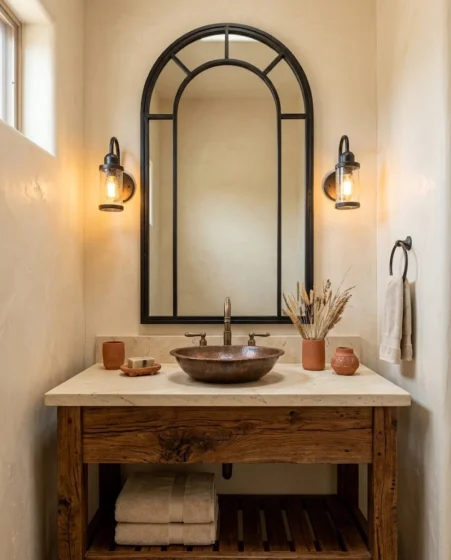
Incorporate gentle curves into your layout by mounting a tall, arch-topped mirror encased in a 1-inch thick blackened wrought iron frame. The arched top softened rigid wall layouts while echoing traditional adobe doorway pass-throughs found throughout New Mexico homes. Scaling the mirror to roughly 36 to 40 inches high reflects maximum daylight across your bathroom decor.Budget Swap: Paint an existing flat-framed wooden arch mirror using a matte black iron-look paint and apply thin black metal tape along the outer border.
10. Muted Sage Green Accent Tile in Shower Alcoves
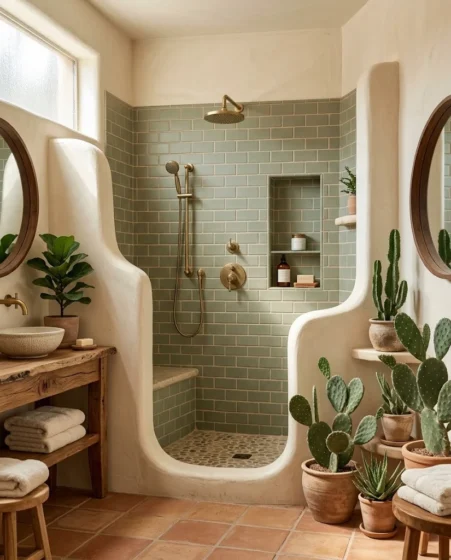
While warm clay tones dominate desert interiors, bringing in a soft desert sage (#879883) matte ceramic subway tile adds balanced botanical contrast. Tiling an entire walk-in shower enclosure or a recessed shampoo niche in muted green mirrors native high-desert flora like saguaro and agave. Pair this green tile with warm buff grout and unlacquered brass shower valves for a serene layout.Budget Swap: Paint an accent wall outside the wet zone in a moisture-resistant matte sage green interior wall paint.
11. Curved Adobe-Style Plaster Walk-In Shower Wall
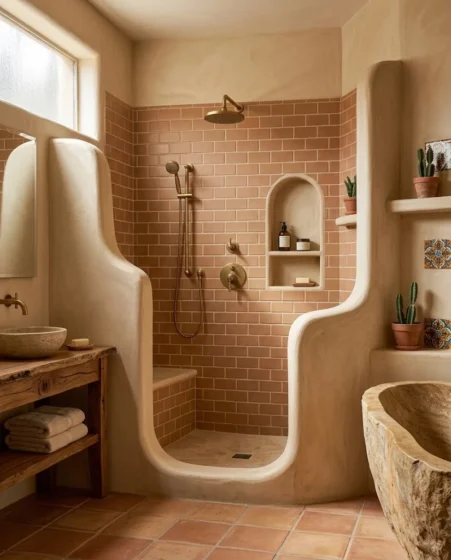
Eliminate cold, high-maintenance glass shower doors in favor of a low, curved plaster partition wall that wraps around your shower space. Sweeping the plaster up in a gentle continuous curve creates a cozy enclosure that holds steam while honoring historic architectural curves. Seal the interior shower plaster with natural black soap (Tadelakt technique) to render the wall completely water-repellent [External Link: Tile Council of North America].Budget Swap: Build a straight knee-wall lined with simple terracotta subway tiles and hang an extra-long heavy linen shower curtain from an iron ceiling rod.
12. Hand-Woven Wool Geometric Runner Rugs
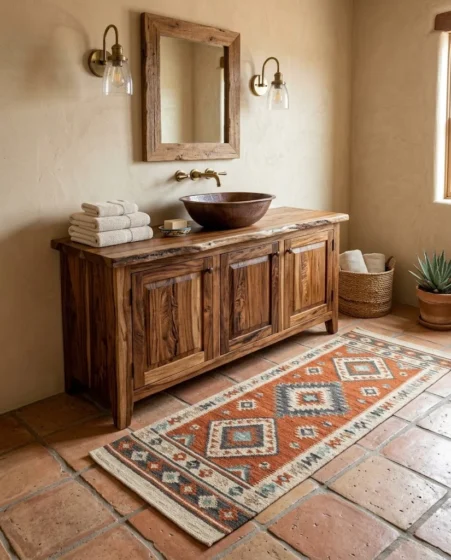
Step away from plush synthetic bath mats and lay down a 2×6 foot hand-woven flatweave wool runner displaying bold Southwestern diamond graphics. Dense wool fibers naturally repel water drops while providing firm, warm cushioning over cold stone or tile flooring. Look for rug designs featuring burnt orange, charcoal, cream, and turquoise yarns to pull together your entire accent palette.Budget Swap: Choose a machine-washable cotton flatweave rug printed with geometric Southwestern motifs to handle high traffic affordably.
13. Natural Wood Trimmed Skylights over Freestanding Tubs
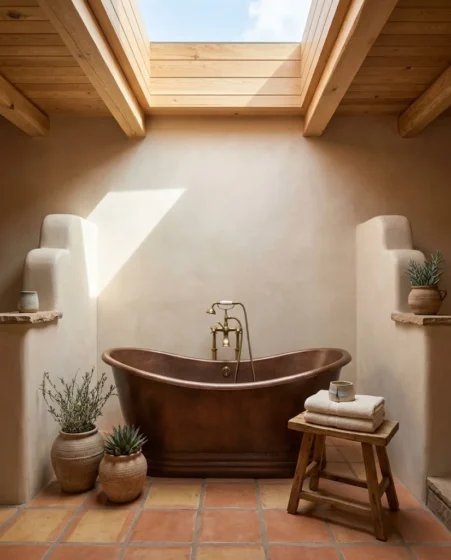
Flooding your space with overhead natural light transforms heavy adobe wall textures and reveals subtle color depth in clay tiles. Positioning a 24×48 inch clear glass skylight directly over an unpainted cedar or copper soaking tub creates a dramatic spa atmosphere. Line the internal skylight shaft with warm cedar wood planks to blend the ceiling window into your overall timber detailing.Budget Swap: Mount a sun-tube skylight fixture with a warm-toned interior diffuser disk to bring natural daylight down without heavy roof alteration.
14. Carved Wooden Sliding Barn Doors with Iron Tracks
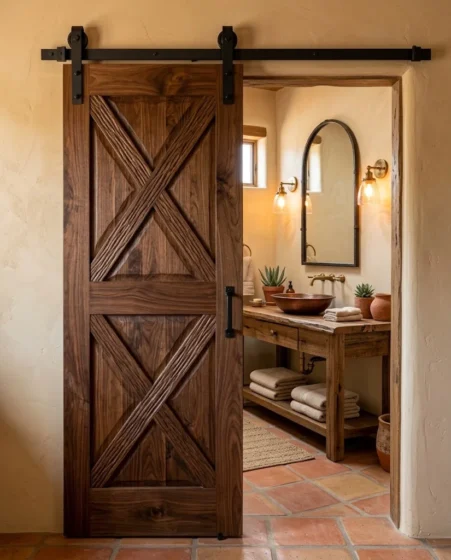
Replace standard hinged interior doors with a heavy, solid wood sliding barn door featuring hand-carved geometric cross-brace paneling. Hanging the door from a heavy-duty matte black industrial iron track saves valuable interior floor space while introducing functional wood texture. I always recommend adding soft-close mechanisms to heavy timber doors to prevent loud slamming against plaster frames.Budget Swap: Install a standard solid core flush door, finish it with dark walnut wood stain, and mount decorative cast-iron corner brackets.
15. Freestanding Hammered Copper Soaking Tub
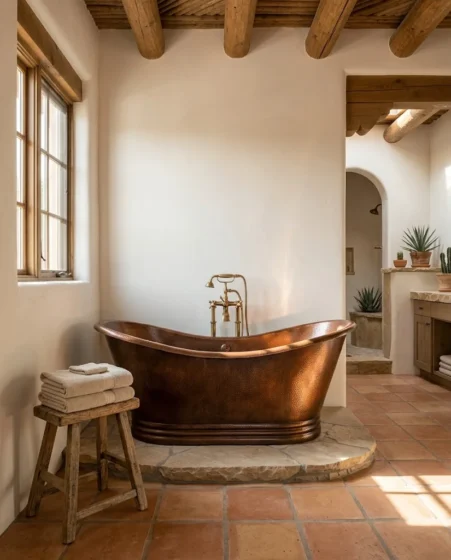
For an ultimate high-end master retreat, make a double-slipper hammered copper bathtub the undisputed centerpiece of the room. Placing the tub against a smooth, dark slate or bone-white plaster wall creates a striking visual contrast that anchors expansive Southwestern Style Bathrooms. Pair it with a floor-mounted raw brass tub filler fitted with cross handles to complete the heritage look.Budget Swap: Install a classic white cast-iron clawfoot tub and hand-paint the exterior shell in a matte terracotta or deep ochre hue.
16. Recessed Arch Wall Niches with Timber Shelves
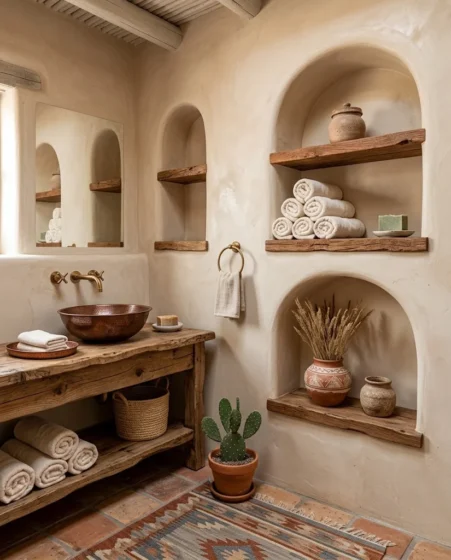
Direct your wall contractor to frame soft, arched wall niches measuring 14 inches wide by 24 inches high into drywall or plaster framing. Line the interior bottom of these arched alcoves with thick, rough-sawn mesquite timber slabs to display rolled cotton towels, handmade soaps, and small earthenware jars. These built-in niches eliminate clutter while honoring historic Southwestern thick-wall masonry traditions.Budget Swap: Install pre-fabricated arched wall shelf units crafted from raw Paulownia wood directly onto your painted drywall using wall anchors.
17. Terracotta Planters Displaying Desert Botanicals
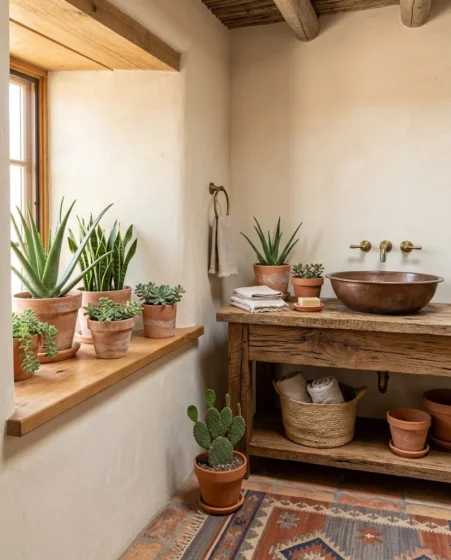
Bring vibrant organic life into your layout by grouping hand-molded unglazed terracotta pots filled with humidity-tolerant desert plants on wide window sills or vanity corners. Plant species like Aloe Vera, Snake Plants, and trailing Fishbone Cacti thrive in warm bathroom environments while absorbing ambient moisture. The porous raw clay pots will absorb excess water and develop a chalky patina that complements plaster walls.Budget Swap: Repurpose vintage ceramic kitchen crock pots or terra cotta food canisters as rustic plant containers.
18. Matte Black Modern Industrial Plumbing Fixtures
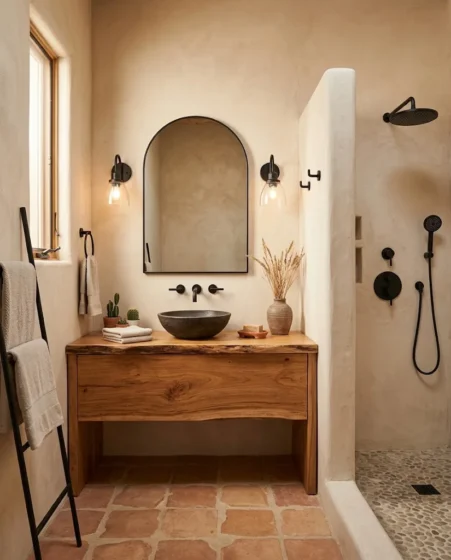
If you lean toward a contemporary desert minimalist aesthetic, select matte black wall-mounted faucets and exposed shower valves. The sharp black lines contrast cleanly against warm, chalky plaster walls and honey-toned wooden vanities without looking busy. This combination bridges historic textures with clean modern functionality effortlessly.Budget Swap: Use durable matte black faucet retrofit kits over existing valve bodies to update hardware without full plumbing replacement.
Pro Styling Hacks / Optical Tricks
Extend Tile to Ceiling: Run your shower tiles or plaster finish all the way up to the ceiling line to draw the eye upward and make low ceilings feel significantly taller.
Continuous Floor Materials: Use the exact same Saltillo or slate tile inside the curbless shower enclosure as the main floor to eliminate visual boundaries and enlarge small footprints.
Large Arch Mirrors: Hang an oversized arch mirror that covers at least 70% of your vanity width to reflect daylight deeper into dark corners.
Vertical Tile Orientation: Lay rectangular terracotta or ceramic subway tiles vertically on accent walls to create the illusion of added vertical height.
Concealed LED Warm Strips: Mount hidden 2700K waterproof LED strip lights behind floating timber vanities or inside recessed wall niches to cast a soft, warm glow across plaster walls.
Low-Profile Vanity Frames: Choose wall-mounted floating wood vanities with open lower shelving to reveal floor space underneath, making narrow powder rooms feel open.
Monochromatic Paint Strategy: Paint your ceiling, trim, and walls in the exact same warmth level (e.g., bone white or light sand) using different paint sheens to erase room boundaries visually.
Layered Wall Textures: Combine rough troweled wall plaster on the upper two-thirds of a wall with smooth, glazed Talavera tiles on the lower third to add rich depth without crowding floor space.
Common Mistakes to Avoid
Overusing Saturated Turquoise: Applying vivid turquoise paint over entire walls creates a chaotic, dated look. Fix: Keep bright turquoise strictly to small accent pieces like handmade tiles, rug yarns, or decorative pottery.
Selecting Cool White Light Bulbs: Installing daylight LED bulbs (4000K or higher) makes natural terracotta tiles look sterile and turns warm plaster into a cold grey shade. Fix: Swap all light bulbs for warm 2700K to 3000K fixtures.
Neglecting Clay Tile Sealer: Leaving porous Saltillo or raw terracotta tiles unsealed in high-moisture zones leads to deep water staining and efflorescence salt buildup. Fix: Apply three thin coats of penetrating matte water-based tile sealer before grouting.
Installing Shiny Chrome Hardware: Pairing cold, highly reflective polished chrome taps with warm, rustic wood vanities breaks the historical material balance. Fix: Opt for unlacquered brass, oil-rubbed bronze, or matte black fixtures instead.
Ignoring Storage Planning: Relying solely on small open shelves causes visible daily clutter that ruins serene bathroom color ideas. Fix: Build functional hidden storage inside vanity drawers or recessed medicine cabinets behind rustic framed mirrors.
Crowding Small Rooms with Dark Wood: Using heavy, dark mesquite vanities and dark ceiling beams in tiny powder rooms creates a claustrophobic feel. Fix: Use light ash wood, pale lime plaster, and high-placed mirrors to keep small spaces airy.
Surprising Facts / Science Section
Thermal Energy Retention: Authentic clay Saltillo tiles possess exceptional thermal mass density, meaning they absorb heat from underfloor heating systems efficiently and release it slowly back into the room over hours.
Tactile Stress Reduction: Environmental psychology research shows that natural, unpolished interior surfaces like rough timber, lime plaster, and raw stone reduce human physiological stress responses compared to synthetic, high-gloss plastic finishes.
Moisture Buffering in Lime Plaster: Natural lime plaster and Tadelakt finishes are naturally vapor-permeable and highly alkaline, allowing them to absorb ambient shower humidity and prevent mold spore growth without toxic chemical coatings.
Warm Lighting Circadian Alignment: Utilizing warm 2700K lighting in bathrooms during evening routines prevents the suppression of melatonin production, supporting healthier natural sleep cycles compared to exposure to blue-tinted 5000K daylight bulbs.
Natural Copper Antimicrobial Qualities: Untreated hammered copper surfaces possess natural antimicrobial properties, killing harmful bacteria on sink surfaces within hours through elemental ion transfer.
Frequently Asked Questions
What colors go well with Southwestern Style Bathrooms?
Warm earth tones like terracotta, desert sand, bone white, burnt sienna, and warm ochre serve as ideal base colors. Contrast these earth tones with botanical accents like desert sage green, denim blue, and subtle hits of turquoise for a authentic, balanced palette.
Which color combination looks best in a small room?
For small rooms, combine a soft bone white (#F5F2EB) lime-plaster wall coat with light natural oak woodwork and muted terracotta floor tiles. Keeping walls light prevents claustrophobia while maintaining the warm, tactile essence of Southwestern style.
What is the 60-30-10 rule?
The 60-30-10 rule balances room color proportions: 60% dominant base color (plaster walls or main tile), 30% secondary structural shade (wooden vanity, doors, or flooring), and 10% bold accent hue (rugs, decorative ceramics, or wall art).
Warm or cool colors, which should I choose?
Always prioritize warm color palettes for Southwestern interiors. Iron oxide rusts, golden ochres, and creamy sands create a welcoming sanctuary, whereas cool blues or industrial greys should only be used sparingly as secondary accent accents.
How do I choose the right lighting?
Select damp-rated fixtures crafted from raw brass, copper, or wrought iron. Ensure all light bulbs are calibrated to a warm 2700K color temperature to enhance natural clay textures, and install dimmer switches to set a relaxing mood during evening baths.
How can I do this on a budget?
Focus your budget on high-impact visual areas like lighting and wall paint. Use warm limewash paint on drywall, refinish a second-hand wood vanity with dark stain, and introduce affordable flatweave geometric rugs instead of tearing out structural tiles immediately.
Which metals and finishes go with this style?
Unlacquered raw brass, hand-hammered copper, oil-rubbed bronze, and matte black wrought iron align perfectly with desert design. Mix up to two metal finishes in one room, keeping living finishes as your primary choice for authentic aging.
What are the biggest mistakes to avoid?
Avoid installing cool blue LED lighting, using high-gloss plastic materials, leaving porous terracotta tiles unsealed, overusing saturated bright turquoise paint, and selecting modern polished chrome hardware that clashes with raw wood and clay textures.
Final Thoughts
Bringing authentic Southwestern Style Bathrooms into your home is ultimately a celebration of nature, heritage craftsmanship, and physical warmth. By focusing on raw tactile materials—such as hand-molded Saltillo tiles, soft troweled lime plaster, unlacquered metals, and weathered timber—you build a timeless personal retreat that matures beautifully with age. Remember to let your materials breathe and avoid chasing sterile perfection; the true soul of desert design lies in its organic irregularities, earthy depth, and soothing connection to the natural world.
