

Finding the right Bed & Mattress combination is the single most important step you can take to banish restless nights and wake up genuinely refreshed.
Over my twenty years as an interior designer and home decor strategist, I have learned that a truly great bedroom blends everyday functionality with deeply personal comfort.
Let us dive into how you can fix common bedroom frustrations and build a sanctuary you will love coming home to.
Quick Answer:
Check your foundation: A squeaky frame or sagging base ruins even the most expensive mattress.
Stop sliding: Use a non-slip grip pad to keep your mattress firmly anchored in place.
Upgrade your sheets: Invest in deep-pocket fitted sheets with robust elastic corners to prevent popping off.
Balance your temperature: Choose breathable linen or cotton layers instead of heavy synthetic blankets that trap heat.
Streamline decor: Limit decorative pillows to three or four to make bedtime routine hassle-free.
Why is your mattress sagging or feeling lumpy, and how can you fix it?
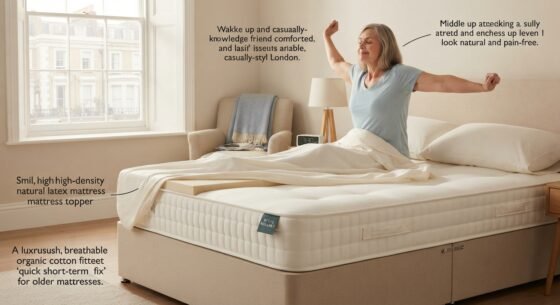
Here is the thing about a sagging or lumpy bed & mattress: it sneaks up on you slowly until one morning you wake up feeling like you spent the night wrestling a bear. In my experience working with clients across the US, UK, and Europe, people often blame their sleep posture when the real culprit is a broken-down support core or an uneven foundation. If your mattress dips more than an inch or feels like a bumpy mountain range, your spine is losing the crucial neutral alignment it needs to truly rest.
Now, here is where it gets interesting—you do not always need to rush out and buy a brand-new mattress immediately if your budget is tight. For a quick short-term fix, you can slide a high-density latex or foam mattress topper over the surface to temporarily bridge minor dips and level out the topography. However, if your mattress is over eight years old or has visible structural indentations, it is time for a proper replacement. When shopping for a new bed & mattress set at retailers like John Lewis in the UK or Wayfair and Target in the US, always check the warranty terms regarding allowable indentation depths.
Let us talk about prevention because replacing a mattress every few years gets expensive quickly. Rotate your mattress 180 degrees every three to six months to ensure even wear across the surface, especially if you sleep with a partner of a different weight. PRO TIP: If you have a traditional two-sided flippable mattress, flip it over seasonally to double its lifespan and keep the padding from compressing permanently in one spot. Whether you are browsing IKEA for a budget-friendly foam model or investing in a luxury pocket-sprung mattress, proper flipping and rotating habits will save you hundreds of dollars or pounds down the road.
What causes a bed frame to squeak and creak, and how do you silence it?

Imagine finally drifting off to sleep only for your bed frame to emit a loud, embarrassing groan every time you so much as roll over. That irritating squeak is usually caused by friction between wooden slats, loose metal bolts, or dry joints rubbing together under your body weight. When I consult with homeowners in cramped city apartments or historic suburban homes, this is one of the most common complaints I hear about master bedroom setups. Fixing this issue does not require a degree in carpentry, just a little bit of detective work and some basic hardware tightening.
Start your investigation by stripping off the sheets and pillows so you can manually shake different sections of the frame to isolate the exact noise source. Grab a wrench or screwdriver and tighten every single bolt and screw you can find, because wood and metal naturally loosen up over months of micro-movements. If the squeak persists between wooden slats and the side rails, apply a strip of cork tape, felt pads, or even old beeswax along the contact points to act as a natural friction buffer. For metal frames purchased from brands like Next Home or Dunelm, a quick spray of silicone lubricant inside the joints will usually silence the noise instantly.
And this is the part most people overlook: your floor might actually be the sneaky culprit behind the noise rather than the bed itself. If your bed frame sits unevenly on hard wood or laminate flooring, the legs will rock slightly and create a grinding sound against the ground. Slip small felt furniture glides or rubber caster cups underneath each leg to level things out and protect your flooring at the same time. You will be amazed at how a completely silent bed transforms your bedroom from a source of nocturnal annoyance into a peaceful, quiet haven.
Why does your mattress keep shifting or sliding off the base?
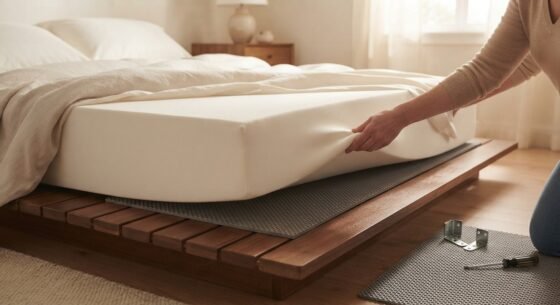
There is nothing quite as annoying as waking up in the middle of the night to find your mattress has migrated three inches off the side of the platform bed. This frustrating slide usually happens because modern smooth-backed mattresses rest on equally slick wooden slats or metal platform bases with zero natural friction. If you toss and turn throughout the night, your body momentum slowly shoves the mattress out of alignment, leaving you hanging over the edge by morning.
Fortunately, solving this slippery dilemma is remarkably simple and inexpensive if you know the right interior design hacks. Head over to Amazon, HomeGoods, or your local hardware store to pick up a non-slip rug pad or a specialized rubberized mattress mesh grid. Cut the mesh to size and lay it directly between your bed slats and the bottom of your mattress to create instant, invisible traction that holds everything securely. Alternatively, if you own a wooden platform bed from a retailer like IKEA, you can install small wooden lips or metal corner brackets along the inside perimeter to physically block the mattress from drifting.
When styling your bedroom, a shifting mattress also messes up your carefully tucked bed linens, making the entire room look unpolished and messy. By anchoring the mattress firmly to its base, your daily bed-making routine becomes a quick thirty-second task rather than a frustrating wrestling match. PRO TIP: If you have an adjustable bed base, look for retainer bars at the foot and sides of the frame, as these are specifically engineered to keep articulating mattresses locked safely in position. Taking ten minutes to secure your mattress base will keep your bedroom looking sharp and feeling structurally sound every single day.
How can you choose the right pillow to stop stubborn neck pain?

Waking up with a stiff neck and a throbbing headache is an absolute nightmare that ruins your productivity before your day even starts. Most people blame a stressful workday, but the real root cause is usually a mismatched pillow that forces your cervical spine into an unnatural angle all night long. As a designer who cares deeply about holistic home wellness, I always tell clients that your pillow is just as vital as your mattress when it comes to spinal health. The goal is to keep your head aligned directly with your spine, mimicking your natural standing posture while you sleep.
Your ideal pillow loft and filling material depend entirely on your primary sleeping position, so abandon the one-size-fits-all mentality. If you sleep on your side, you need a thick, firm pillow that fills the gap between your ear and the mattress surface to support your head’s weight. Back sleepers generally require a medium-loft pillow with a slight contour or indentation in the center to cradle the head while supporting the natural curve of the neck. Stomach sleepers, on the other hand, should look for an ultra-thin, soft down or feather pillow to prevent the neck from twisting at an extreme, painful angle.
When shopping at high street favorites like H&M Home or department stores across Europe and the US, test pillows out by lying on a mattress display if possible. Look for adjustable shredded memory foam pillows where you can pull out or add filling to customize your exact loft height at home. Investing in a quality pillow that suits your biomechanics will eliminate morning soreness and dramatically improve your overall sleep quality. Your neck will thank you after just one night of proper, customized ergonomic support.
Are you tired of removing too many decorative pillows every single night?
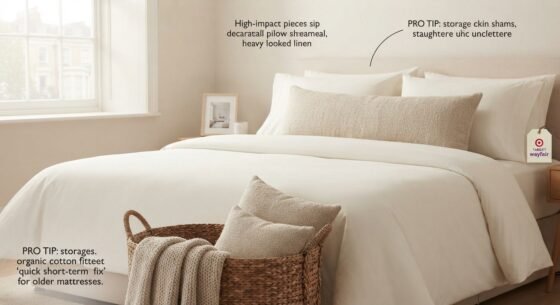
We have all fallen victim to the Pinterest-inspired bed styling trap: piling twelve oversized Euro shams, decorative bolsters, and accent cushions across the mattress. While a heavily layered bed looks stunning in a home magazine photoshoot, stripping off an army of pillows every night before bed feels like a chore. If your gorgeous decorative pillows end up living in a messy pile on the floor or a storage basket every evening, your styling strategy needs a realistic, streamlined update.
Let us embrace a minimalist chic approach that gives you magazine-worthy elegance without the exhausting nightly teardown routine. Instead of twelve separate pillows, scale back to a curated collection of three or four high-impact pieces that anchor the space effortlessly. Start with your everyday sleeping pillows propped up against the headboard, add two standard shams matching your duvet cover, and finish with one single long lumbar pillow across the front. This lean formula looks sophisticated, takes less than a minute to toss aside at bedtime, and makes making your bed in the morning an absolute breeze.
When selecting your accent pillows from brands like Wayfair or Target, focus on rich textures like heavy linen, boucle, or woven cotton rather than sheer volume. Mixing tactile fabrics adds visual depth to your bed without requiring clutter to make a strong design statement. PRO TIP: Keep an attractive canvas laundry hamper or a woven basket at the foot of the bed or in the corner of the room to easily catch your decorative pillows at night. Streamlining your pillow collection keeps your bedroom functioning smoothly for real life while maintaining an upscale, polished aesthetic.
Why do your fitted sheets constantly pop off the corners of your bed?
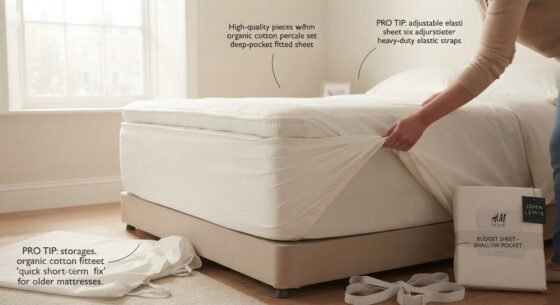
There is nothing quite as infuriating as crawling into bed at night only to feel a corner of your fitted sheet snap loose and slap your ankle. This annoying phenomenon happens because mattress manufacturers keep making beds thicker and pillow-top profiles higher, while budget sheets still feature shallow fifteen-inch pockets. Every time you shift in your sleep, the tight fabric tension overpowers weak, flimsy elastic bands, causing the corners to launch upward like a coiled spring.
Fixing this daily annoyance starts with checking your mattress depth before buying any new bedding linens online or in-store. Measure your mattress height from base to top, and always buy fitted sheets with deep pockets that offer an extra two to four inches of clearance. If you already own standard sheets that refuse to stay put, buy a set of adjustable elastic sheet suspenders or corner straps to lock the fabric underneath the mattress. These clever little gadgets clamp onto the underside corners of your sheet and pull them taut, ensuring they never slip loose again.
When shopping for durable, high-quality bedding across the UK, US, or Europe, look for reputable home textiles featuring full-perimeter heavy-duty elastic rather than just corner patches. Brands like H&M Home and John Lewis offer wonderful percale and washed linen sets designed with generous depths to accommodate modern luxury mattresses comfortably. Spending a little extra time checking pocket depths ensures your bed always looks crisp, inviting, and neatly tailored. Say goodbye to middle-of-the-night sheet adjustments and hello to uninterrupted, smooth sleeping comfort.
How can you stop heavy blankets from trapping heat and causing night sweats?
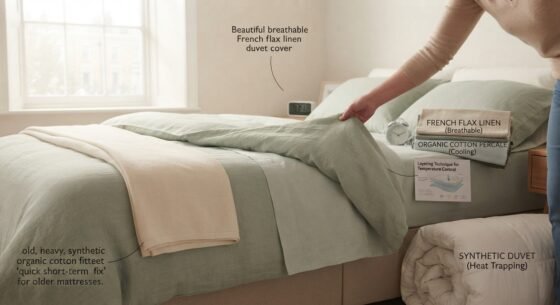
Waking up drenched in sweat in the middle of the night is an uncomfortable experience that completely destroys your sleep cycle and leaves you exhausted. Many homeowners make the mistake of buying heavy synthetic polyester comforters or thick fleece blankets that trap body heat and block natural airflow completely. If your bedroom feels like a sauna despite keeping the window cracked or the air conditioning running, your bedding textiles are working against your body’s natural cooling mechanisms.
The secret to a temperature-regulated sleep environment lies in choosing natural, breathable fibers that wick away moisture rather than trapping it against your skin. Swap out synthetic duvets for lightweight French flax linen, organic cotton percale, or bamboo-blend blankets that allow air to circulate freely all night long. If you live in a colder European climate during winter, layer multiple light blankets instead of using one suffocating heavy duvet so you can easily adjust your warmth levels. This layering technique gives you ultimate control over your microclimate as room temperatures fluctuate through the evening.
PRO TIP: Pay close attention to your mattress core materials as well, because cheap memory foam without gel infusion or open-cell structure tends to trap body heat underneath you. When selecting a new bed & mattress, look for hybrid models featuring individually wrapped pocket coils that promote active airflow through the lower support layers. Pairing a breathable mattress with lightweight natural bedding will keep you cool, dry, and blissfully comfortable through every season of the year.
Frequently Asked Questions About Bed & Mattress
Q: How often should I replace my bed & mattress? A: Most standard mattresses should be replaced every 7 to 10 years, depending on the quality of materials and how frequently they are used. If you notice visible sagging, springs poking through, or waking up with persistent back pain, it is time for an upgrade.
Q: Can a mattress topper really fix a sagging mattress? A: A high-density latex or memory foam topper can temporarily smooth out minor surface dips and add comfortable cushioning. However, it cannot fix structural sagging in the core support foundation, meaning it is only a short-term fix.
Q: What is the best way to clean a mattress safely? A: Start by vacuuming the entire surface to remove dust mites and debris, then sprinkle a generous layer of baking soda across the fabric to neutralize odors. Let it sit for a few hours before vacuuming it up again, and spot-clean stains with mild dish soap and cold water.
Q: How do I stop my bed frame from squeaking permanently? A: Tighten all visible bolts, screws, and brackets using a wrench or screwdriver to eliminate loose friction points. Applying felt pads, cork tape, or silicone lubricant between wooden slats and metal joints will silence lingering squeaks.
Q: Are expensive mattresses actually better than budget options? A: Not always, as comfort is subjective and depends on your preferred sleeping position and body weight. Many mid-range pocket-sprung and hybrid mattresses offer exceptional ergonomic support and durability that rival ultra-luxury luxury brands.
CONCLUSION
Creating the ultimate sleep sanctuary comes down to making intentional, informed choices about every layer of your bed & mattress setup. By investing in quality foundations, breathable linens, and smart structural fixes, you can turn your bedroom into the most relaxing room in your house. I invite you to explore our other home design guides to find more practical inspiration for your living spaces.
