

Over the past decade of working hands-on with residential spaces, I have watched design trends swing from sterile minimalism to vibrant maximalism, but nothing captures modern sophistication quite like Black Nouveau Decor.
When clients ask me how to introduce dark elements without making a room feel heavy or oppressive, I always point them toward this refined aesthetic.
It bridges the gap between classic vintage allure and clean contemporary lines, letting deep charcoal and obsidian tones breathe new life into everyday interiors.
Let me walk you through my signature approach to styling this dramatic yet surprisingly versatile design movement in your own home.
Quick Reference Comparison Table
| Approach / Element | Best Suited For | Primary Visual Impact | Maintenance Level |
| Matte Black Cabinetry | Kitchens & Wet Bars | Striking, fingerprint-resistant depth | Low to Moderate |
| Art Nouveau Ironwork | Entryways & Balustrades | Flowing, organic architectural lines | Low |
| Velvet Upholstery | Living Room Seating | Rich light absorption and texture | Moderate |
| Smoked Glass Accents | Tabletops & Lighting | Luminous, translucent layering | Low |
Essential Tools & Materials Checklist
Before you start transforming your rooms with black nouveau decor, gather these foundational items to ensure a seamless execution:
Matte Black Interior Paint: Opt for an ultra-matte finish (around 2% to 5% sheen) to absorb light evenly across walls and architectural trim.
Wrought Iron Hardware: Look for organic, whiplash-curve handles and cabinet pulls that reflect classic Art Nouveau motifs.
Warm Ambient Lighting Bulbs: Secure LED bulbs measuring between 2400K and 2700K to keep dark surfaces looking inviting rather than stark.
Textured Fabrics: Procure heavy black cotton velvet, charcoal bouclé, and patterned jacquard swatches to prevent flat visual planes.
1. Statement Black Nouveau Mantelpiece
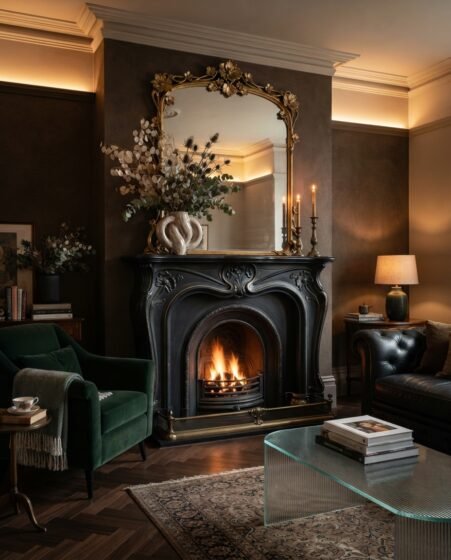
When I style a living room fireplace, I treat it as the absolute anchor of the space. Coating your mantel in a deep charcoal lacquer or painting the surrounding brick a rich obsidian creates an instant focal point that draws the eye upward. I love pairing this dark architectural anchor with gilded mirrors and dried botanicals to keep the arrangement feeling organic and alive.
2. Whiplash Curve Cast Iron Railings
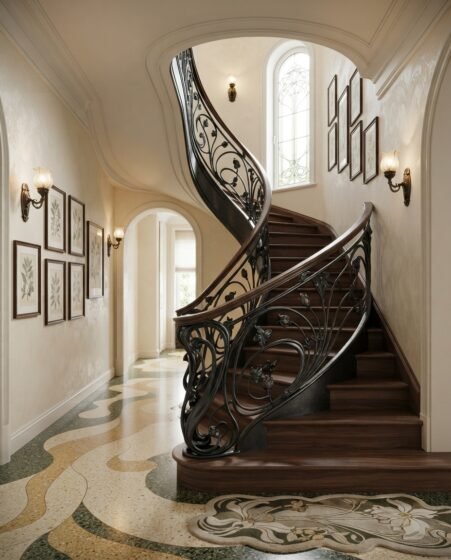
The signature hallmark of the Art Nouveau movement is its embrace of asymmetrical, whiplash-curved lines inspired by stems and vines. Integrating custom or vintage cast iron stair railings finished in a satin black powder coat instantly introduces that fluid, rhythmic grace to an otherwise boxy hallway. It transforms a standard safety barrier into a high-art sculptural installation.
3. Velvet Black Nouveau Accent Chairs
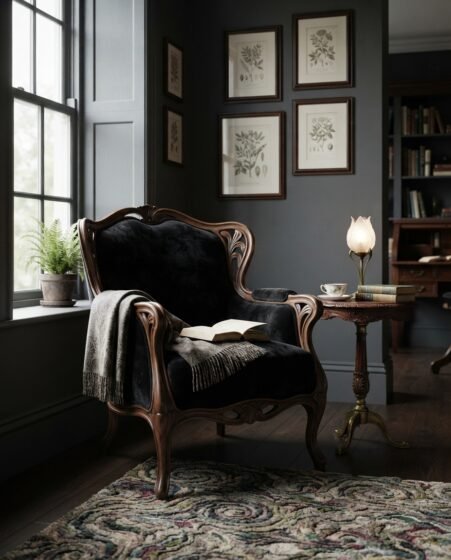
Texture is the secret weapon that keeps dark interiors from feeling cold or uninviting. I frequently source vintage parlor chairs upholstered in heavy black velvet, which catches light dynamically across its plush pile. Placed near a reading nook or a sunlit window, these seating pieces offer deep visual warmth and incredible tactile luxury.
4. Smoked Glass Pendant Lighting
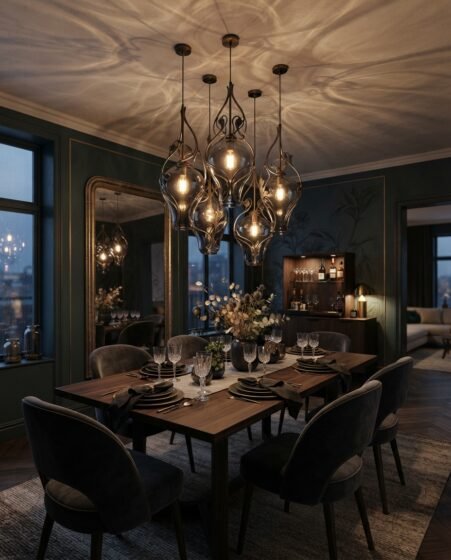
Lighting fixtures act as the jewelry of any room, and smoked glass takes dark design to an entirely new level. Hanging a cluster of handcrafted smoked glass pendants over a dining table or kitchen island diffuses a moody, romantic glow. The translucent charcoal tint softens the intensity of the bulbs while casting intricate, shifting shadows along your ceiling.
5. Obsidian Ceramic Tableware Displays
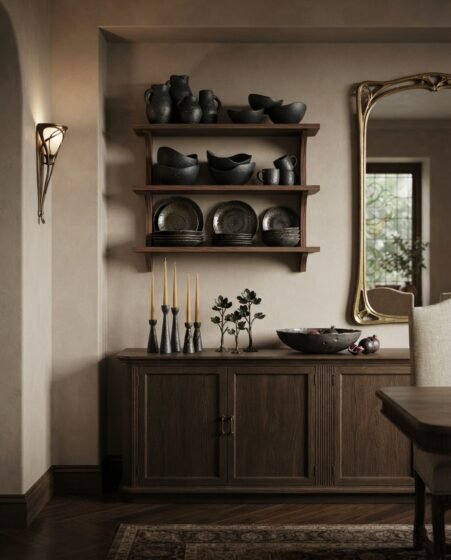
Curating open shelving or a dining room buffet becomes an art form when you utilize organic, matte-glazed ceramics. I always encourage my clients to collect handmade ceramic vessels featuring irregular, organic silhouettes finished in deep black washes. Grouping these vessels in odd numbers creates an effortless tablescape rich with earthy imperfection.
6. Sculptural Black Nouveau Wall Sconces
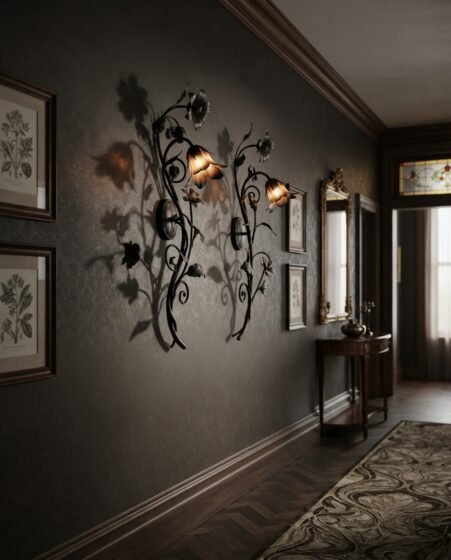
Lighting should always do double duty as wall art, especially when working with darker color palettes. Choosing cast-bronze or matte black sconces featuring winding floral stems or petaled backplates adds subtle sculptural dimension to blank hallway walls. When illuminated at night, they cast dramatic, petal-like silhouettes across the surrounding drywall.
7. Damask Patterned Charcoal Wallpapers
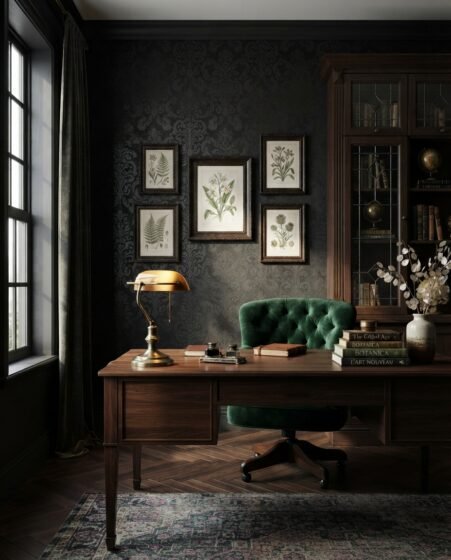
Pattern play is essential for breaking up large expanses of dark color without sacrificing moodiness. I often specify heavy-weight non-woven wallpapers featuring subtle, tonal black damask patterns that catch the ambient light differently throughout the day. This layered approach adds incredible depth to powder rooms or intimate home offices.
8. Matte Black Architectural Interior Doors
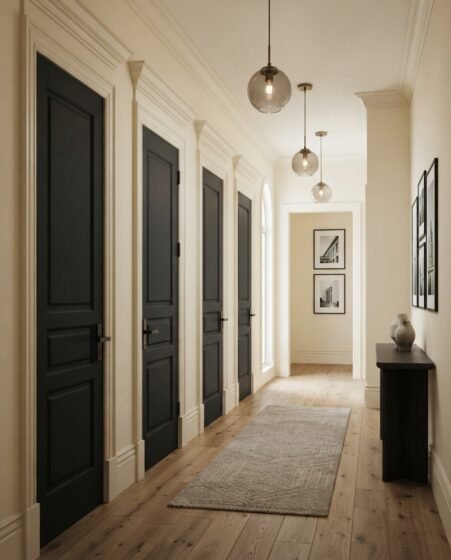
Swapping out standard hollow-core doors for solid wood doors painted in a rich, velvety black is one of my favorite interior architectural upgrades. This simple swap instantly grounds the entire floor plan, creating a deliberate rhythm of dark frames that guides the eye naturally from one room into the next.
9. Intricate Wrought Iron Room Dividers
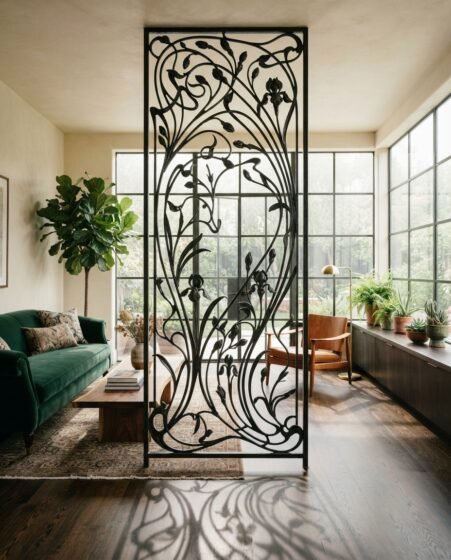
In open-concept floor plans, carving out intimate zones can feel tricky without blocking precious natural light. I love using freestanding or mounted wrought iron screens featuring botanical ironwork patterns to zone spaces softly. The intricate open-work frame of black nouveau decor allows air and light to circulate while establishing a distinct spatial boundary.
10. Dark Stained Herringbone Hardwood Floors
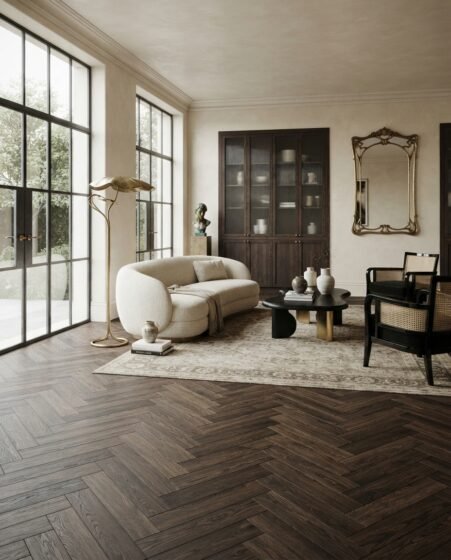
Flooring sets the psychological temperature of a home, and dark wood laid in a classic herringbone pattern speaks volumes of timeless elegance. Using a deep espresso or custom carbon stain on white oak planks accentuates the natural grain while providing a sophisticated, grounding foundation for lighter furniture pieces to pop against.
11. Sculptural Obsidian Coffee Table Centers
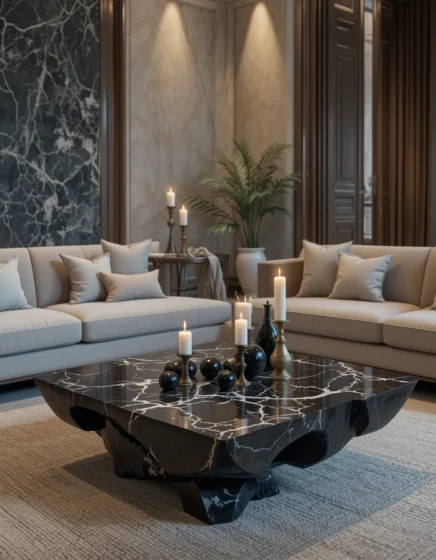
Your coffee table surface deserves a curated arrangement that feels intentional rather than cluttered. I frequently style low-slung, dark-stained wood or cast-resin tables with heavy marble trays, obsidian spheres, and antique brass candlesticks. This contrast between cold polished stone and warm flickering candlelight establishes an immediate sense of refined luxury.
12. Black Nouveau Framed Botanical Etchings
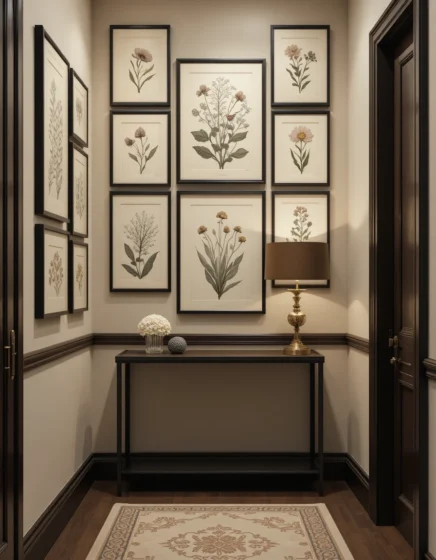
Art doesn’t always need bright colors to command attention in a well-designed room. Grouping vintage botanical illustrations of moody night-blooming flowers inside slender black metal frames creates a cohesive gallery wall. The fine-line sketches honor traditional craftsmanship while reinforcing the organic motifs central to this design style.
13. Fluted Charcoal Wall Panelling
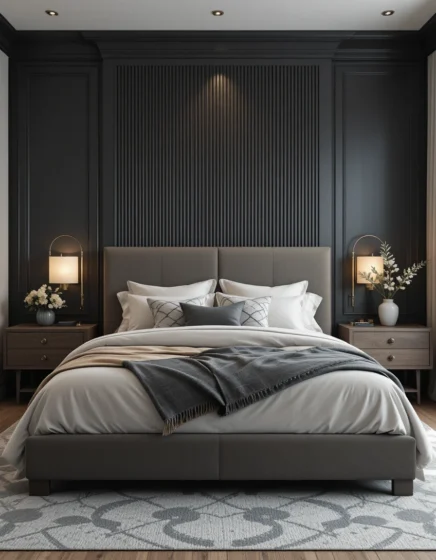
Flat walls can sometimes feel lifeless, which is why introducing vertical texture is one of my go-to spatial design techniques. Installing floor-to-ceiling fluted wood wall panels finished in a matte black lacquer adds dramatic verticality and acoustic warmth. It works exceptionally well behind a bed headboard or lining a sophisticated entryway foyer.
14. Antique Brass and Black Hardware Pairings
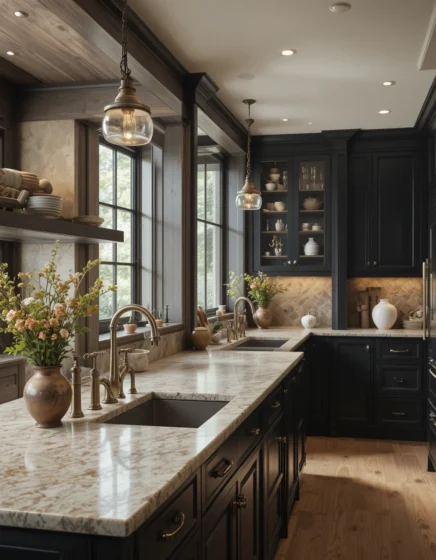
Monochromatic spaces run the risk of looking flat if you fail to introduce secondary metallic accents. I always pair matte black cabinetry and fixtures with warm, unlacquered antique brass hinges, pulls, and faucets. This pairing introduces a timeless metallic warmth that catches natural window light brilliantly.
15. Noir Ceramic Tile Backsplashes
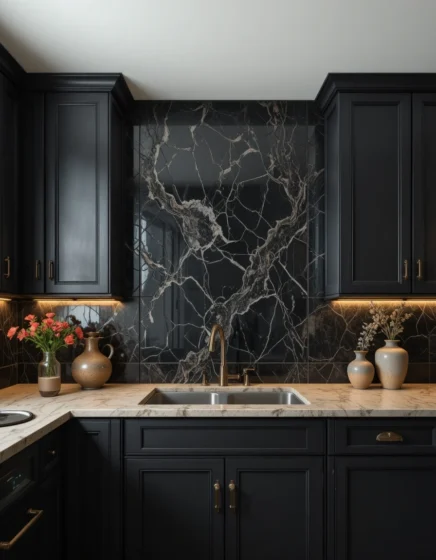
Kitchens and bathrooms are prime real estate for experimenting with high-end tile shapes like handmade zellige or elongated pickets. Opting for glazed black zellige tiles with subtle color variations creates a shimmering, light-reflective backsplash. The natural imperfections in the tile glaze catch every flicker of under-cabinet lighting.
16. Heavy Black Velvet Window Draperies
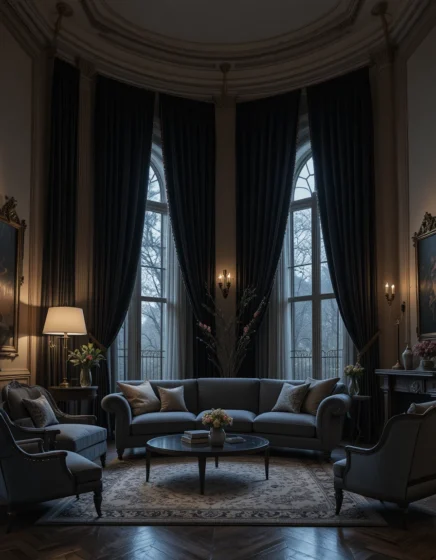
Soft window treatments play a massive role in acoustic control and perceived room height. Hanging floor-to-ceiling black velvet draperies on heavy brass rods adds theatrical elegance and tactile richness. When drawn at dusk, they cocoon the room in a comforting, private sanctuary-like atmosphere.
17. Organic Cast-Aluminum Branch Mirrors
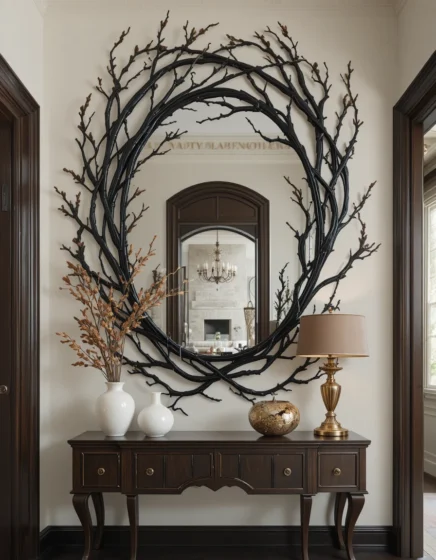
Mirrors are optical tools used to bounce light and expand perceived square footage, but their frames dictate their design pedigree. I look for oversized wall mirrors framed in cast aluminum shaped like intertwined tree branches or budding vines finished in black. It merges rustic natural forms with high-end metropolitan polish seamlessly.
18. Matte Black Open Shelving Brackets
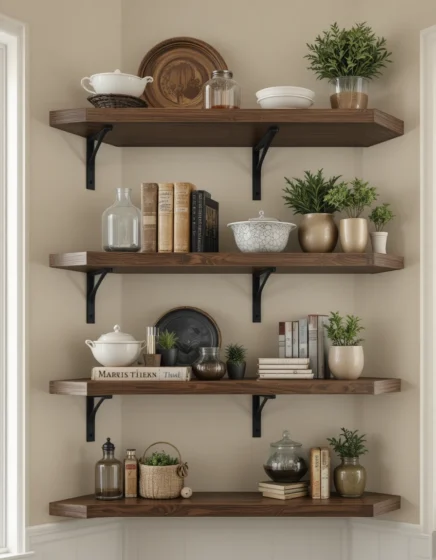
Displaying your favorite dishware or library books looks remarkably crisp when supported by structural iron hardware. Utilizing heavy-duty matte black brackets paired with dark walnut shelving boards creates a seamless, floating effect along your kitchen or study walls. It keeps the visual weight light while offering robust structural support.
19. Dark Soapstone Kitchen Countertops
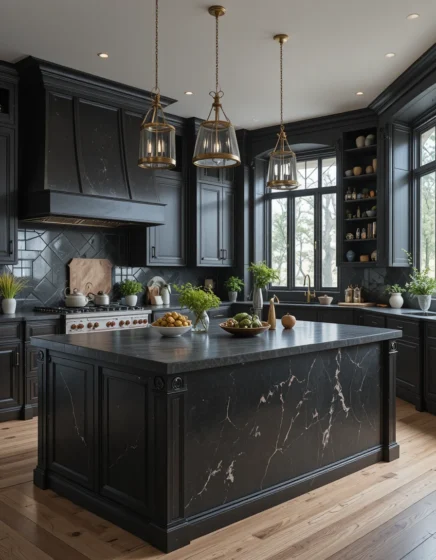
Natural stone brings an unmatched tactile authenticity to residential design interiors. Soapstone offers a velvety, matte texture that develops a gorgeous, organic patina over years of daily cooking and living. Its deep charcoal gray hue with subtle white veining serves as the ultimate working surface for a refined culinary space.
20. Sculptural Black Tiered Plant Stands
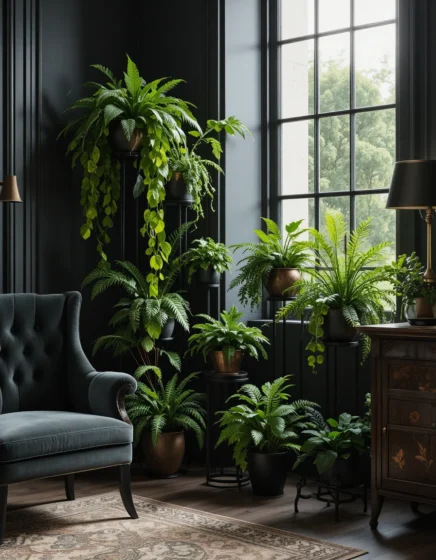
Bringing living greenery into a moody interior is essential for maintaining a healthy, balanced ecosystem at home. Elevating cascading plants like trailing pothos or ferns on slender, wrought iron tiered plant stands creates striking vertical lines. The vibrant green foliage pops intensely against the dark metal framework, completing your balanced interior vision.
Optical Tricks and Pro Styling Hacks
When designing with dark tones, managing light reflection is your primary technical challenge. I always advise placing your darkest elements—like velvet sofas or matte walls—directly opposite your primary light sources to maximize depth without swallowing room brightness. Furthermore, incorporate varying sheens; pairing high-gloss black lacquer with ultra-matte chalk paint in the same room tricks the eye into perceiving complex architectural dimensions. Always remember that negative space is your best friend when working with saturated palettes.
Surprising Facts and Spatial Science
Color psychology and environmental physics reveal fascinating insights about how our brains process dark interior environments. Research in spatial perception indicates that matte dark surfaces absorb up to 90% of incident light, which actually reduces visual clutter and calms the human nervous system by minimizing micro-distractions in our peripheral vision. Furthermore, cooler charcoal tones have been scientifically shown to lower ambient room temperature perceptions by a fraction of a degree, making them exceptionally comforting during warmer seasonal transitions.
Frequently Asked Questions
Does black nouveau decor make small rooms look smaller?
Not necessarily. While dark colors absorb light, using ultra-matte finishes on walls blurs corner boundaries, tricking the eye into perceiving boundless depth rather than restricted physical dimensions.
What lighting color temperature works best with dark interiors?
Stick to warm white LEDs ranging between 2400K and 2700K. Cooler bulbs above 3000K will make dark charcoal and black surfaces look clinical, flat, and uninviting.
How do I keep a dark room from feeling depressing?
Incorporate varied tactile textures like velvet, brushed brass, natural wood grain, and abundant indoor greenery to break up flat surfaces and introduce organic vitality.
Final Thoughts
Mastering Black Nouveau Decor is ultimately an exercise in confidence, balance, and intentional restraint. By honoring organic forms, playing fearlessly with tactile finishes, and respecting how light moves through your rooms, you can create a home that feels both deeply grounding and breathtakingly sophisticated.
I encourage you to start small—perhaps with a single painted accent wall or a statement lighting fixture—and watch how your entire living experience transforms for the better.