

In my years of styling homes for the season, I’ve learned that primitive fall craft does something a polished, store-bought decoration simply cannot.
It says handmade before a single word is spoken, and the imperfection itself becomes the decoration, giving every stain, stitch, and rusty edge you add real room to shine.
A grungy fabric pumpkin, a rusted tin garland, or a moody blackened candle can all bring genuine warmth and personality to a mantel or entryway.
Below are 20 primitive fall craft ideas that blend old-world texture with fresh seasonal color, so you can find the perfect match for your own home.
Quick Reference: Primitive Fall Craft At a Glance
| Category | Best For | Skill Level | Typical Cost |
|---|---|---|---|
| Fabric & fiber crafts | Living rooms, mantels | Beginner | Low ($5-$15) |
| Wood & bark projects | Entryways, porches | Beginner-Intermediate | Low-Medium |
| Rusty tin & metal accents | Kitchens, shelves | Intermediate | Medium |
| Dried botanicals | Tables, wreaths | Beginner | Very Low |
| Painted primitives | Statement pieces | Intermediate | Medium |
Things You Need Before You Start
I always tell my clients to gather supplies before touching a single project, since primitive fall craft relies on layering textures, and running out mid-project breaks the rhythm.
- Homespun or osnaburg fabric (roughly ½ yard per project)
- Coffee, tea bags, or walnut ink for aging fabric and paper
- Rusty tin, real or faux (small sheets, about 6×6 inches)
- Raffia, jute twine, and grungy wire
- Dried corn husks, wheat stalks, or bittersweet vine
- Unfinished wood slices (4-6 inches in diameter)
- Muted acrylic paints: mustard, barn red, black, and cream
- A hot glue gun and basic sewing supplies
1. Grungy Osnaburg Pumpkin Bowl Fillers
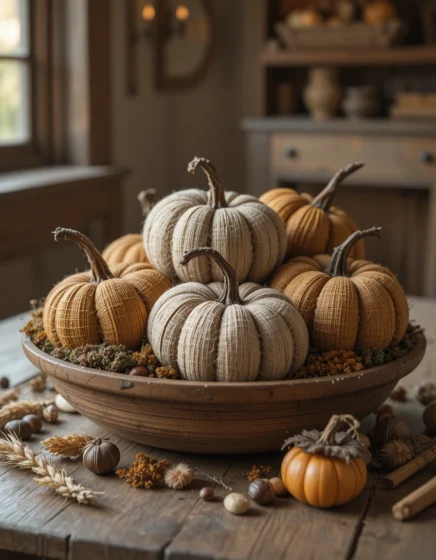
I stitch simple pumpkin shapes from coarse osnaburg fabric, stuff them loosely with polyfill, and stain the outside with strong coffee before drying. The rough, blotchy staining is the entire point here; even, factory-perfect color ruins the effect. I finish each one with a stick stem and a strip of rusty wire wrapped twice around the top.
🟤 Fabric coarse osnaburg ☕ Aging strong coffee stain 🪵 Finish stick stem, rusty wire
2. Rusty Tin Star Garland
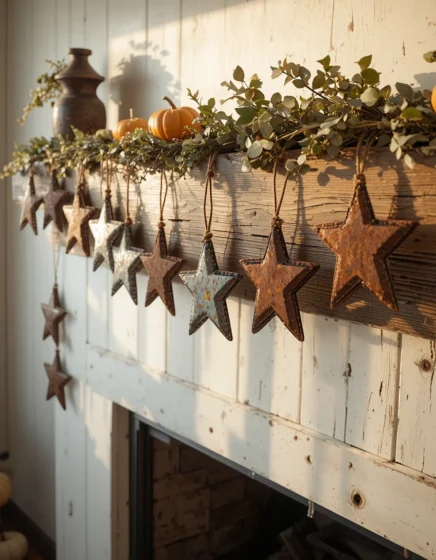
Old tin ceiling tiles or cheap tin sheets cut into rough five-point stars make one of my favorite garlands. I punch a hole in each star, thread them onto jute twine with uneven spacing, and let the natural rust patina do the styling work.
💡 Quick Tip
This garland actually looks better after a season outdoors, since real weather does the aging work no craft supply can fake.
3. Dried Corn Husk Wreaths
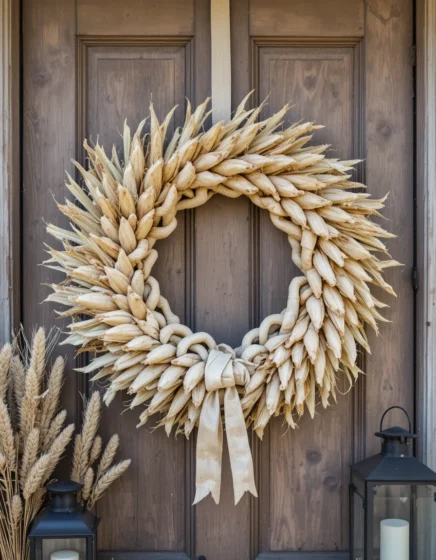
Instead of the tidy wreaths sold in stores, I bundle dried corn husks in loose clusters and wire them onto a grapevine base, letting the ends fray naturally.
STORE-BOUGHT WREATH Tidy, symmetrical, but reads as artificial.
HAND-BUNDLED HUSK WREATH ✨ Loose, frayed, and genuinely farmhouse.
4. Primitive Blackened Beeswax Candles
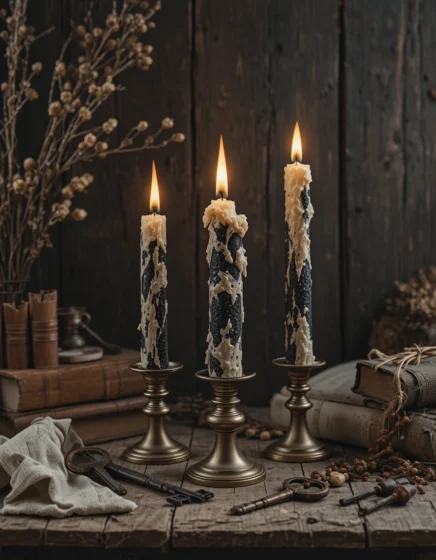
I dip plain taper candles in melted black candle wax repeatedly, then rub the surface once cooled to reveal streaks of the original color underneath. The uneven, weathered look mimics candles that have burned for years.
1
Dip plain taper candles in melted black wax.
2
Let each layer cool before the next dip.
3
Rub the surface to reveal streaks underneath.
5. Homespun Table Runner with Frayed Edges
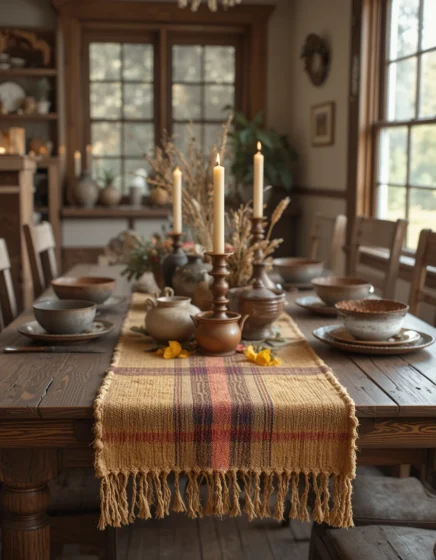
I cut homespun fabric to length, pull threads along each edge until they fray naturally, and skip hemming entirely. Adding a mustard or barn-red plaid pattern reinforces the old-farmhouse feeling without a single stitch of embroidery.
| Element | Detail |
|---|---|
| Fabric | Homespun plaid, mustard or barn red |
| Edges | Hand-frayed, no hem |
6. Bittersweet Vine Door Swag
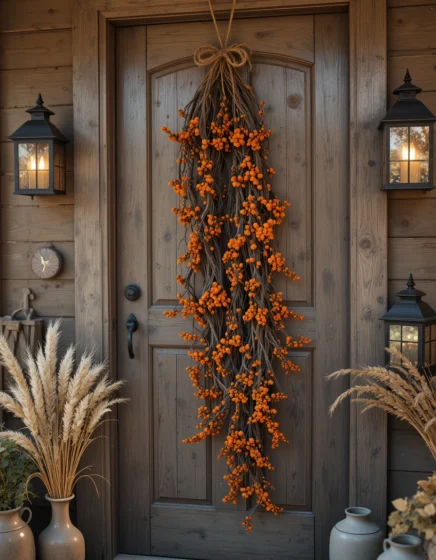
Fresh bittersweet vine, twisted loosely and hung with a scrap of jute, brings genuine orange-and-gold color without artificial dye. I let the berries dry in place over weeks, which deepens the color and adds movement as the vine curls.
✅ Do this Twist the vine loosely, not tightly.
Let it dry in place on the door.
🚫 Skip this Spraying it with artificial preservatives.
Hanging it somewhere out of natural light.
7. Rusty Bell Pumpkin Toppers
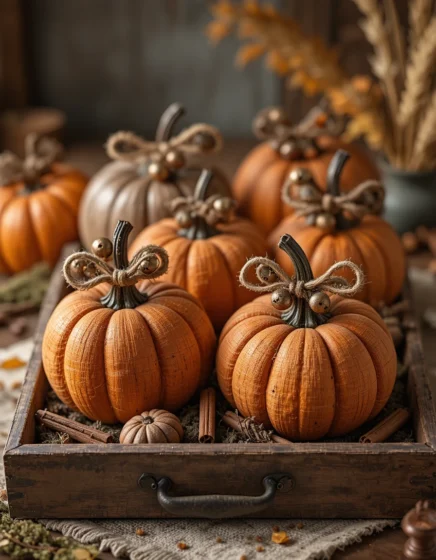
Small rusty jingle bells threaded onto raffia and tied to the stems of fabric or wood pumpkins add sound and texture together. This is a detail most people skip, but it’s one clients remember most in my finished rooms.
THE ONE THING TO REMEMBER
Sound is a texture too — the soft jingle when someone brushes past is what makes guests actually notice this detail.
8. Salt Dough Autumn Leaf Ornaments
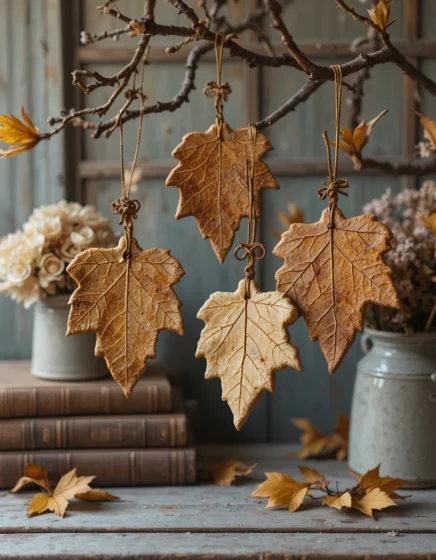
I roll salt dough thin, press real leaves into the surface for texture, bake until firm, and stain with tea for an aged look. Hung from grungy wire, they read as antique rather than crafted last weekend.
🌿 Texture real pressed leaves 🍵 Aging black tea stain 🔗 Hanging grungy wire loop
9. Wood Slice Pumpkin Stack
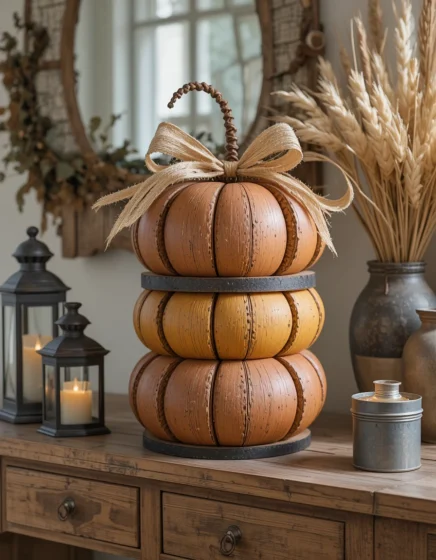
Unfinished wood slices, stacked and glued in descending size, painted in flat mustard and barn red, make a sturdy tabletop pumpkin with none of the shine of plastic versions. A twisted wire stem finishes it off convincingly.
PLASTIC PUMPKIN Shiny, uniform, and instantly reads as fake.
WOOD SLICE STACK ✨ Matte, grainy, and genuinely tabletop-worthy.
10. Grubby Muslin Ghost Poppets
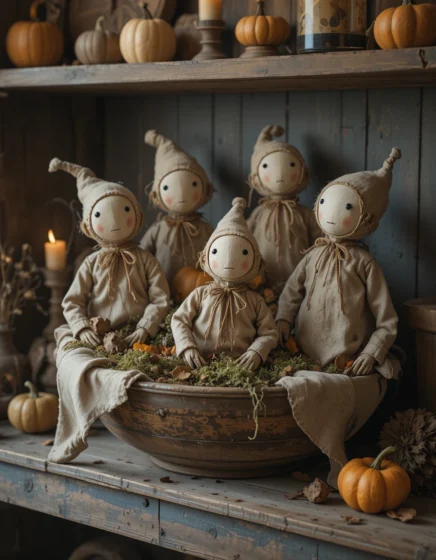
Even in fall, I like adding a few muslin figures stuffed loosely and tied at the neck with jute, their faces left blank on purpose. The rough, undyed muslin and lopsided stitching are what make them feel handmade rather than manufactured.
💡 Quick Tip
Leave the stitching slightly crooked on purpose — a poppet that’s too neat starts to look store-bought instead of gathered.
11. Rusty Cookie Cutter Pumpkin Patch
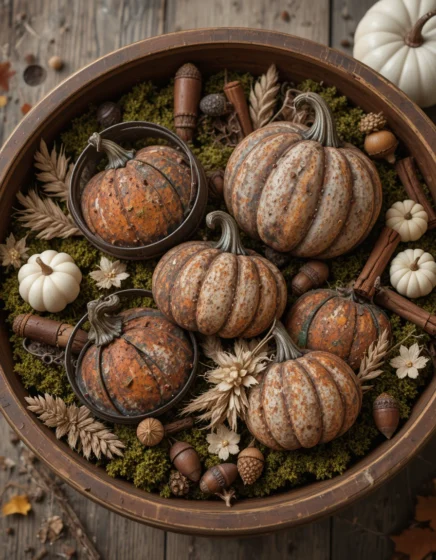
Vintage-style rusty tin cookie cutters, arranged in a shallow bowl with dried moss and wheat stalks, create an unexpected primitive fall craft vignette for a kitchen counter or open shelf.
🥣 Container shallow bowl 🌾 Filler dried moss, wheat stalks 🔧 Accent rusty tin cutters
12. Homespun Pillow with Blanket Stitch
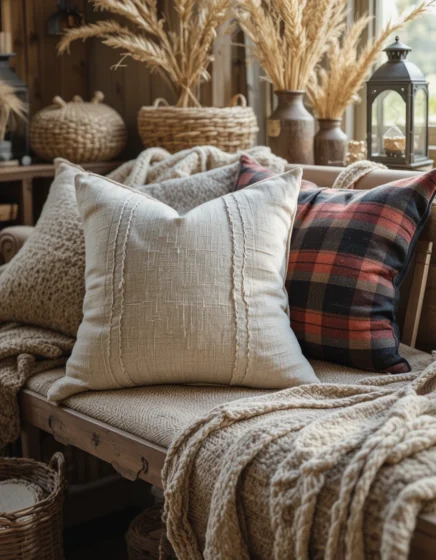
I sew simple square pillows from homespun plaid, adding a rough blanket stitch by hand along the seams instead of a machine finish. The visible, imperfect stitching is a signature primitive detail that machine sewing simply can’t replicate.
✅ Do this Sew the blanket stitch by hand.
Let the stitch spacing stay slightly uneven.
🚫 Skip this Finishing the seam on a machine.
Ironing out every wrinkle in the fabric.
13. Dried Apple Slice Garland
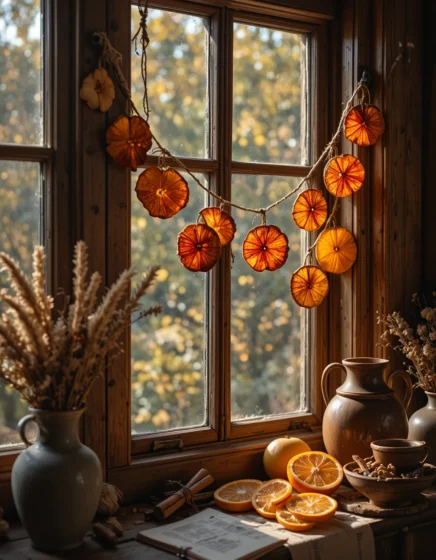
Thin apple slices, dehydrated slowly until leathery and dark, threaded onto twine with cinnamon sticks between each piece, fill a room with genuine autumn scent alongside the visual texture.
1
Slice apples thin and dehydrate slowly.
2
Thread slices onto twine with cinnamon sticks.
3
Hang where the scent can circulate the room.
14. Primitive Scarecrow Head on a Stake
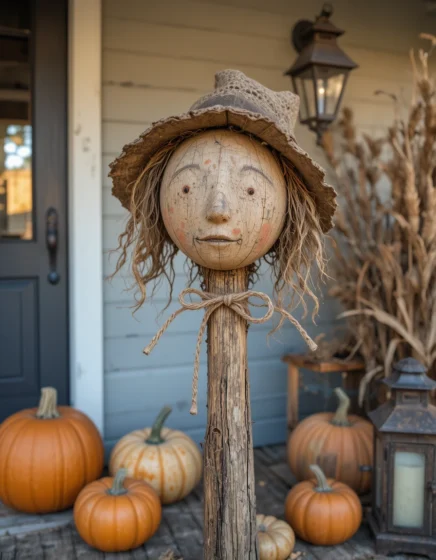
A muslin sack stuffed and stained with coffee, tied with jute at the neck, and set atop a rough wooden stake makes a striking front-porch accent that avoids the overly cheerful look of store-bought scarecrows.
STORE-BOUGHT SCARECROW Bright, cheerful, and often plastic-faced.
COFFEE-STAINED MUSLIN HEAD ✨ Weathered, faceless, and quietly eerie in a good way.
15. Rusted Tin Punched Lanterns
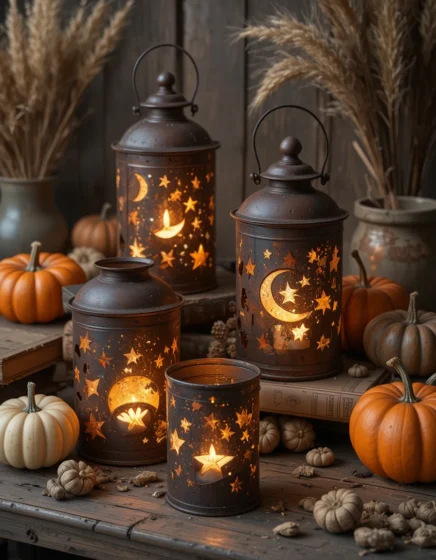
I punch simple star or moon patterns into tin cans with a nail and hammer, then set votive candles inside so the light spills through the rough holes at night. The imperfect spacing of the punches only adds to the charm.
| Element | Detail |
|---|---|
| Base | Recycled tin can |
| Pattern | Hand-punched stars or moons |
| Light source | Votive candle |
16. Wheat Bundle Door Leaners
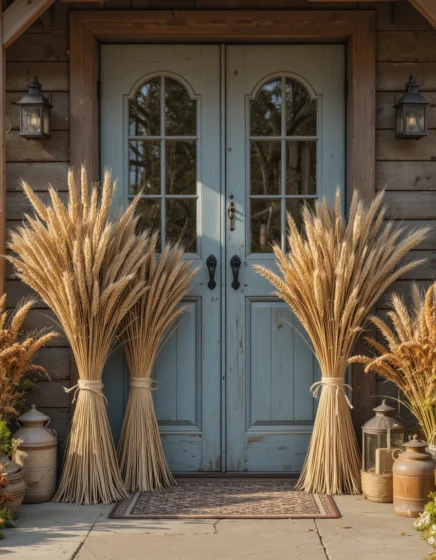
Dried wheat stalks, gathered into a loose bundle and tied with raffia at two points, leaned against a door or porch post, bring height and texture without any actual crafting skill required.
💡 Quick Tip
Tie the bundle at two points, not one — a single tie lets the stalks splay open too far and lose their shape.
17. Aged Paper Harvest Tags
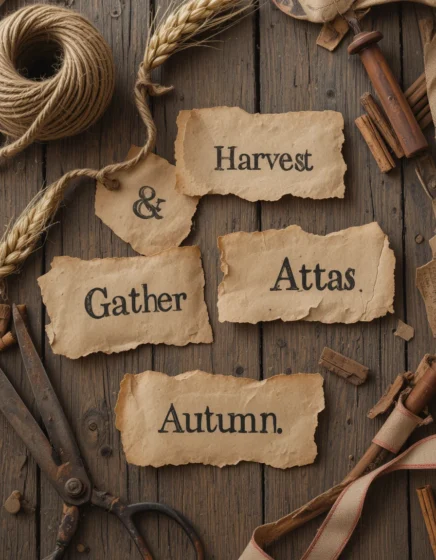
Plain kraft paper tags, dipped in coffee or tea and dried with a slight curl, stamped with simple words like “harvest” or “gather,” tie beautifully onto gift bundles, jars, or wreaths.
☕ Aging coffee or tea dip 🖋️ Detail stamped harvest words 🎀 Use jars, wreaths, bundles
18. Grungy Fabric Acorn Bowl Fillers
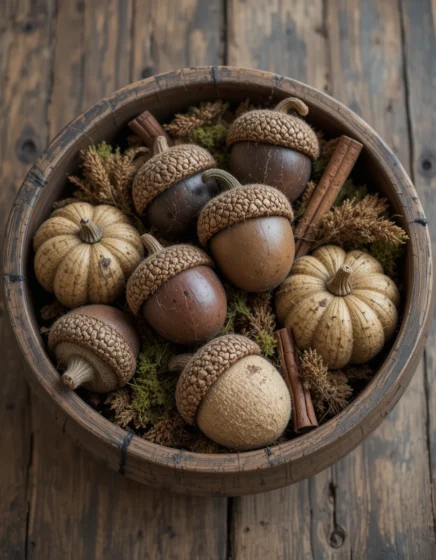
Small acorn shapes sewn from stained homespun fabric, stuffed firmly, and topped with a real acorn cap glued on, mix wonderfully with pumpkin fillers in a primitive-style bowl.
THE ONE THING TO REMEMBER
A real acorn cap glued to a fabric acorn is the single detail that convinces people it’s handmade, not purchased.
19. Rusty Wire Pumpkin Sculptures
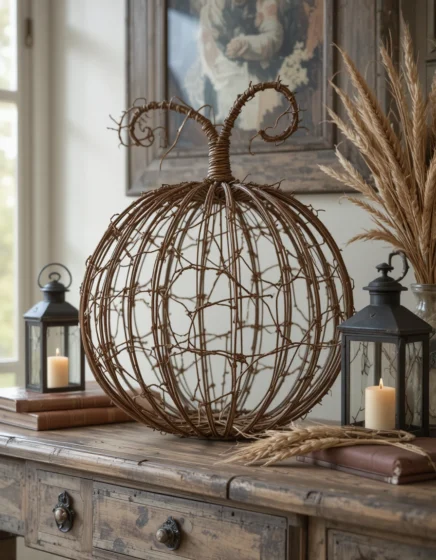
Bending heavy-gauge rusty wire into a rounded pumpkin silhouette, then wrapping it loosely with raffia or dried vine, creates an open, sculptural piece that adds dimension without bulk.
1
Bend heavy-gauge wire into a pumpkin silhouette.
2
Wrap loosely with raffia or dried vine.
3
Set among flatter pieces for visual height.
20. Primitive Painted Crow on a Stick
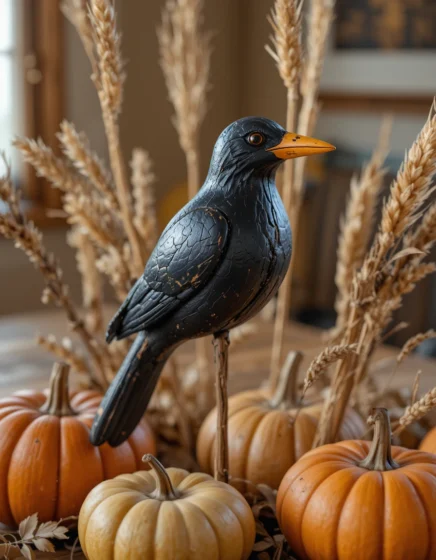
A simple wood-cutout crow, painted flat black with a hint of worn mustard on the beak, mounted on a thin dowel and pushed into a pumpkin or wreath, is a small detail that instantly signals primitive fall craft style.
🖤 Paint flat black, worn mustard beak 🪵 Mount thin dowel 🎃 Placement pumpkin or wreath
Optical Tricks & Pro Styling Hacks
I rely on a few tricks in every primitive fall craft project I style. Grouping items in odd numbers, usually three or five, reads more natural to the eye than pairs. Layering heights — tall wheat bundles behind shorter pumpkin stacks — keeps a vignette from looking flat. And I always mix at least two textures, fabric and tin, or wood and dried botanical, in the same grouping, since a single texture can start to look staged rather than gathered.
Surprising Facts Behind Primitive Fall Craft
Color psychology backs up why this style feels so warm. Muted mustard and barn-red tones sit close to the natural light spectrum of autumn sunlight, which research on color perception links to feelings of comfort and nostalgia. Rough, matte textures also absorb more ambient light than glossy finishes, which is part of why primitive rooms feel calmer and less visually busy, even with plenty of objects on display.
Final Thoughts
Primitive fall craft never asks for perfection. Every uneven stitch, every blotchy coffee stain, every crooked star cut from tin adds character rather than taking away from it, and that’s exactly what separates it from anything mass-produced.
Start with just two or three pieces from this list rather than all twenty at once, and let your collection grow the way a real primitive home would, slowly, honestly, and with a little rust along the way.
Frequently Asked Questions
What makes a craft “primitive” style? Primitive style relies on rough textures, muted natural colors, and visible imperfections like fraying, staining, or uneven stitching rather than polished, symmetrical finishes.
Can I make primitive fall crafts without sewing? Yes. Wood slice pumpkins, rusty tin stars, dried wheat bundles, and painted wood cutouts require no sewing at all.
How do I age fabric for primitive projects? Steep the fabric in strong coffee or black tea, wring it out, and let it air dry unevenly for a mottled, aged look.
Is primitive fall craft budget-friendly? Very. Most materials, dried botanicals, scrap fabric, and basic tin, cost under fifteen dollars per project.