

Creating an efficient, beautiful kitchen comes down to optimizing your layout, maximizing storage, and choosing resilient materials that handle the chaos of daily cooking.
To transform your space into an inviting culinary hub, you need to eliminate common layout bottlenecks like cramped walkways, poor task lighting, and unorganized cabinets.
By implementing targeted design tweaks, you can easily turn your cooking area into a highly functional, visually stunning heart of the home.
Quick Answer:
Optimize your work triangle by ensuring your sink, stove, and refrigerator form an unobstructed, cohesive path for effortless meal preparation.
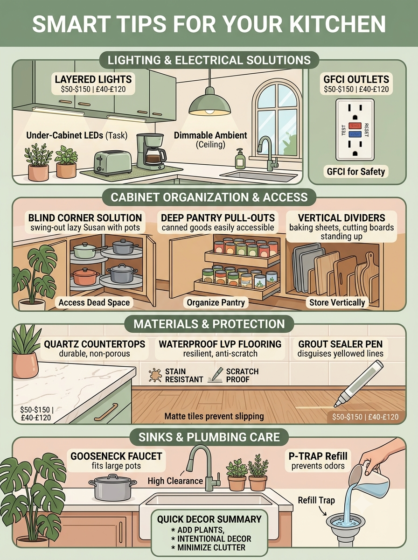
Install under-cabinet lighting to banish dark shadows over your prep zones and improve safety while cutting ingredients.
Utilize vertical cabinet dividers to organize baking sheets, cutting boards, and large pans without creating cluttered stacks.
Introduce rolling pull-out organizers into deep pantry shelves and blind corners to make every item instantly accessible.
Are Layout Bottlenecks Ruining Your Culinary Workflow?
The layout of your kitchen dictates how much you enjoy preparing meals, throwing weekend dinner parties, or making your morning coffee.
Here’s the thing: we often blame our cooking skills for a chaotic evening when the real culprit is a poorly planned spatial flow. Let’s look at some actionable tips and quick solutions for kitchen layout headaches that keep you from moving smoothly.
Broken “Work Triangle”
When your refrigerator, stove, and sink sit too far apart or are blocked by a massive barrier, simply cooking a basic meal feels like a marathon. If you can’t completely remodel the plumbing or gas lines, focus on minor adjustments to create a secondary prep station. Add a mobile kitchen cart from IKEA or Wayfair between the zones to bridge the gap and hold your frequently used ingredients.
Blind Corner Cabinets
Deep corner cabinets often become dark, forgotten zones where old small appliances go to gather thick layers of dust. Retrofit these deep cavities with a swing-out organizer like a LeMans pull-out shelf or a classic lazy Susan mechanism. These smart hardware solutions bring your hidden pots and pans directly out into the light with a gentle pull.
Insufficient Countertop Prep Space Next to the Stove
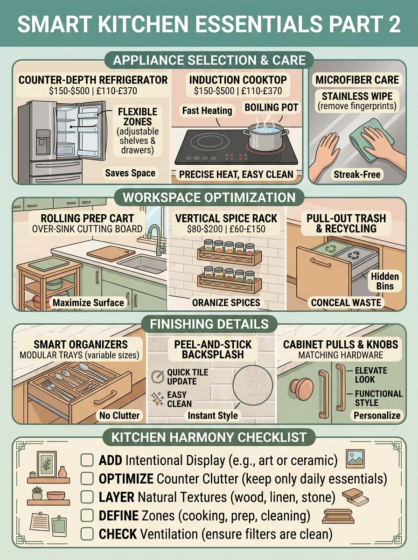
Trying to chop vegetables or set down a boiling hot pot when your stove is pressed against a wall is dangerous and frustrating. Reclaim valuable workspace by investing in a sturdy, oversized wooden noodle board or a large over-sink cutting board from Target or Dunelm. This temporarily extends your workspace directly over unused burner grates or sink basins while you prep.
Upper Cabinets Mounted Too High
Straining your back or constantly climbing onto a shaky dining chair to reach everyday coffee mugs is an accident waiting to happen. Relocate your most frequently used plates, glasses, and bowls to the lowest shelves of your upper cabinets or upper drawers. Use the highest shelves exclusively for seasonal items, like holiday platters or specialized baking molds.
Kitchen Island Blocking the Walking Path
An oversized island centered in a modest room forces you to constantly navigate an awkward obstacle course while carrying hot dishes. Ensure you maintain at least 36 to 42 inches ($90–105\text{ cm}$) of clear open space all around the perimeter of your island. If your current island is fixed and too large, consider replacing it with a slim, rolling butcher block table that you can wheel against the wall when guests arrive.
Narrow Walkways Causing Tight Squeezes
When two people attempt to cook together in a narrow galley kitchen, opening the oven door shouldn’t pin your partner against the opposite counter. Choose appliances with low-profile handles or flush profiles to maximize every fraction of an inch. When designing the space, select open shelving rather than bulky upper cabinet doors to make the physical walkway feel significantly wider.
PRO TIP: If you are dealing with ultra-narrow walkways, choose cabinet doors with integrated J-pull handles or push-to-open latches. Eliminating protruding metal hardware prevents you from catching your clothes or bruising your hips as you move past.
How Can You Conquer Cabinet Clutter and Storage Chaos?
A disorganized cabinet setup slows down your cooking speed and forces you to hunt through mountains of clutter just to find a single lid.Now here’s where it gets interesting: you don’t need more cabinets; you just need to utilize the interior space you already have far more efficiently.
Deep Pantry Shelves
Deep, dark pantry shelves are notorious black holes where canned goods and spices hide until they expire. Stop losing food by installing deep wooden or plastic pull-out storage drawers that function like slides. This allows you to pull the entire contents of the shelf forward into the light, keeping everything fully visible and accessible.
“Tupperware Avalanche”
We have all experienced the frustration of opening a cabinet door only to have a mountain of plastic container lids tumble out onto the floor. Purge any warped, stained containers that lack matching pieces, and nest the remaining bases neatly by size. Store all the corresponding lids vertically inside an inexpensive wire dish rack or a dedicated plastic lid organizer from HomeGoods or Next Home.
Heavy Pots and Pans Stacked Precariously
Stacking heavy cast-iron pans directly on top of each other scratches their finishes and makes grabbing the bottom pan a noisy, heavy chore. Slide an adjustable metal pan organizer rack into your lower cabinet to store your pans horizontally or vertically on individual tiers. This keeps the weight evenly distributed and lets you grab a skillet without moving three other pots.
Inadequate Vertical Storage for Baking Sheets
Storing thin, wide items like baking sheets, muffin tins, and large wooden cutting boards in flat, stacked piles makes them hard to slide out. Screw simple wooden or wire vertical cabinet dividers into an upper cabinet or the deep drawer beneath your oven. This allows you to store these items upright like books on a library shelf, saving immense space.
Spice Jars Cluttered on Countertops
Leaving dozens of colorful spice jars scattered loosely around your stove creates visual clutter and eats up precious meal prep real estate. Mount a series of sleek spice racks directly onto your blank wall space, or place a tiered acrylic spice drawer insert inside a top drawer. This keeps your seasonings organized alphabetically and completely clear of your work surfaces.
Under-Sink Cabinet Mess
The dark cavern beneath the kitchen sink often turns into a messy damp pile of half-empty cleaning bottles, sponges, and plastic bags. Install a two-tier expandable under-sink organizer rack that fits neatly around your existing drainage pipes. Hang spray bottles by their triggers from a tension rod mounted across the top of the cabinet to double your usable space.
What Are the Best Fixes for Common US Kitchen Layout Issues?
American kitchens are famous for their generous scaling, but large spaces bring their own set of unique design challenges.Let’s look at how to scale back massive appliances and layout elements so your kitchen feels balanced and highly functional.
Over-the-Range Microwave Mounted Too High
Reaching up over a steaming hot stove to pull out a heavy, boiling bowl of soup from a high microwave is a significant burn hazard. If your microwave sits too high, consider relocating it to an under-counter microwave drawer built directly into your lower cabinetry or island. This keeps the hot food at a much safer lifting level below your shoulders.
Monster-Sized French Door Refrigerators
A massive, deep French door refrigerator can completely block your primary kitchen walkway the moment the doors are swung open. When shopping for major appliances at US retailers, look specifically for models labeled as “counter-depth.” These models sit flush with your standard 24-inch countertop line, creating a clean, high-end built-in look while keeping paths clear.
Loud, Jammed Garbage Disposals
A jammed garbage disposal that hums loudly without draining can quickly back up your sink and create unpleasant kitchen odors. Always turn off the wall switch first, then insert a standard hex wrench into the small breaker hole located at the very bottom of the disposal unit under the sink. Give it a few firm twists to manually break up the trapped food debris and free up the internal impellers.
Massive Corner Walk-In Pantries
While a large walk-in pantry sounds luxurious, a massive corner drywall pantry often cuts into valuable floor space and disrupts clean counter lines. Remove the bulky drywall framing and replace the zone with a sleek, floor-to-ceiling modern pantry cabinet unit from a brand like Wayfair. This matches your surrounding cabinetry seamlessly while offering deep, organized storage shelves.
Lack of a Dedicated Trash Cabinet
Leaving a giant, plastic garbage bin sitting exposed at the end of an island looks unappealing and allows pet dogs easy access to food scraps. Sacrifice one single lower cabinet base next to your sink and install a smooth pull-out trash drawer hardware kit. This keeps a dual recycling and waste bin completely hidden behind a matching cabinet front panel.
Standard Depth Refrigerators Sticking Out Past Cabinets
When a standard refrigerator sticks out 6 inches past your custom cabinet line, it breaks the visual continuity of the room and exposes ugly dark sides. Build out the surrounding cabinet pantry panels slightly forward to match the depth of the fridge box, or recess the wall cavity behind the appliance by a few inches. This simple adjustment creates a high-end, custom look on a modest budget.
How Do You Solve Unique UK Kitchen Space Challenges?
Kitchen design across the UK requires maximizing historical footprints, where every single inch of wall and floor space counts.
Now here’s where it gets interesting: dealing with compact floor plans and traditional utility setups requires some creative multi-tasking solutions.
The Washing Machine Trapped Inside the Kitchen
Because many traditional UK homes lack a dedicated utility room, the loud washing machine often ends up integrated directly into the food prep area. Quiet the visual noise by concealing the appliance behind a matching cabinet door that matches your kitchen run. Additionally, place heavy-duty rubber anti-vibration pads beneath the machine feet to silence loud spin cycles during dinner.
Boiler Units Hidden Awkwardly Inside Wall Cabinets
An ugly boiler unit box mounted right in the middle of your main cooking wall can ruin your design and limit your storage space. Have a local joiner build a custom, well-ventilated slatted cabinet casing around the unit that matches your kitchen doors from Dunelm or Next Home. Ensure the casing features easy-access magnetic latches so gas engineers can service the boiler without dismantling your kitchen.
Separate Hot and Cold Water Taps
Older traditional ceramic sinks across the UK often feature separate pillar taps, forcing you to choose between freezing cold or boiling hot water. Replace the twin setup with a stylish, modern monobloc mixer tap or a bridge mixer faucet from John Lewis. If you are renting and can’t swap the plumbing fixtures, snap an affordable silicone tap swiveling connector over the spouts to blend the water streams.
Strict Load-Bearing Wall Regulations
Attempting to create a modern, open-plan kitchen diner in an older terraced home can be halted by strict structural regulations and building control approvals. If knocking down a wall completely requires an expensive steel RSJ beam that is out of your budget, try cutting a large internal window or “serving hatch” into the wall instead. This brings in shared natural light while preserving structural integrity.
Smaller Under-Counter Refrigerators
A small, under-counter larder fridge offers highly limited storage capacity, requiring frequent shopping trips to Next or local markets. Maximize the small interior space by utilizing stackable clear acrylic organizer bins and removing bulky product packaging before storing food. Invest in a secondary freestanding freezer or drinks fridge placed out of the way in a garage or under-stairs cupboard.
Shallow Countertop Depths
Older UK homes sometimes feature narrow worktops where large British three-pin plug heads stick out awkwardly from wall sockets, eating up prep space. Swap out standard faceplates for low-profile, flush-mounted electrical sockets, or install a pop-up socket tower directly into the countertop surface. This allows you to plug in your toaster or kettle without cords taking over your entire prep surface.
What Are the Best Tips and Solutions for Kitchen Challenges in Europe?
From compact city apartments to European rental customs, decorating a kitchen in mainland Europe requires specific spatial strategies.And this is my favorite part: learning how to create a flexible, high-functioning kitchen setup that can adapt to changing living situations.
Taking the Entire Kitchen With You When Moving Rentals
In countries like Germany, tenants are often expected to bring their own kitchen cabinets, countertops, and appliances when moving into a new flat. Avoid buying expensive, custom-fitted cabinetry that won’t fit your next home. Instead, opt for freestanding, modular kitchen systems like IKEA’s Knoxhult or metal modular units that you can easily pack down, rearrange, and reconfigure in a new floor plan.
Ultra-Compact Apartment Kitchens With No Dishwasher
Tiny European studio apartment kitchens often lack the standard 60cm cabinet width required to install a full-sized dishwasher. Look for a slimline 45cm integrated dishwasher model, or purchase a compact, countertop dishwasher that connects directly to your sink faucet. When not in use, these small units sit neatly out of the way on a side table or inside a deep pantry cupboard.
Restricted Gas Line Plumbing
Many historic European city centers have restricted gas infrastructure, forcing renters into cooking on old, inefficient electric coil stovetops. Upgrade your cooking experience without opening up walls by placing a portable, plug-in induction cooktop plate directly on top of your counter. Induction plates plug into standard wall outlets, heat up instantly, and wipe completely clean with a single swipe.
Lack of Built-In Ice Makers in Small Refrigerators
Compact European refrigerators rarely feature bulky built-in door water dispensers or automatic ice makers, leaving you short on ice during summer heatwaves. Keep a stack of slim, silicone ice cube trays with spill-proof lids stacked neatly in your freezer compartment. These freeze water much faster than bulky plastic trays and keep your ice cubes from absorbing stale freezer odors.
Tiny Under-Counter Trash Bins
A miniature trash can hidden beneath a small sink cabinet fills up quickly, requiring annoying daily trips out to communal recycling bins. Maximize your waste storage efficiency by using a color-coded vertical stacking bin system in an unused corner. Stacking your plastic, paper, and general waste bins upward utilizes vertical wall space without eating up precious kitchen flooring.
Low Water Pressure in Historic Buildings
Older plumbing lines in historic European apartment buildings often produce a weak, slow stream of water that makes washing heavy pots tedious. Unscrew your existing faucet aerator nozzle and soak it in warm white vinegar overnight to clear out white limescale blockages. Replace it with a specialized, low-pressure high-velocity spray nozzle attachment to instantly boost your rinsing power.
How Do You Design the Perfect Lighting and Electrical Layout?
A beautifully decorated kitchen can feel cold, dark, and dangerous to work in if it relies on poor lighting placement.Let’s explore some simple, safe ways to brighten up your workspace and organize your electrical outlets beautifully.
Head Shadows Cast on Prep Zones
Relying solely on a single, brilliant center ceiling fixture means that whenever you stand at the counter to chop food, your body blocks the light and casts a dark shadow over your knife. Install slim, plug-in LED under-cabinet light strips directly beneath your upper wall cabinets. This targets bright, focused task lighting exactly where you need it most for safe meal prep.
Blinding Under-Cabinet LED Strips
If you have highly reflective, glossy quartz or polished granite countertops, exposed LED tape lights can create an intense, blinding reflection on the stone. Mount your LED strip lights inside a slim aluminum channel fitted with a milky, frosted plastic diffuser lens. This softens the light output completely, transforming harsh points of light into a smooth, elegant glow.
Not Enough Electrical Outlets for Small Appliances
Having to constantly unplug your coffee maker just to use your blender because you only have one wall outlet is an annoying daily hassle. Place a multi-outlet kitchen power strip bar along the back of your counters, tucking it neatly against the backsplash wall. Look for models with built-in USB ports to keep your phone charged safely away from food spills.
Weak Recirculating Range Hoods
A cheap, ductless range hood that doesn’t vent outside often just blows greasy, smoky air right back into your face and stains upper cabinets. Upgrade the internal charcoal filters at least once every six months to keep the air fresh and clean. When frying foods, place a mesh splatter guard directly over your frying pans to trap grease airborne particles before they escape into your room.
Loud, Rattling Extractor Fans
A noisy, vibrating kitchen extractor fan can make holding a normal conversation or listening to music while cooking impossible. Turn off the breaker power and clear away caked-on grease from the fan blades using a heavy-duty degreaser spray and an old toothbrush. If the fan continues to rattle loudly, the motor bearings are likely worn out, indicating it’s time to replace the unit with a modern, low-sone model.
Outlets Placed Dangerously Close to the Sink Splash Zone
Exposed electrical outlets located right next to your sink running water present a dangerous electrical shock hazard if water splashes into them. Ensure all outlets within 6 feet ($1.8\text{ meters}$) of your kitchen sink are upgraded to safety GFCI (Ground Fault Circuit Interrupter) outlets. These smart sockets instantly cut off power in milliseconds if they detect moisture, keeping your household safe.
What Maintenance Keeps Your Sinks and Plumbing Trouble-Free?
Your kitchen sink functions as the primary cleaning engine of your home, making it prone to structural wear and tear.Let’s look at some cost-effective ways to restore your plumbing fixtures and fix minor leaks without calling an expensive professional.
Scratched or Stained Porcelain Sink Basins
Dark gray scratch marks from metal pots and stubborn coffee stains can make a gorgeous white ceramic sink look dirty and old. Make a thick paste using baking soda and a few drops of water, scrub the basin gently with a non-scratch sponge, and rinse. For deep, stubborn stains, spraying the sink with hydrogen peroxide and letting it sit for fifteen minutes will lift the discoloration safely.
Low-Arc Faucets
A short, straight faucet spout makes it incredibly awkward to slide a massive pasta stockpot or baking sheet underneath the running stream to rinse. Swap out the old fixture for a high-arc, gooseneck pull-down kitchen faucet from a home improvement center. This style provides ample vertical clearance for large cookware while the extendable spray hose makes cleaning the corners of your basin effortless.
Slow-Draining Sinks from Grease Buildup
Pouring hot cooking grease down your kitchen drain causes it to cool, solidify, and trap food particles, creating a stubborn clog inside your pipes. Pour half a cup of baking soda down the drain, follow it with one cup of white vinegar, let it fizz for ten minutes, and flush it with boiling water. To prevent future issues, always pour liquid cooking fat into an empty tin can, let it cool, and toss it directly into the trash.
Wet, Rotting Cabinet Bases Caused by Leaks
A slow, unnoticed drip from your sink spray hose can quietly rot away the bottom wooden panel of your sink cabinet and cause mold growth. Fix the leak immediately by wrapping the loose plumbing threads with professional Teflon plumber’s tape, then line the bottom cabinet shelf with a waterproof silicone under-sink mat. This heavy-duty rubber mat traps any future water drops safely, protecting your wood cabinetry.
Bad Odors Emerging from Floor Drains
An unpleasant, sour sewage odor drifting up into your kitchen often means the water trap inside your floor plumbing lines has dried out completely. Pour a gallon of warm tap water mixed with a few drops of dish soap straight down the drain to refill the P-trap mechanism. This creates a fresh water seal that blocks sewer gases from rising up into your home.
How Do You Protect Countertops, Floors, and Appliances?
Kitchen surfaces take a daily beating from sharp knives, heavy cast-iron cookware, and accidental food spills.Now here’s where it gets interesting: choosing the right protective strategies can save you thousands of dollars or pounds in surface repairs.
Easily Stained or Etched Marble Countertops
Acidic ingredients like fresh lemon juice, tomato sauce, and red wine can quickly etch dull, permanent spots into natural marble counters. If you love the look of natural stone but want low maintenance, opt for durable engineered quartz or solid surface countertops instead. For existing marble surfaces, ensure you apply a high-quality penetrating stone sealer once a year to protect against stains.
Grout Lines on Tiled Countertops Collecting Grease
Old-fashioned tiled countertops feature hundreds of small grout lines that quickly collect dark grease, food bacteria, and crumbs. Scrub the stained grout lines thoroughly using a stiff toothbrush dipped in a thick paste of baking soda and hydrogen peroxide. Once the grout is completely clean and dry, paint over the lines with a specialized grout sealer pen to seal out grease permanently.
Slippery Kitchen Floor Tiles
Sleek, high-gloss ceramic floor tiles can become incredibly slick and dangerous whenever water drops or cooking oil splashes onto them. Place low-profile, machine-washable runner rugs featuring non-slip rubber backings along your main work zones, like in front of the stove and sink. When remodeling your flooring, look for matte-finished porcelain tiles with a high slip-resistance rating.
Cracked Ceramic Cooktops
Dropping a heavy, cast-iron skillet onto a sleek glass or ceramic induction stovetop can leave a web of permanent cracks across the surface. Always place your heavy cookware down gently rather than sliding or dropping it onto the glass burners. If your cooktop develops a minor surface scratch, polishing it gently with a dab of ceramic cooktop cleaning paste can buff out the mark.
Stainless Steel Appliances Covered in Fingerprints
Sleek stainless steel refrigerators and dishwashers can quickly become covered in dark, unsightly smudges, water drips, and pet nose prints. Wipe down your appliances using a soft microfiber cloth lightly dampened with a dedicated stainless steel cleaning spray, always rubbing in the direction of the metal’s natural grain lines. Alternatively, a few drops of ordinary baby oil rubbed onto a dry cloth leaves a beautiful, fingerprint-resistant shine.
Warped Laminate Flooring Near the Dishwasher
Steam venting from your dishwasher door or minor water splashes can cause cheap laminate floor planks to swell, buckle, and warp over time. Wipe up any accidental floor puddles immediately using a dry microfiber towel rather than letting water sit on the seams. When installing new floors in a wet zone, choose 100% waterproof luxury vinyl plank (LVP) flooring for total peace of mind.
What Maintenance Keeps Windows, Walls, and Backsplashes Clean?
Cooking steam, airborne grease, and food splatters can quietly accumulate on your peripheral surfaces over time.
Let’s look at how to protect your decorative elements so your kitchen continues to look fresh, bright, and beautifully maintained.
Sticky Grease Film on Window Glass
Airborne cooking oils can float across the room, leaving a sticky, hazy film on your window glass that normal glass cleaners can’t cut through. Mix a few drops of heavy-duty grease-cutting dish soap into a spray bottle filled with warm water to break down the oil layer first. Wipe the soapy residue away with a clean towel, then follow up with your standard vinegar glass spray for a streak-free shine.
Peeling Paint Near High-Steam Cooking Zones
Standard matte wall paint can bubble, blister, and peel away when exposed to constant moisture above boiling pasta pots or kettles. When painting your kitchen walls, always choose a high-quality satin, semi-gloss, or dedicated kitchen anti-mould paint finish. These smooth finishes resist moisture absorption beautifully and can be wiped clean with a damp rag without removing the color.
Backsplash Grout Lines Discoloring
The white grout lines directly behind your stovetop can quickly turn an unappealing shade of yellow or brown from hot grease splatters. Clean the discolored lines using a heavy-duty kitchen degreaser spray and a firm nylon scrub brush. To prevent future discoloration, apply a generous layer of clear penetrating grout sealer over the lines, or install a sleek, solid glass sheet backsplash for an easy-to-wipe surface.
Frequently Asked Questions About Tips and Solutions for Kitchen Design
Q: What is the most durable countertop material for a busy family kitchen?
A: Engineered quartz is widely considered the most durable option because it is non-porous, highly resistant to scratching, and does not require periodic sealing like natural granite or marble. It easily resists stains from coffee, wine, and lemon juice, making it an ideal choice for high-traffic homes.
Q: How can I add extra storage to a kitchen without installing more cabinets?
A: Look upward and utilize your unused vertical wall space by installing a series of sturdy floating shelves or hanging a metal pot rack from your ceiling. You can also mount magnetic knife strips on your backsplash and clip small wire storage baskets to the inside surfaces of your existing cabinet doors.
Q: What lightbulb temperature is best for a residential cooking space?
A: A bright warm white or neutral white color temperature ranging between 3000K and 3500K is ideal for kitchens. This range provides clean, clear visibility for safe food preparation and ingredient chopping without making your home feel cold, clinical, or overly blue like commercial office lighting.
Q: How do I clean and maintain a wooden butcher block countertop?
A: Clean your wooden counters daily using a mild dish soap and a damp cloth, making sure to dry the surface completely afterward to prevent water damage. To keep the wood from drying out or cracking, rub the surface with a food-safe mineral oil or beeswax blend once a month.
Q: Why is my dishwasher leaving a cloudy white film on my glassware?
A: This cloudy film is typically caused by hard water mineral buildup or using too much detergent during the wash cycle. To fix this, fill a small dishwasher-safe bowl with white vinegar, place it on the top rack of an empty machine, and run a hot cycle to dissolve the internal scale deposits.
Wrapping It All Up
Transforming your cooking area into a highly efficient, stress-free space comes down to identifying and resolving the minor layout and storage bottlenecks that slow down your daily meal preparation. By implementing these practical tips and solutions for kitchen styling and organization, you can easily create a beautiful environment that supports your culinary routines. Take a walk through your space today and choose just one small update to tackle first—whether that’s organizing a deep shelf or brightening a dark prep zone—to enjoy a smoother cooking experience tonight. Explore our latest decoration guides for even more intentional design ideas to elevate your home.