

Creating a beautiful home comes down to balancing comfort, function, and style without overcomplicating the design process. To curate a space that feels welcoming and intentional, focus on proper furniture layout, layered lighting, correctly sized rugs, and a cohesive color palette.
By addressing minor design mistakes like improper curtain heights or poor seating arrangements, you can instantly elevate your space into a cozy oasis.
Quick Answer:
Hang curtains high and wide to instantly make your ceilings look taller and your windows feel much larger.
Choose a large area rug that anchors your seating arrangement, ensuring at least the front legs of all furniture rest on it.
Layer your lighting using table lamps, floor lamps, and sconces instead of relying solely on harsh overhead fixtures.
Pull furniture away from walls to create a more intimate, conversational seating layout that flows naturally.
How Do You Choose the Best Paint and Art Tips for Living Room Spaces?
Your walls act as the backdrop for your entire life, so getting the foundation right changes everything.
Here’s the thing: we often overlook how much minor wall imperfections or rushed decor choices can disrupt the peaceful vibe of a home. Let’s look at how to tackle these common visual hiccups easily.
Peeling, Chipped, or Bubbling Paint
Nothing kills a cozy evening vibe faster than catching a glimpse of flaking paint near your baseboards or windows. This usually happens because of hidden moisture issues or because the wall wasn’t primed properly before painting. Grab a flexible putty knife to scrape away the loose flakes, sand the area smooth, and apply a high-quality primer like Zinsser before brushing on your matching topcoat.
Stress Cracks in Drywall
As houses settle over the years, minor hairline cracks naturally appear above door frames and near corners. Don’t panic, as this is completely normal for homes across both old European brick builds and modern US suburbs. Simply widen the crack slightly with a utility knife, fill it with a lightweight spackling compound like drydex, sand it flush, and repaint.
Improper Paint Sheen
Choosing a high-gloss finish for your main living area walls highlights every single lump, bump, and drywall imperfection when the afternoon sun hits it. Instead, opt for a washable flat, matte, or eggshell finish from brands like Farrow & Ball or Benjamin Moore. These softer finishes absorb light rather than reflecting it, giving your room a luxurious, velvety depth.
Drab or Distracting Color Combinations
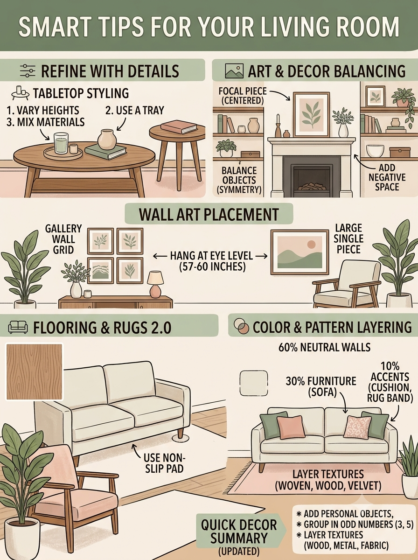
If your walls feel a bit chaotic, you might have mixed conflicting undertones, like pairing a cool blue-gray with a warm, creamy yellow sofa. Stick to a simple 60-30-10 color rule to keep things balanced and easy on the eyes. Dedicate 60% of the room to your dominant neutral wall color, 30% to a secondary tone like your furniture upholstery, and 10% to fun accent pieces like pillows and art.
“Floating” Wall Art Hung Too High
Walking into a room and having to crane your neck upward to look at a painting makes the entire space feel disjointed. A good rule of thumb is to hang your artwork so the center of the piece sits exactly at eye level, which is roughly 57 to 60 inches (145 to 152 cm) from the floor. If you are hanging a frame above a couch from Wayfair or Next Home, leave about 6 to 8 inches of breathing room between the bottom of the frame and the top of the sofa back.
Undersized Artwork on Large Walls
A tiny, lone 8×10 frame stranded on a massive blank wall ends up looking like a postage stamp in the middle of a desert. If you don’t want to spend hundreds of dollars or pounds on massive oversized canvases, create a curated gallery wall instead. You can buy affordable matching frame sets from IKEA or Target and arrange them together to fill out the visual space beautifully.
PRO TIP: Before hammering any nails into your drywall, trace your art frames onto leftover newspaper or wrapping paper. Tape those paper cutouts to the wall using painter’s tape so you can test out different layouts risk-free.
What Lighting Adjustments and Layout Tips for Living Room Setups Matter Most?
Lighting completely dictates how you feel when you unwind at the end of a long workday.
Now here’s where it gets interesting: the wrong lightbulb can make a beautifully decorated space feel sterile and cold in a matter of seconds.
Harsh Overhead Ceiling Lights
Relying solely on a single, brilliant center ceiling fixture creates a stark atmosphere that feels more like an interrogation room than a home. Turn off that big overhead light and lean heavily into localized ambient lighting instead. Place a warm floor lamp next to your favorite reading armchair and add a couple of small accent lamps on side tables around the room.
Blinding Blue-White Daylight Bulbs
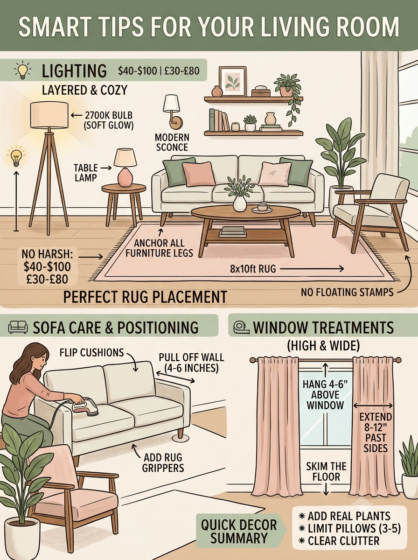
Bulbs that range from 5000K to 6500K emit a stark, blue-toned light that disrupts your circadian rhythm and makes cozy fabrics look washed out. When shopping at HomeGoods, Dunelm, or John Lewis, always check the packaging for soft white or warm white bulbs rated at 2700K to 3000K. This temperature mimics the comforting, golden glow of candlelight and instantly softens up your space.
Hazardous Extension Cord Trails
Running long, bright orange extension cords across your main walkways is an eyesore and a tripping hazard waiting to happen. Try tucking your cords neatly along the tops of your baseboards using small, paintable cable clips. If your sofa sits in the center of the room away from the walls, consider investing in a low-profile floor cord protector or a rechargeable cordless lamp.
Reflective Screen Glare on the TV
Positioning your television directly opposite a bright, sunlit window makes watching your favorite shows in the afternoon almost impossible. If you can’t rearrange your furniture layout to fix this, install some light-filtering woven shades or blackout curtains. Alternatively, upgrading to a tilting wall mount allows you to easily angle the screen away from direct light reflections.
How Can You Fix Sinking Sofas and Awkward Seating Arrangements?
Your sofa is usually the single largest investment piece in the space, so it needs to look and feel spectacular.Let’s look at how to extend the lifespan of your current seating while making the arrangement feel far more inviting.
Sagging Sofa Cushions
Over time, even high-end couch cushions lose their bounce and leave deep, sad indentations where everyone sits. Zip open your cushion covers and stuff them with extra high-density upholstery foam or affordable polyester fiberfill from a local craft shop. If your cushions aren’t removable, inserting a sturdy, folding wooden sofa saver beneath the cushions provides instant structural support.
Sinking Couch Springs
If you sit down and feel like you’re dropping straight down into a deep hole, the zig-zag support springs beneath the frame may have stretched or detached. Flip your sofa upside down, carefully pull back the protective dust cover fabric, and inspect the metal clips holding the springs in place. Often, you can easily pop loose springs back into their tracks or tighten them up using a pair of sturdy pliers.
Pilling Fabric Upholstery
Woven fabrics often develop fuzzy little pills from regular friction, making a perfectly good couch look old and worn out. Grab a cheap handheld electric fabric shaver or a manual lint sweater stone to gently remove the fuzz. Run the shaver lightly across the surface in small circles, and your sofa fabric will look brand new in less than ten minutes.
Sofas Pushed Stiffly Against Walls
Flattening all of your furniture tightly against the perimeter of the room creates a cold, empty void right in the center of your floor plan. Pull your sofa and armchairs away from the walls by at least 4 to 6 inches ($10–15\text{ cm}$) if you’re tight on space. If you have a larger room, floating your main seating arrangement right in the middle creates a much cozier conversational layout.
Constant Armchair Sliding on Hard Floors
Every time someone sits down, your accent chairs shouldn’t slide backward into the walls or scratch your flooring. Stick heavy-duty, self-adhesive rubber or thick felt furniture pads onto the bottom of every single chair leg. Not only will this hold your furniture firmly in place, but it also protects your hardwood or laminate from scuffs.
What Are the Golden Rules for Coffee Table Sizes and Layouts?
A great coffee table serves as a functional anchor for your seating area while holding your drinks and decor.
And this is my favorite part: getting the scale and distance right completely transforms how usable your entire living area feels.
Sharp, Dangerous Coffee Table Edges
Sharp, angular wooden or glass coffee tables can be stressful if you have toddlers running around or a narrow walkway where you constantly bump your shins. Consider swapping out a sharp rectangle for a soft, round wooden table or a plush upholstered fabric ottoman. If you love your current table, you can add sleek, transparent corner guards to protect your family without ruining your aesthetic.
Incorrect Coffee Table Height
A coffee table that sits significantly higher or lower than your sofa cushions makes reaching for your morning mug of coffee awkward. Aim for a table height that is within 1 to 2 inches ($2.5–5\text{ cm}$) of your surrounding sofa seat cushions. This keeps the visual lines of the room clean and makes setting down a plate or book completely effortless.
Table Placed Too Close or Too Far from Seating
If your coffee table is too close, you’ll bump your knees every time you sit down; if it’s too far away, you’ll have to lean uncomfortably forward to reach your drink. Leave an ideal spacing of 14 to 18 inches ($35–45\text{ cm}$) between the edge of your sofa and the edge of the table. This provides plenty of comfortable legroom while keeping everything within arm’s reach.
Permanent Water Ring Stains on Wood Surfaces
Setting a cold, sweaty glass down on a beautiful wood tabletop leaves cloudy white rings that can damage the finish permanently. To fix existing rings, place a clean, dry cotton towel over the stain and run a warm iron over it with zero steam for a few seconds to draw out the trapped moisture. Keep a stack of pretty marble, cork, or leather coasters handy to prevent future rings.
How Do You Select and Position the Right Rug for Your Space?
Rugs act as the ultimate anchor for a room, visually grouping your furniture together into a cohesive zone.The most frequent design mistake people make is buying a rug that is far too small for their layout.
Tiny “Floating Stamp” Rugs
Buying a small $5\times7$ foot rug and dropping it in the middle of a large room makes the space feel fragmented and cheap. Your rug should be large enough so that at least the front two legs of all your main seating pieces rest firmly on top of it. In most standard living areas across the US and UK, this means opting for an $8\times10$ foot ($2.4\times3\text{ meters}$) or a $9\times12$ foot rug.
Curling Rug Corners
Woven rug corners that curl upward create an annoying trip hazard and look messy. Try dampening the curled corner slightly with a mist of water, place a clean towel over it, and weigh it down with a stack of heavy textbooks overnight. For a permanent fix, stick down a set of double-sided, washable silicone rug corner grippers to keep the edges flat.
Rug Bunching and Slipping
A lightweight rug that shifts, bunches up, or slides across smooth floors when your pets run past is incredibly frustrating. Always place a high-quality, felted or rubberized non-slip rug pad underneath your area rug, cutting it about one inch smaller than the rug itself. This adds a layer of plush cushioning underfoot while keeping the rug locked securely in place.
What Are the Best Tips for Living Room Window Treatments and Curtains?
Window treatments function like the mascara of a room, framing your view and drawing your eye upward.
When done right, they make your ceilings look soaring; when done wrong, they can make a room feel closed-in.
“High-Water” Curtains
Curtains that stop several inches short of the floor look awkward and visually cut your room in half. Your drapery panels should always skim the floor lightly or puddle elegantly by a fraction of an inch. When shopping online at shops like Dunelm or Target, skip the standard short lengths and reach for 96-inch or 108-inch panels instead.
Curtains Hung Too Low and Narrow
Mounting your curtain rod directly to the top of your window frame blocks natural light and creates a cave-like feel. Instead, install your curtain rod 4 to 6 inches ($10–15\text{ cm}$) below your ceiling line, and extend the rod out horizontally 8 to 12 inches past the sides of the window frame. This tricks the eye into thinking your window is massive while allowing maximum daylight to flood into your home.
Dust-Gathering Horizontal Blinds
Traditional thin plastic horizontal blinds are notorious magnets for dust, pet dander, and hair, and they can be tricky to clean cleanly. Swap them out for minimal roller shades, Roman shades, or elegant plantation shutters. If you are renting on a tight budget, clean your existing blinds quickly by wiping them down with a damp microfiber cloth slipped over a kitchen pair of tongs.
Stuck or Squeaking Curtain Rings
Tugging hard on a stubborn metal curtain panel every morning only to have it stick on the rod joints is an annoying way to start the day. Rub a tiny bit of silicone lubricant spray, WD-40, or even a simple piece of wax paper along the top surface of your curtain rod. The rings will immediately slide back and forth with a whisper-quiet glide.
How Can You Resolve Common Flooring and Tile Issues?
Your floors bear the brunt of daily life, traffic, and spills, meaning they require regular maintenance to stay beautiful.
Let’s explore some simple, cost-effective ways to quiet your floors and repair minor surface wear without a full renovation.
Squeaky Wood Floorboards
A loud, piercing floorboard squeak right in the middle of your main walkway can easily wake up a sleeping household at night. This noise happens when floorboards rub together or loosen from the subfloor beneath them. Try dusting a generous amount of powdered graphite or talcum powder into the seams between the noisy boards, then step on it repeatedly to work the powder down into the cracks to lubricate the wood.
Scratched Hardwood Finishes
Moving chairs around or dropping heavy items can leave unsightly light scratches across your hardwood or laminate floors. For surface scratches, rub a matching wood stain marker or an affordable wax furniture repair crayon directly into the groove. If it’s a very light scratch on natural wood, rubbing a raw walnut meat over the scratch fills it in naturally using the nut’s natural oils.
Cracked Ceramic Floor Tiles
A single hairline fracture running through a tile in front of your fireplace can make the entire floor look neglected. If you happen to have a leftover spare tile from when the floor was installed, chip out the broken piece carefully using a hammer and chisel, scrape away the old adhesive, and set a new tile in place with fresh thin-set mortar. If you don’t have a spare, filling the tiny crack with a color-matched epoxy resin kit stabilizes the tile and disguises the damage well.
Discolored or Stained Grout Lines
Over time, high-traffic grout lines turn a dark, dingy gray from dirt, spilled coffee, and everyday mop water. Mix a thick paste of equal parts baking soda and hydrogen peroxide, scrub it vigorously into the grout lines using a stiff grout brush, let it sit for ten minutes, and rinse it away. If your grout is permanently stained, drawing over the lines with an affordable grout paint pen completely refreshes the floor for under $15 / £12.
What Maintenance Keeps Fireplaces and Mantels Looking Pristine?
A fireplace serves as a spectacular architectural focal point, especially during chilly autumn and winter months.
However, a neglected hearth can introduce drafts, soot odors, or visual clutter into an otherwise beautiful layout.
Smoky Fireplace Drafts Backing Into the Room
If lighting a cozy fire fills your home with smoke, your chimney flue might be cold, or you may have a hidden soot blockage. Before lighting your kindling, roll up a piece of newspaper, light it, and hold it up inside the chimney for a minute to warm up the cold air pocket. This creates a proper upward draft that draws smoke safely up and out of your home.
Soot Stains on Brick Facades
Dark, smoky soot stains bleeding out onto your beautiful exterior brick fireplace looks messy. Mix a strong paste of heavy-duty dish soap and warm water, scrub the brick face using a stiff nylon bristle brush, and wipe it away with a damp rag. For stubborn, caked-on soot, a specialty brick cleaner paste from your local DIY shop will lift the stains out effortlessly.
Overcluttered Mantelpiece
Piling your mantel high with dozens of small travel souvenirs, tiny picture frames, and candles creates a chaotic look. Clean everything off completely and start fresh with a curated design approach. Choose one large primary item, like a stunning mirror or an oversized artwork, then balance it out with a tall vase on one side and a small stack of books on the other.
Cold Drafts from an Unused Fireplace Opening
During the breezy spring and summer months, an open, unused fireplace chimney can let a constant stream of cold air into your home. Buy an inexpensive, inflatable chimney balloon plug or a decorative wool fireplace draft stopper to seal up the opening when it’s not in use. This simple trick lowers your monthly heating and cooling bills while blocking outdoor drafts.
How Do You Hide Ugly Tech Cables and Prevent Media Overheating?
We love our entertainment systems, but managing all the devices, wires, and consoles can challenge your styling goals.
Here’s the thing: you don’t have to sacrifice your entertainment setup to maintain a clean, organized aesthetic.
“Spaghetti Monster” Cable Mess Behind the TV
A tangled web of black power cords dropping down from a wall-mounted TV looks messy and chaotic. Gather those messy cords together and tuck them inside a paintable plastic cable raceway track that runs straight down your wall. Paint the exterior plastic cover the exact same shade as your wall paint, and your wires will blend right into the background.
TV Mounted Too High Near the Ceiling
Mounting your TV way above a tall mantel forces you to tilt your head back uncomfortably, which can lead to neck strain over time. For the most comfortable viewing experience, your television screen should be mounted so your eyes align perfectly with the middle third of the screen when sitting down. If you must mount it high, upgrade to a specialized drop-down mantel mount that pulls out and down to eye level when in use.
Overheated Media Equipment in Closed Cabinets
Stowing your gaming systems, streaming boxes, and media receivers inside a closed media cabinet traps heat and can cause your expensive electronics to fail early. Use a hole-saw drill bit to create hidden ventilation holes in the back panels of your media console furniture to allow warm air to escape. Alternatively, swap out solid cabinet doors for stylish, breathable woven cane or mesh doors from Wayfair or IKEA.
What Accessories, Shelves, and General Layout Tips for Living Room Spaces Work Best?
Accessorizing is where you get to let your unique personality shine through via books, pillows, plants, and art.Let’s look at how to refine your finishing touches so your room feels beautifully balanced and functional.
Leaning or Falling Books on Shelves
Every time someone walks past your built-in shelves, you shouldn’t have to worry about a row of books sliding over and causing a mini-avalanche. Pick up a pair of heavy marble, brass, or wooden bookends from shops like H&M Home or Next Home to keep them standing tall. Alternatively, stack a few heavy art books horizontally to act as a sturdy, natural base for your vertical books.
Overstuffed Bookshelves
Packing your bookshelves completely full from edge to edge with paperbacks makes your living room look smaller and more cluttered than it actually is. Try styling your shelves using a more balanced 70/30 approach. Fill 70% of the shelf space with your favorite books and decor items, leaving the remaining 30% completely empty to give the eye a place to rest.
Wobbly Side Tables
A side table that rocks back and forth whenever you try to set down a glass of water is an accident waiting to happen. Most modern accent tables feature adjustable, screw-in leveling feet hidden underneath the legs that you can turn to balance things out. If yours doesn’t have them, stick a tiny, trimmed piece of adhesive felt furniture padding under the shortest leg to stabilize it.
Dusty Fake Plastic Plants
Faux plants are a wonderful way to bring green life into darker rooms, but when they collect a thick layer of grey dust, they look unappealing. Take your artificial plants outside once a season and give them a quick spray with a compressed air can, or wipe the leaves down with a damp cloth. To make them look even more realistic, place them in a real terracotta pot and top the base with real dried moss or soil.
Empty, Unused “Dead Corners”
An empty corner at the far edge of a room can make your layout feel incomplete and a bit barren. Fill that empty spot intentionally with a tall, leafy fiddle-leaf fig plant, or tuck a cozy reading armchair and a sleek floor lamp there to create a functional secondary zone. This maximizes your usable square footage while making the entire room feel anchored.
Too Many Accent Pillows on the Sofa
If your guests have to physically move a mountain of throw pillows out of the way just to sit down, you have too many pillows. Limit yourself to two or three cozy pillows on each end of a standard-sized couch. Mix up the textures by pairing a soft velvet cover with a chunky knit or a linen pillow to add rich visual interest without sacrificing seating comfort.
Radiator or Heating Vent Blockage
Pushing a massive, heavy armchair or sofa directly in front of your heating vents or radiators blocks warm air from circulating throughout the space. Pull your furniture pieces back by at least 10 to 12 inches ($25–30\text{ cm}$) to keep your heating system running efficiently during the winter. This simple adjustment keeps your home cozier while lowering your energy bills.
Smelly Upholstery and Pet Odors in Fabrics
Fabric fibers can trap pet odors, cooking smells, and dust over time, leaving a room smelling a bit stale. Generously sprinkle dry baking soda across your rugs and fabric sofas, let it sit for a few hours to absorb the odors, and vacuum it up thoroughly. For an extra touch of freshness, mist your fabrics lightly with a homemade linen spray made from water, rubbing alcohol, and a few drops of lavender essential oil.
Scratched or Scuffed Baseboards
High-traffic baseboards naturally pick up dark scuffs from vacuum cleaners, shoes, and pet toys over time. You don’t necessarily need to repaint them; a damp Mr. Clean Magic Eraser or a melamine foam pad will buff away most dark surface scuffs in seconds. For deeper dents, fill them with a dab of wood filler, sand smooth, and touch up with leftover trim paint.
Door Swing Path Hitting Furniture
If your living room entry door or patio door bumps into the side of a chair or table every time it opens, your layout is restricted. Ensure you maintain a completely clear path of travel by keeping furniture outside of the door’s full opening radius. If you are dealing with an incredibly tight layout, consider swapping out a traditional swinging interior door for a sleek sliding barn door or a pocket door.
Lack of Drink Surfaces Near Seating
Every single seat in your room should have an easily accessible surface nearby to set down a mug of tea or a cold glass of water. If your main coffee table is out of reach for someone sitting on the far end of the sofa, add a small, slim C-shaped side table that slides neatly over the arm of the couch. This adds great functionality without taking up precious floor space.
Loud Echoing and Poor Room Acoustics
If your room features sleek hardwood floors, large windows, and high ceilings, conversations can sound echoey and hollow. Soften the room’s acoustics by introducing plenty of sound-absorbing textiles like plush area rugs, thick linen curtains, and soft throw blankets. Wall decor like canvas art prints or woven wall tapestries also help absorb sound waves beautifully.
No Clear Focal Point in the Layout
A room without a clear focal point can feel disorganized, with furniture facing random directions. Decide on one main feature to build your layout around, whether that’s a beautiful fireplace, a large window view, or your television console. Arrange your main seating options so they face toward this central feature, which naturally organizes the flow of the room.
Frequently Asked Questions About Helpful Tips for Living Room Decor
Q: How do I make a small living room feel larger and more open?
A: Focus on maximizing your natural light by hanging your curtains high and wide, and use light, reflective paint colors like soft off-whites or pale grays. Choose furniture with raised legs rather than solid bases to let light pass underneath, and place a large wall mirror opposite a window to visually double the depth of the space.
Q: How do I choose the right size rug for my layout?
A: Always measure your main seating area before buying, and ensure your rug is large enough so that at least the front legs of your sofa and accent chairs rest comfortably on top of it. Avoid small rugs that float in the center of the room without touching any furniture, as this can make your layout feel fragmented and small.
Q: What is the best way to arrange furniture in a long, narrow room?
A: Avoid pushing all of your furniture pieces flat against the longest walls, as this creates a narrow “bowling alley” feel. Instead, break the long room down into two distinct functional zones, such as a cozy primary seating area anchored by a rug on one side, and a compact writing desk or reading nook on the other.
Q: How many throw pillows should I put on a standard three-seater sofa?
A: A balanced approach is to use three to five pillows total, grouping them in pairs on the corners of your sofa with a single accent pillow in the center. Mix up the sizes, patterns, and fabric textures—like pairing smooth leather with a chunky knit—to create rich visual interest without overcrowding the seating space.
Q: How high should I hang my wall art and picture frames?
A: Frame arrangements should be hung so that the center point of the artwork sits right at eye level, which is generally between 57 and 60 inches ($145–152\text{ cm}$) from the floor. If you are hanging a frame directly above a sofa, leave 6 to 8 inches ($15–20\text{ cm}$) of space between the bottom of the frame and the top of the couch back.
Wrapping It All Up
Refreshing your favorite gathering space doesn’t mean you need to invest in a massive, costly renovation. By implementing these practical tips for living room design, you can easily address layout hiccups, improve your lighting, and create a truly functional home. Take a walk through your space today and pick just one or two small adjustments to tackle first—you’ll be amazed at how much cozier your home feels tonight. Explore our latest styling guides for even more design inspiration to elevate your home.
