

When I consult with clients on residential styling, the single biggest hurdle they face is creating a space that feels deeply restorative without looking like a boring hotel room. Most people recognize that a bedroom should serve as an intimate sanctuary, yet they end up defaulting to safe, stark neutrals that trigger zero emotional comfort. Your walls hold the psychological framework of your entire morning and evening routines, meaning your choices directly influence how easily your nervous system decompress at night.
In my decade of hands-on interior design experience, I have developed a repeatable system that moves beyond temporary trends, focusing instead on how natural light reflectance and biophilic undertones alter the spatial layout of your room. By matching your color palette with your natural lighting architecture and layering texturized materials, you can easily implement Green Bedroom Ideas that feel highly custom, grounding, and personal.
The secret to mastering this organic design system is understanding that a color does not exist in a vacuum; it changes constantly based on fabric weights, pile densities, and lighting variables. Below is my designer handbook alongside 22 expanded, deeply detailed layout concepts to completely transform your private space.
| Design Category | Suggested Palette | Best Lighting Condition | Target Spatial Vibe |
| Serene & Calming | Sage Green, Celadon, Mint | Morning Eastern Light | Lowers heart rate; ultra-restful |
| Crisp & Modern | Deep Forest, Emerald, Spruce | High-Output Natural Light | Structured, architectural, clean |
| Warm & Earthy | Olive Green, Moss, Khaki | Afternoon Western Light | Nurturing, intimate, protective |
| Rich & Luxurious | Emerald Green, Hunter Green | Low-Level Amber Lighting | Boutique hotel-grade drama |
Tools & Materials You Need
Before opening any paint cans or moving heavy bed frames, collecting these professional-grade tools and technical specifications will ensure a seamless execution:
High-CRI Test Lamps: Use adjustable LED bulbs featuring a Color Rendering Index (CRI of 92+) to view paint swatches under 2700K (warm evening) and 4000K (cool daytime) illumination.
Large Peel-and-Stick Paint Samples: Measuring at least 12″ x 12″ to move across different walls throughout the day, ensuring the undertones look right in every corner.
Low-Tack Precision Edge Painter’s Tape: Crucial for achieving razor-sharp lines along your baseboards and crown moldings.
Digital Laser Distance Measure: Essential for mapping your floor plan to ensure a minimum of 32 inches of open walking clearance around all sides of your bed.
Microfiber Roller Covers: Look for a 3/8-inch nap to achieve a smooth, velvet-like finish on standard interior drywalls.
Detailed Step-by-Step Guide: 22 Master Bedroom Concepts
1. Pair Sage Green Walls with White Bedding

Soft sage functions as a timeless, highly sophisticated neutral that brings immediate architectural calm to a space. When implementing this look, I always recommend choosing a sage with subtle warm undertones to keep the room from looking cold or clinical. Pair these gentle walls with crisp, long-staple linen white bedding layers to create an environment that feels incredibly open and airy without looking sterile.
2. Add a Deep Green Accent Wall
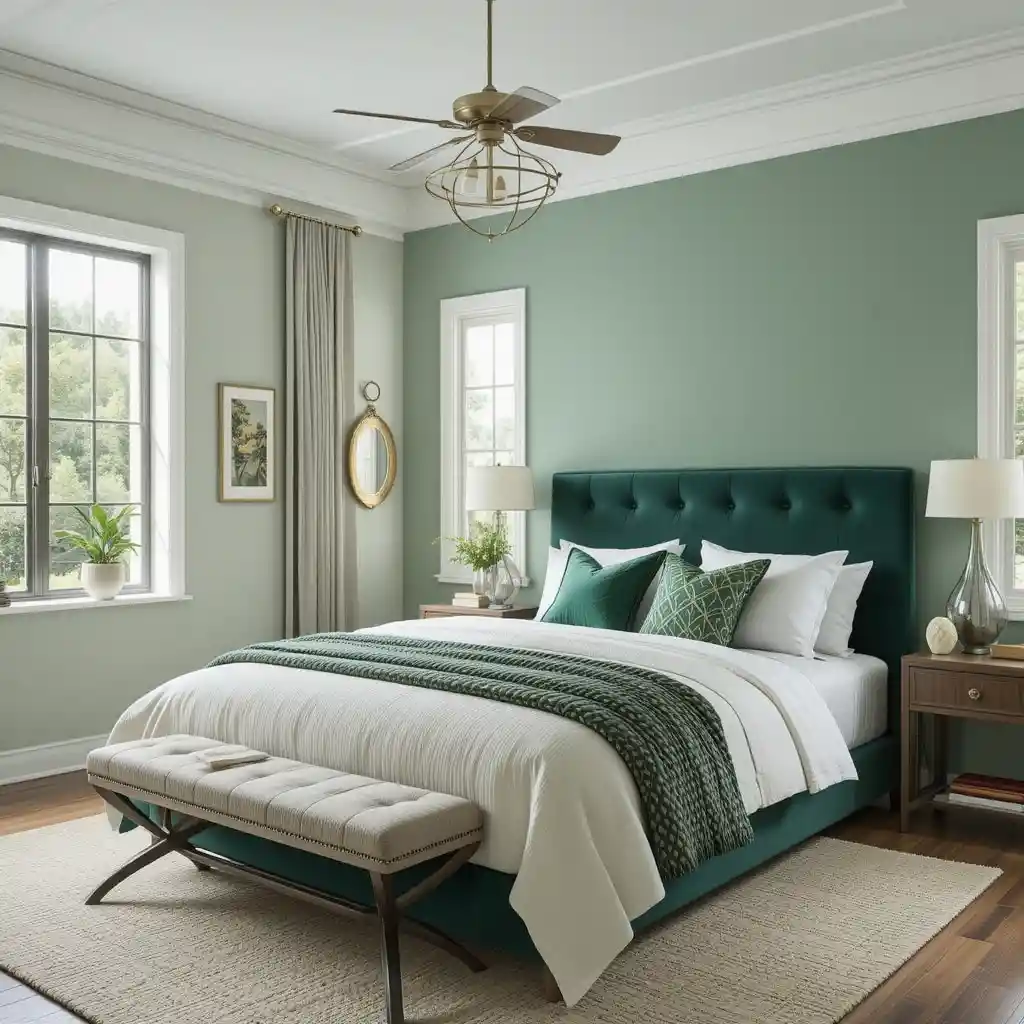
Using a rich forest or emerald green on the wall directly behind your headboard frame builds a stunning focal point without overwhelming the layout. This deep pigment absorbs excess glare, causing the physical boundaries of the accent wall to recede into shadow. This visual trick adds a beautiful sense of depth and scale to a compact bedroom.
3. Mix Green with Warm Wood Tones

To prevent a colorful room from looking artificial or over-decorated, you must bring in grounding, natural elements. Furnish your layout with nightstands and dressers crafted from warm woods like white oak, walnut, or raw pine. The organic wood grains complement green walls perfectly, adding a cozy, rustic charm that connects your space to nature.
4. Use Olive Green Bedding for Warmth
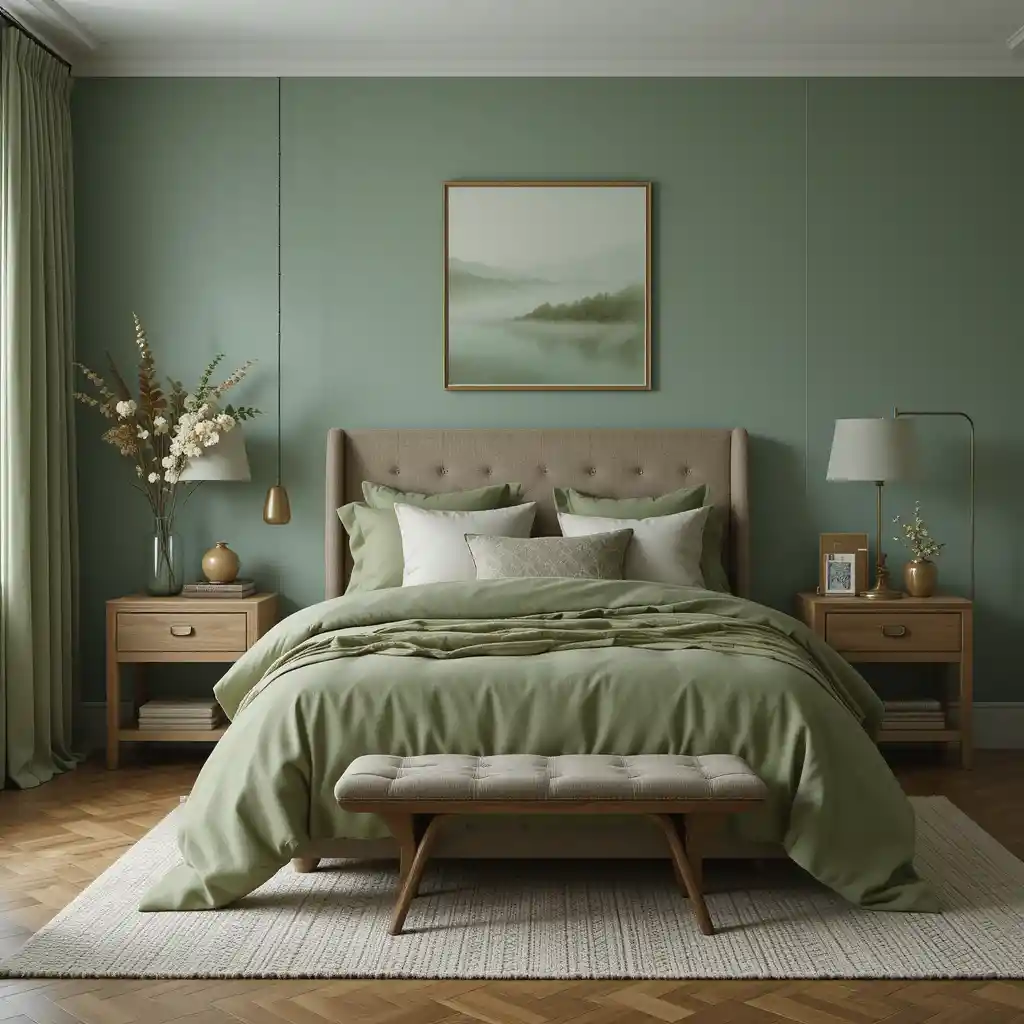
If you are testing out a moody color palette for the first time, you don’t need to commit to full-scale painting projects immediately. Swap out your standard sheets or duvet for a high-texture olive green textile kit. The muted, earthy quality of olive provides an instant layer of comforting warmth that pairs beautifully with neutrals or soft metallics.
5. Style with Indoor Plants and Greenery

Bring the outdoors in by introducing live potted plants like a fiddle-leaf fig, hanging ivy, or high-quality faux greenery to your shelf layouts. The living tissue introduces a dynamic textural layer that echoes your wall paint. This literal layer of nature enhances the room’s oxygen levels while making the environment look lived-in and fresh.
6. Choose Green-Toned Artwork or Wall Prints

Empty walls can occasionally break the visual continuity of a tailored design system. Hang a curated gallery arrangement of abstract art or historical botanical prints featuring deep green pigments. Encasing these prints in thin, clean frames adds a wonderful layer of personality while keeping the general aesthetic incredibly soothing.
7. Incorporate Emerald Velvet Accents
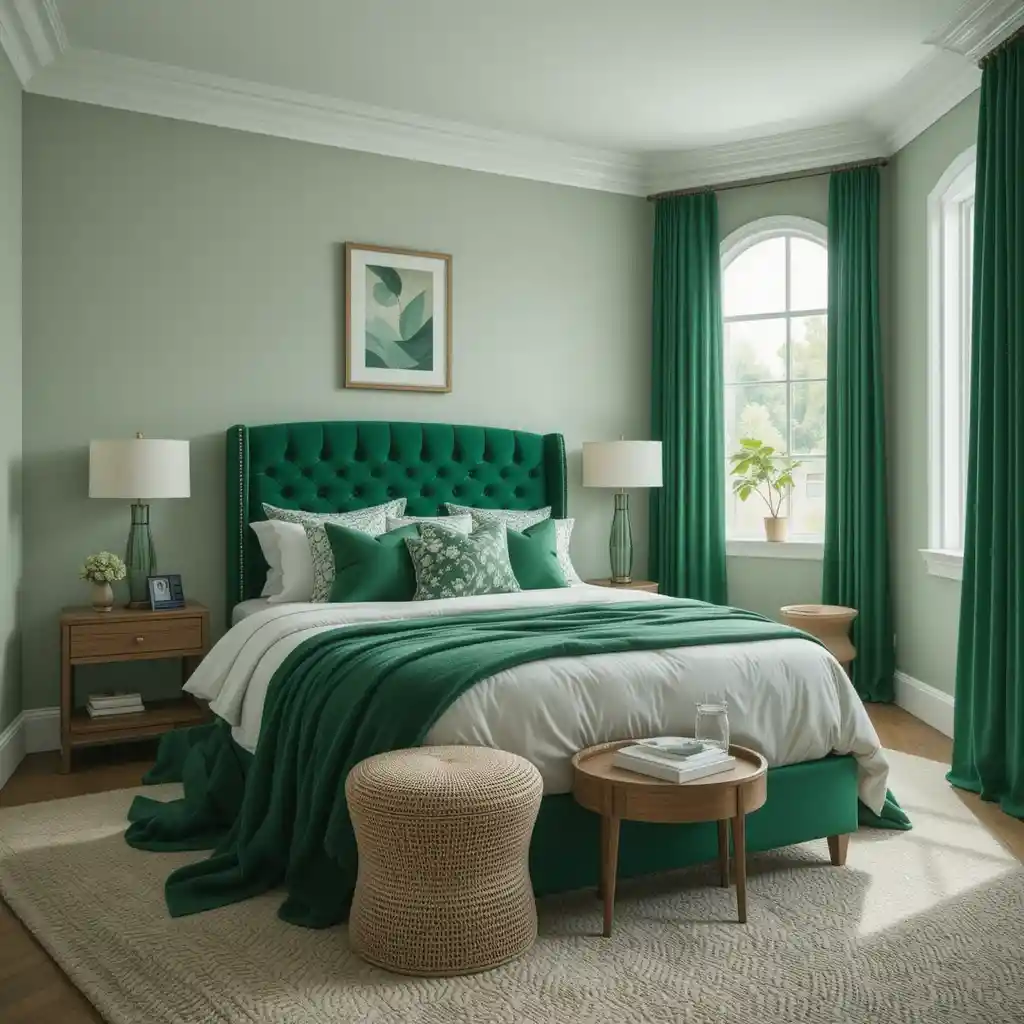
Introduce a stunning sense of boutique-hotel luxury by incorporating deep emerald green velvet accents across your textiles. Whether you select a pair of plush throw pillows, floor-to-ceiling draperies, or a custom tufted headboard, velvet is excellent at creating rich shadows. The thick material captures low-level evening light, producing a high-end look.
8. Use Green in Your Rug for Grounding
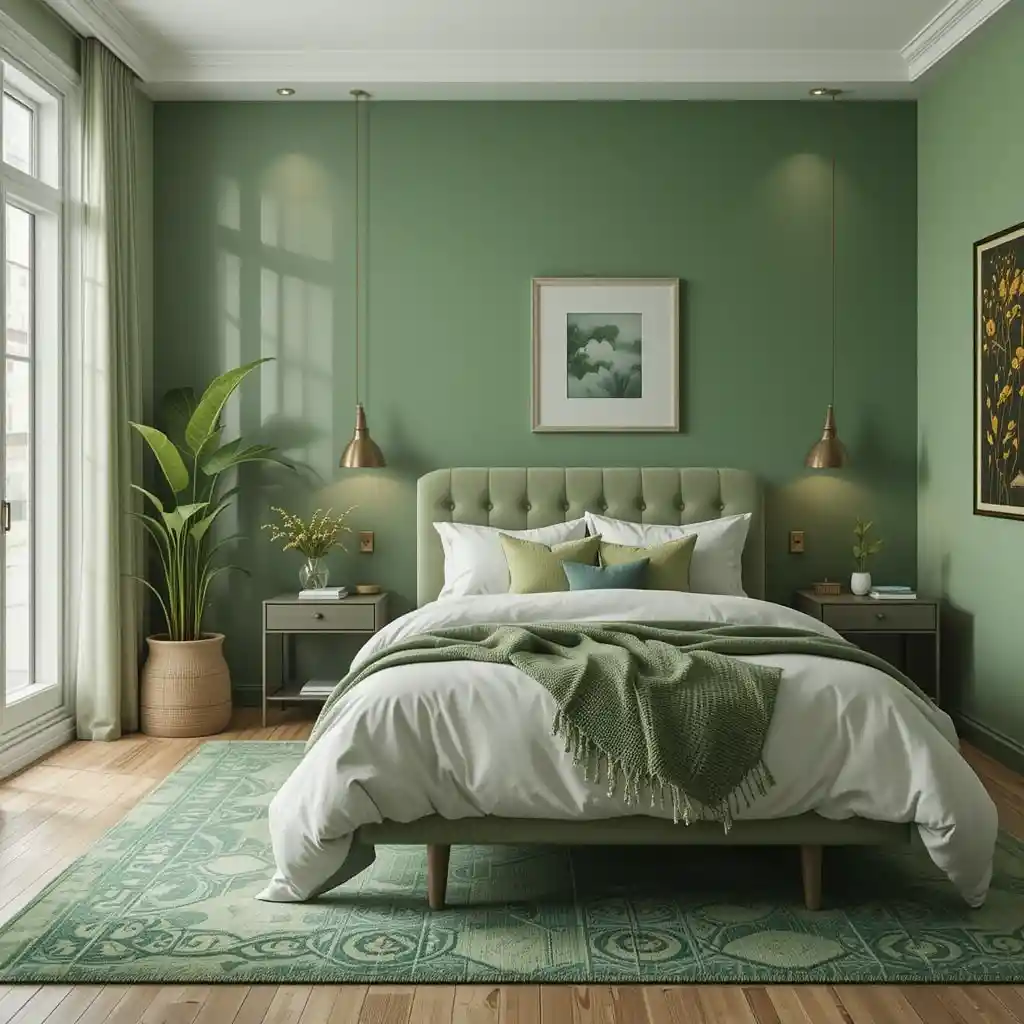
Ground your main furniture arrangement by building a soft, highly tactile foundation for your bare feet. Slide a substantial, low-pile wool area rug featuring a subtle green pattern horizontally underneath the bottom two-thirds of your bed frame. This layer provides a warm landing zone every morning while pulling together the room’s color scheme.
9. Try Mint Green for a Soft, Youthful Vibe

Mint green carries a beautiful, desaturated clarity that works wonders in smaller guest rooms, attic renovations, or teen spaces. This uplifting shade bounces ambient light into dark corners, making a low-ceilinged footprint feel significantly grander. Balance the minty brightness with soft cream textiles and light ash wood surfaces.
10. Add Green Throw Pillows to Neutral Bedding

For homeowners who love a minimalist aesthetic but crave a hint of organic color, use your bedding as a canvas for contrast. Keep your primary duvet a clean sand beige or soft charcoal gray, then toss two heavily textured moss green pillows at the top. This small placement builds a polished look without requiring a heavy color commitment.
11. Paint Furniture in Muted Green Shades

You can easily breathe new life into outdated bedroom dressers or vintage nightstands with a simple weekend refinishing project. Sand down the old wood frame, apply two coats of a dusty sage or mossy green furniture lacquer, and install updated hardware. This quick customization delivers a high-end designer look on a sensible budget.
12. Accent with Gold or Brass Hardware
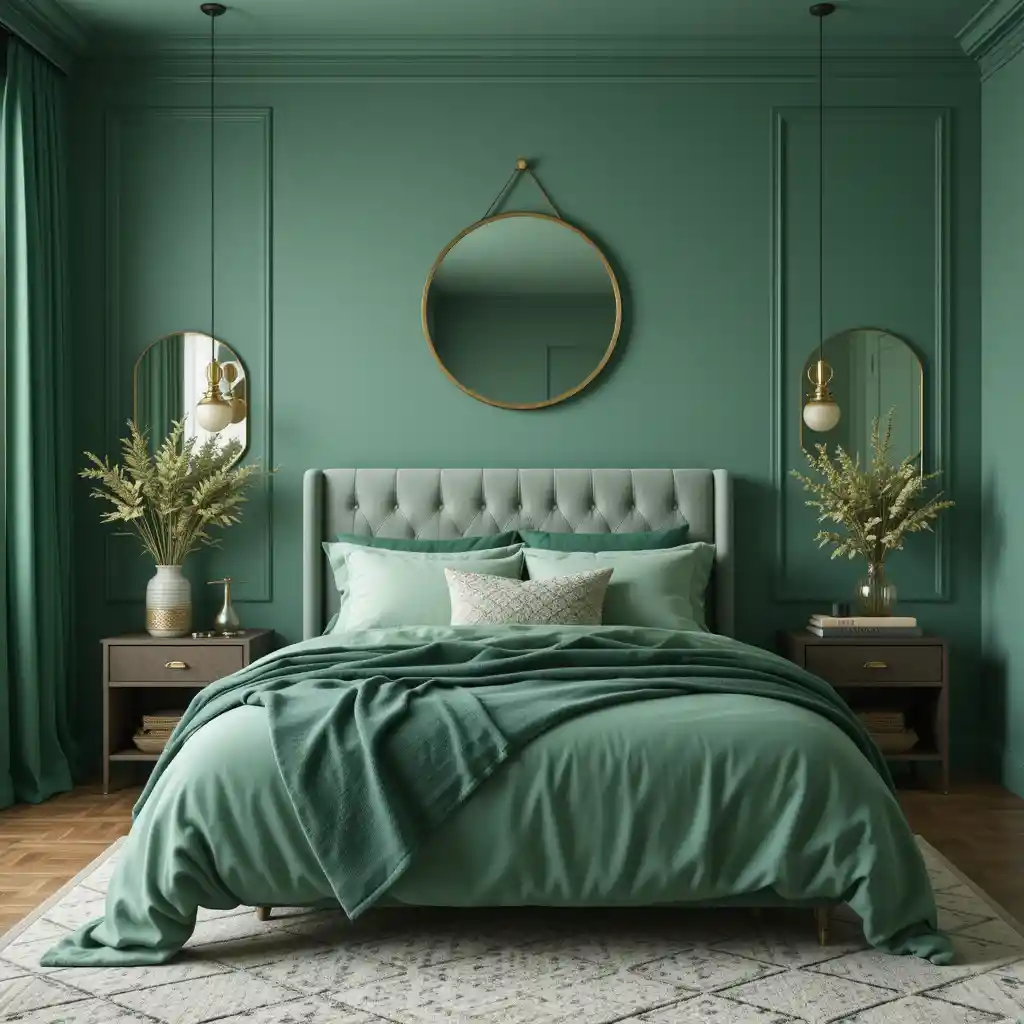
Green color palettes require a touch of metallic warmth to keep the environment looking bright, balanced, and sophisticated. Swap out generic builder-grade cabinet pulls and light switches for sleek satin brass or unlacquered gold hardware. The shimmering metal works like jewelry against the green backdrop, elevating basic fixtures.
13. Choose Botanical Wallpaper for a Bold Statement
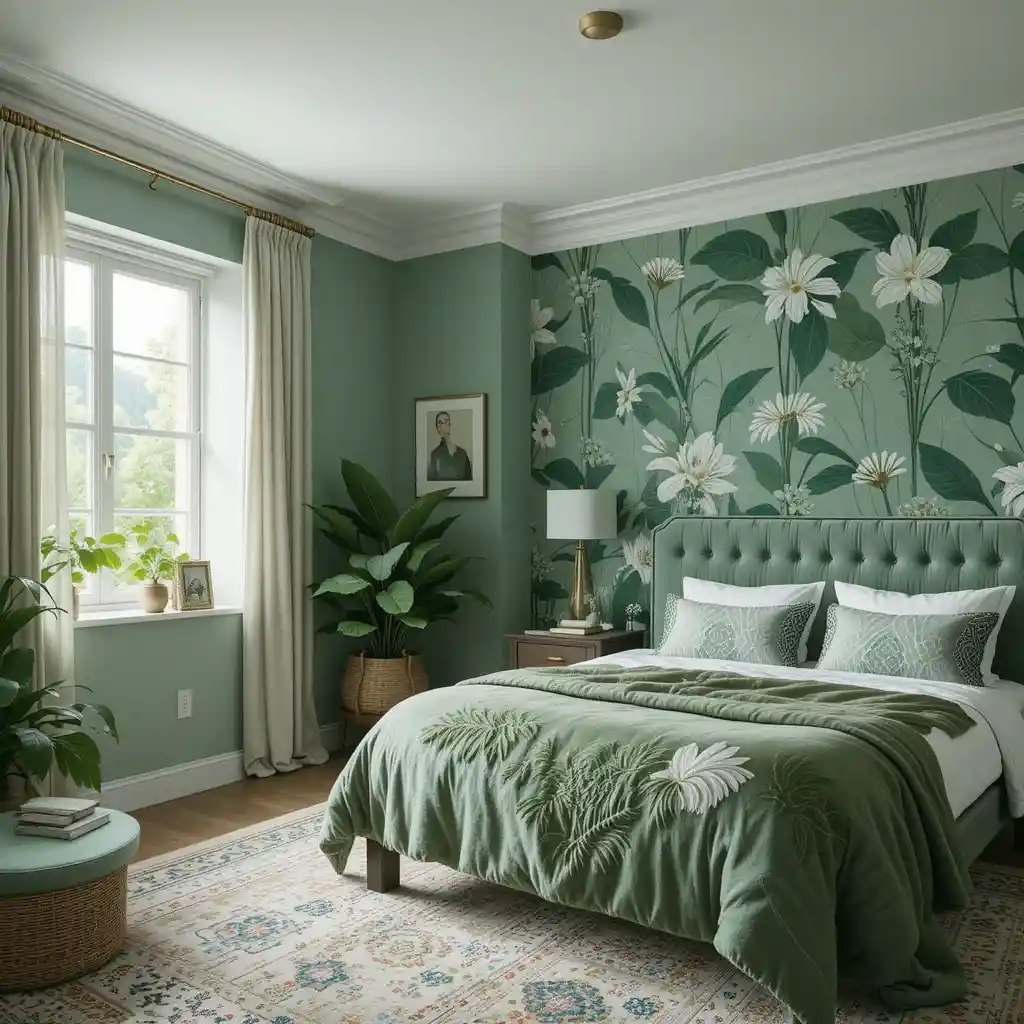
If solid painted surfaces feel a bit too plain for your personal style, introduce complex visual texture with high-end wallpaper. Source a premium peel-and-stick paper that features an elegant green botanical or oversized floral motif behind the bed. This single statement wall builds instant architectural interest without cluttering your floor space.
14. Use Layered Green Tones for Dimension

Layering multiple variations of the same color family is the key to preventing a monochromatic space from looking flat or clinical. Mix an olive quilt with sage green curtains and a deep forest green accent chair within the same footprint. This gradient approach builds a designer-inspired depth that feels intensely comforting to the eyes.
15. Incorporate a Green Upholstered Bench or Chair
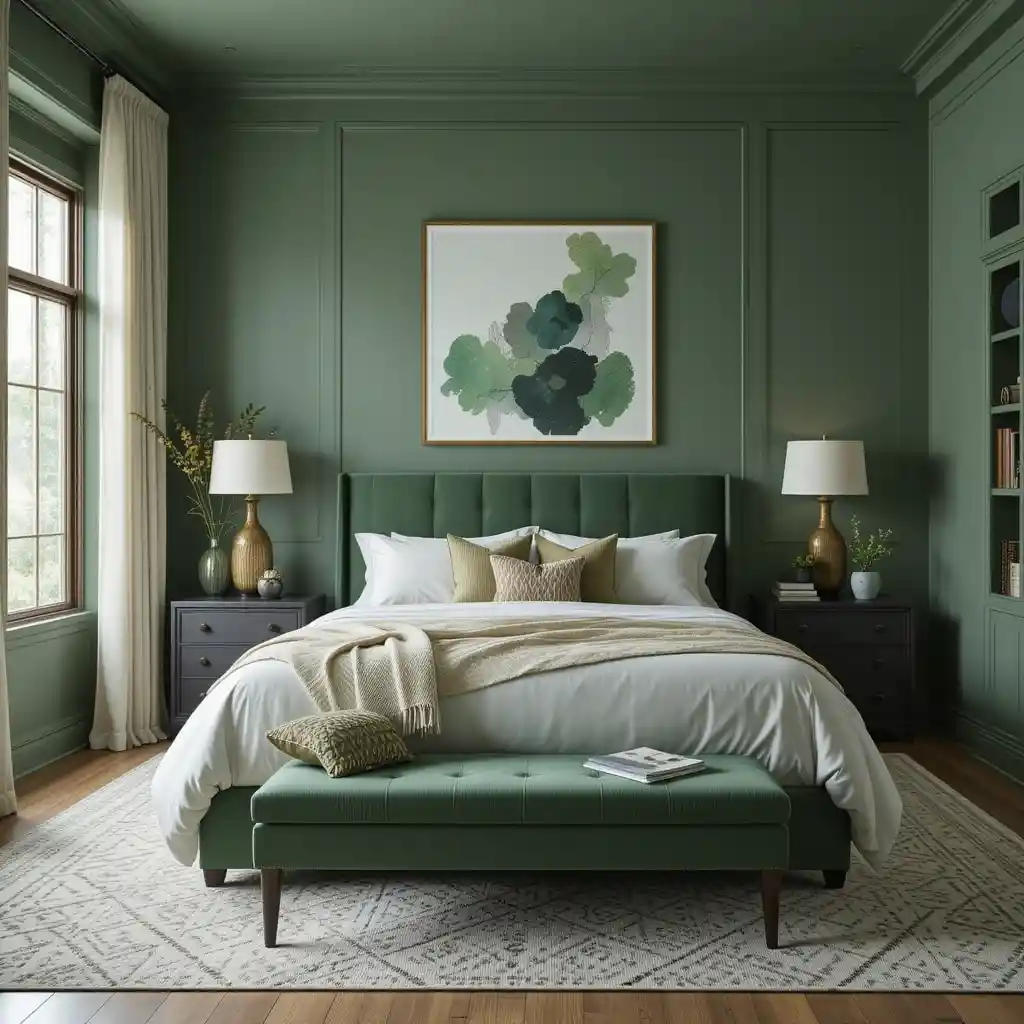
Avoid the bad habit of working or relaxing entirely on your mattress, as this can disrupt your healthy sleep patterns. If your floor plan allows, add a separate seating option like a velvet emerald slipper chair or an upholstered bench at the foot of the bed. This addition establishes a clear secondary destination that boosts the room’s function.
16. Combine Green and Beige for Earthy Calm

Pairing soft sage or olive green tones with rich beige, taupe, or cream surfaces creates a deeply peaceful, organic environment. This low-contrast palette reflects the natural, calming beauty of an outdoor landscape. It removes harsh visual boundaries, making the bedroom layout feel spacious, soft, and completely grounded.
17. Add a Green Canopy or Bed Curtains

For a grand, romantic statement that remains clean and tailored, opt for a minimalist canopy bed frame layered with green fabrics. Drape a sheer, lightweight green linen loosely over the upper rails to create a private, comforting sanctuary within the room. This layering builds a cozy cocoon effect that helps lower stress before sleep.
18. Use Green-Tinted Glass Décor or Lamps
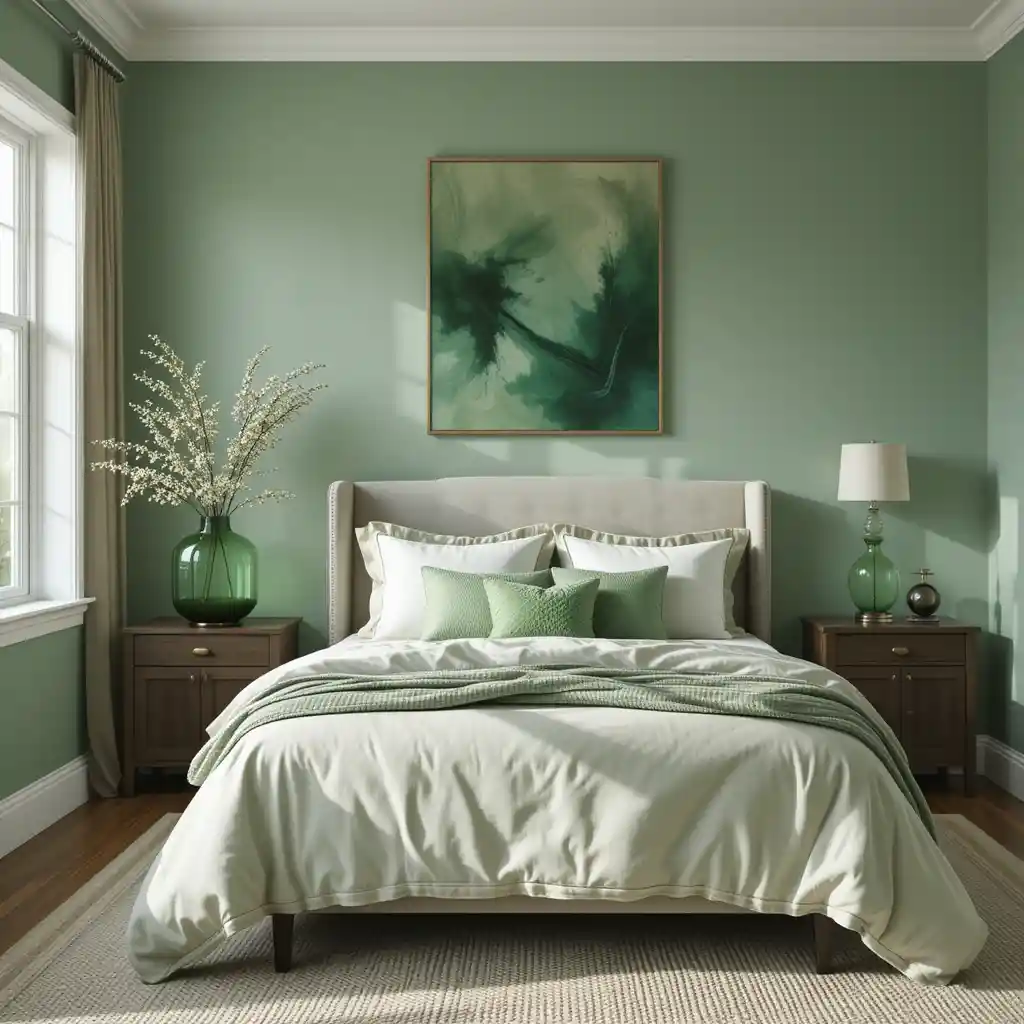
Do not overlook your smaller desktop accessories when building out a comprehensive, high-end color scheme. Distribute a few seafoam or emerald green-tinted glass vases, pendant light globes, or candleholders across your surfaces. The translucent material catches shifting natural daylight, scattering subtle color accents across the room.
19. Opt for a Green-Toned Headboard Wall

Instead of coating all four drywalls in paint, introduce physical texture by installing millwork along your main focal wall. Apply green shiplap, classic board-and-batten, or painted paneling directly behind your mattress layout. The raised wooden trim elements build beautiful geometric shadows, adding architectural substance to the bedroom.
20. Accent with Green Linen Curtains

Windows offer a critical canvas for soft textiles that enhance the vertical height of your room. Hang semi-sheer green linen curtains high and wide relative to your window frames to allow daylight to filter gently into the footprint. The lightweight fabric allows a breezy airflow while softly coloring the edges of your room in an effortless way.
21. Go for Monochrome Green Styling
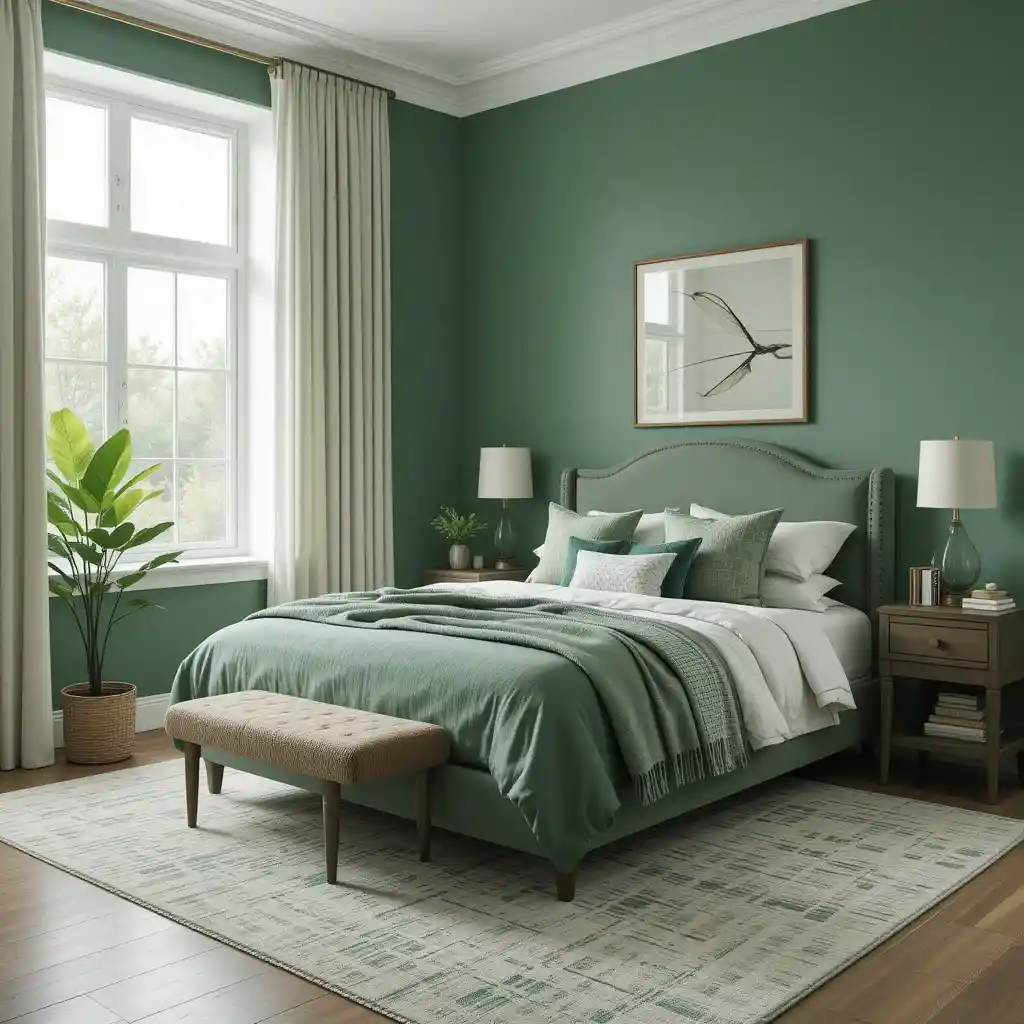
Design the entire room in varying shades of green—from the matte walls and trim to the bedding and accent rugs—to create a bold, cohesive retreat. This complete saturation technique wraps the room footprint in a singular, protective color envelope. The lack of contrasting color boundaries tricks the brain into feeling completely relaxed.
22. Keep It Minimal with Just a Touch of Green

If your style leans toward a clean, strict minimalist approach, maintain a crisp white or soft alabaster backdrop throughout the layout. Introduce a single, deliberate green feature—such as an oversized leafy plant or a heavy forest green throw blanket across the mattress. This isolated pop provides a sense of calm without adding visual clutter.
Optical Tricks & Pro Styling Hacks
The 60-30-10 Color Guide: To maintain perfect visual harmony in any room, distribute your color percentages intentionally. Dedicate 60% of your layout to your dominant background color (usually neutral or sage walls), 30% to your secondary color layer (bedding and drapes), and restrict the final 10% to small, deliberate accent pops like gold hardware or plants.
The Continuous Trim Illusion: Paint your baseboards, window trim, and crown moldings the exact same color and matte sheen as your walls. This technique removes hard horizontal lines, tricking the brain into perceiving your ceilings as much higher and your room footprint as much wider than they actually are.
The Ceiling Sheen Rule: When painting a ceiling a dark color, always choose a Flat Matte finish. Glossy or satin paints reflect light bulbs sharply, creating distracting hot spots on the ceiling plane, whereas matte surfaces absorb light softly to create an expensive, velvet-like look.
Scientific Data & Color Psychology
The Neuro-Architecture of Green Wavelengths: Environmental design research shows that viewing desaturated green color environments drops baseline cortisol production in the human brain. Unlike high-contrast colors that stimulate visual activity, these natural wavelengths reduce strain on the optical nerves, allowing your parasympathetic nervous system to relax and transition into healthy sleep cycles.
Light Reflectance Value (LRV) and Thermal Metrics: According to architectural physics, deep paint pigments with an LRV rating below 20% absorb excess ambient light waves rather than scattering them across the room. This controlled light absorption reduces evening visual glare while slightly improving thermal insulation when paired with heavy draperies, dropping room echo by up to 15%.
Frequently Asked Questions (FAQ)
Will a dark green accent wall make my small bedroom look tiny?
No, it actually does the opposite when you use a flat matte finish. Matte surfaces absorb glare completely, causing the physical boundaries of the accent wall to recede into shadow, which adds a beautiful sense of depth and scale to a compact room.
How do I choose the right size area rug for a king-size bed frame?
A standard king bed frame pairs beautifully with an $8′ \times 10’$ or $9′ \times 12’$ area rug. Position the rug horizontally underneath the bottom two-thirds of the mattress footprint, ensuring a soft, warm landing zone for your bare feet on both sides of the bed.
What paint finish is best for high-traffic master bedrooms?
I always recommend using an Eggshell or Satin finish for your walls, as they offer a soft sheen that is easy to wipe clean. Reserve Flat Matte for ceilings and low-contact feature walls, and use durable Semi-Gloss strictly for baseboards and door frames.
How can I prevent a neutral gray bedroom from looking cold?
The secret is introducing warm organic elements to break up the gray. Layer the space with natural wood nightstands, a plush wool area rug, amber-toned lighting sources (2700K), and varied fabric textures like knit cotton or bouclé to bring instant physical warmth.
Final Thoughts
Selecting your color foundation using these Green Bedroom Ideas is an exceptional opportunity to showcase your design confidence while building a deeply restorative, personal sanctuary. It proves that modern residential styling doesn’t have to feel clinical, cold, or entirely plain white to look highly sophisticated and polished.
By managing your fabric weights carefully, establishing clear furniture proportions, and layering your lighting tiers with intent, you can easily create an elegant escape. Take your time testing your paint swatches, trust your design system, and enjoy watching your private world transform into a beautiful space.
